F-theta Lenses Overview: Understanding Precision Laser Beam Focusing
Laser technology is used in many industries for marking, engraving, cutting, welding, and inspection.
One of the important optical components that helps these systems work accurately is the F-theta lens. Although many people focus on the laser source itself, the lens plays an equally important role in directing and focusing the laser beam.
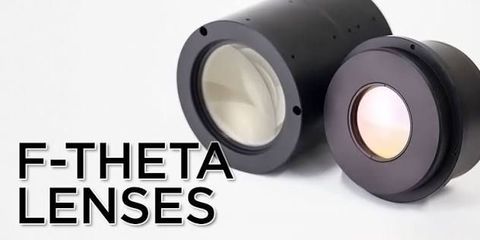
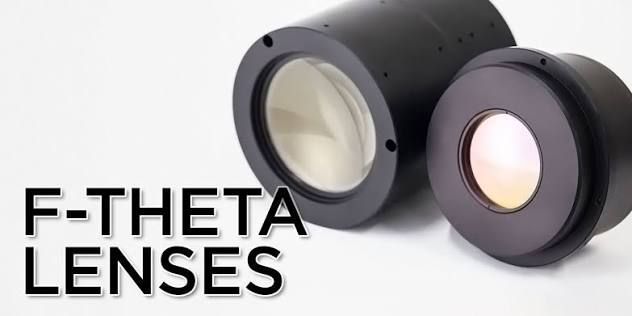
An F-theta lens is a specialized optical lens designed for laser scanning applications. Unlike a standard focusing lens, it helps maintain a nearly flat working field while keeping the laser spot in the correct position across the scanning area. This makes it useful in systems that require consistent accuracy over large surfaces.
A laser scanning lens works together with a galvanometer scanning system, which uses fast-moving mirrors to guide the laser beam. As the mirrors change direction, the F-theta scan lens keeps the focused beam aligned with the intended position. This combination is commonly found in industrial laser marking systems, engraving equipment, and precision manufacturing applications.
Different types of F-theta lenses are designed for various laser wavelengths, scanning areas, and industrial requirements. Examples include the fiber laser F-theta lens for fiber laser equipment and the telecentric F-theta lens for applications requiring improved dimensional consistency. These optical components are part of a broader field known as industrial laser optics.
Importance
Supporting Precision Manufacturing
Modern manufacturing often depends on accurate laser positioning. Whether a product requires identification marks, serial numbers, or detailed patterns, the focusing lens helps determine the final quality of the result. A properly matched laser marking lens contributes to consistent beam positioning across the work area.
Improving Scanning Accuracy
Without specialized optics, the laser beam would naturally lose focus as it moves away from the center of the scanning field. An F-theta lens reduces this effect by maintaining a more predictable relationship between the scan angle and the beam position.
Enabling Multiple Industrial Applications
Laser scanning systems are used across many industries because they allow non-contact processing with high precision. Common applications include:
- Product identification and traceability
- Barcode and QR code marking
- Medical device manufacturing
- Automotive component marking
- Consumer electronics production
- Printed circuit board manufacturing
- Semiconductor processing
- Scientific research laboratories
Supporting Consistent Beam Quality
Many laser systems also use a laser beam expander before the focusing optics. The beam expander increases the beam diameter, allowing the F-theta scan lens to produce a smaller and more uniform focal spot. This combination improves processing precision for many industrial tasks.
Recent Updates
Growth of Fiber Laser Technology
Recent developments in manufacturing continue to increase the use of fiber laser systems. As a result, the demand for fiber laser F-theta lens designs has grown because they are compatible with the wavelengths commonly used in industrial laser marking systems.
Larger Scanning Fields
Manufacturers continue developing lenses capable of maintaining accuracy across larger working areas. This helps improve productivity when processing larger components while maintaining consistent beam positioning.
Improved Optical Coatings
Advances in optical coatings have focused on increasing light transmission while reducing unwanted reflections. These coatings help improve the efficiency of industrial laser optics under different operating conditions.
Better Compatibility with Automation
Modern laser systems are increasingly integrated with robotics, machine vision, and automated production lines. Laser scanning lens technology continues evolving to support faster scanning speeds while maintaining positioning accuracy.
Increased Use of Simulation Software
Optical design software has become more common during the development of laser systems. Engineers can simulate beam paths before physical installation, helping optimize lens selection and system configuration.
Laws or Policies
Laser equipment is commonly regulated through workplace safety standards rather than rules that apply only to optical lenses. The exact requirements depend on the country and the intended industrial application.
Many countries follow international laser safety standards developed through organizations such as the International Electrotechnical Commission (IEC). These standards classify laser systems according to their potential hazards and outline appropriate protective measures.
Manufacturing facilities using industrial laser marking systems typically follow workplace safety regulations that address:
- Laser radiation exposure
- Protective eyewear requirements
- Machine guarding
- Warning labels
- Operator training
- Controlled access to laser processing areas
Many industrial organizations also follow quality management standards when manufacturing optical components. A laser optics manufacturer may use internationally recognized quality systems to support consistent production processes and product inspection.
When laser systems are exported internationally, additional regional compliance requirements may apply depending on local regulations governing industrial equipment.
Tools and Resources
Several software platforms and technical resources assist engineers and manufacturers when designing laser systems that include an F-theta lens.
Optical Design Software
Optical simulation software allows engineers to evaluate beam paths, focal lengths, distortion, and scanning performance before assembling a complete system.
CAD Software
Mechanical design software helps create mounting structures that position the laser scanning lens accurately within the optical system.
Beam Analysis Equipment
Beam profilers measure important laser characteristics such as:
- Beam diameter
- Spot size
- Beam symmetry
- Energy distribution
- Focus quality
Technical Specification Sheets
Lens specification documents commonly include information such as:
| Parameter | Typical Information Included |
|---|---|
| Wavelength | Laser wavelength compatibility |
| Focal Length | Working distance characteristics |
| Scan Field | Maximum marking area |
| Entrance Pupil | Beam entry dimensions |
| Distortion | Expected positional accuracy |
| Coating Type | Optical transmission properties |
| Working Distance | Distance from lens to work surface |
Design Resources
Engineers may also use:
- Optical calculators
- Laser beam propagation software
- CAD templates
- Beam alignment tools
- Material processing guides
- Industry technical documentation
These resources help simplify system planning and improve compatibility between optical components.
FAQs
What is an F-theta lens used for?
An F-theta lens is designed to focus a laser beam accurately across a scanning field. It is commonly used in laser marking, engraving, cutting, welding, and inspection systems where consistent beam positioning is important.
How is an F-theta scan lens different from a standard focusing lens?
A standard lens focuses light to a single point, while an F-theta scan lens is specifically designed for scanning applications. It helps maintain a nearly uniform focus as the laser beam moves across the work surface using a galvanometer scanning system.
What is a fiber laser F-theta lens?
A fiber laser F-theta lens is designed for use with fiber laser wavelengths commonly found in industrial laser marking systems. It is optimized to work efficiently with those specific laser sources while maintaining accurate beam focusing.
When is a telecentric F-theta lens used?
A telecentric F-theta lens is commonly selected when applications require improved dimensional consistency across the scanning field. It helps reduce variations caused by changing beam angles during laser processing.
Why is a laser beam expander sometimes used with industrial laser optics?
A laser beam expander increases the diameter of the incoming laser beam before it enters the focusing lens. This can produce a smaller focal spot and improve beam quality, making it useful for applications requiring higher precision.
Conclusion
F-theta lenses are specialized optical components that support accurate laser beam positioning in modern scanning systems. Working together with galvanometer scanning systems, they help maintain consistent focus across the working area for applications such as marking, engraving, inspection, and manufacturing. Different lens designs, including fiber laser F-theta lens and telecentric F-theta lens models, address varying industrial requirements. As laser technology continues to evolve, industrial laser optics remain an important part of precision manufacturing and automated production environments.