Factory Automation Basics: Explore Components, Robotics, Sensors, Software, and Safety Factors
Factory automation refers to the use of machines, control systems, sensors, software, robotics, and communication technologies to perform or support manufacturing activities with limited manual intervention. Factory automation basics include understanding how these technologies work together to monitor processes, control equipment, move materials, and manage production tasks.
Automation has developed from simple mechanical controls into interconnected systems that can collect data and coordinate multiple machines. Early factory automation relied heavily on mechanical devices, relays, timers, and dedicated control equipment. Modern facilities can combine programmable logic controllers, industrial robots, sensors, machine vision, industrial networks, supervisory software, and data systems.
The purpose of factory automation is not necessarily to remove people from manufacturing. Instead, automated systems can perform repetitive, hazardous, highly precise, or continuously monitored activities while people supervise processes, handle exceptions, maintain equipment, and make operational decisions.
Main Areas of Factory Automation
A factory automation system can contain several connected layers. Sensors collect information from machines and production processes, controllers interpret that information and issue commands, and actuators carry out physical actions.
Robotics can provide automated movement and handling, while industrial software can display operating conditions, record production information, and support process control. Communication networks connect these elements so that information can move between machines and control systems.
Where Factory Automation Is Used
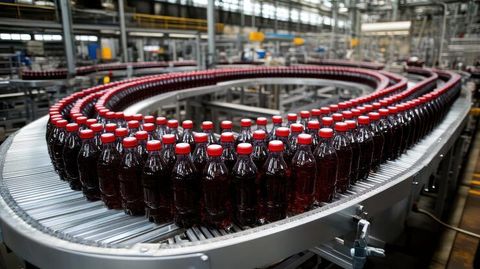
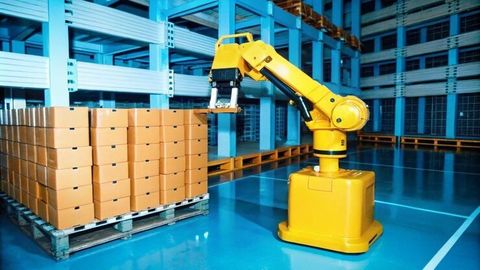
Factory automation is found in many manufacturing activities, including assembly, packaging, material handling, machining, inspection, welding, painting, filling, sorting, and palletizing.
The level of automation can range from a single automated machine to an integrated production line containing robots, conveyors, inspection equipment, controllers, and centralized monitoring systems.
Importance
Factory automation matters because modern manufacturing processes often involve large production volumes, repeated operations, strict process requirements, and demanding workplace conditions. Automation can provide a structured way to control these activities while allowing production personnel to focus on supervision, maintenance, quality checks, and process decisions.
Automation can also support consistent machine operation. For example, a controller can execute the same programmed sequence repeatedly, while sensors can identify whether a machine has reached a specified position or whether a process condition has changed.
Problems Automation Can Address
Manufacturing facilities may face challenges involving repetitive work, equipment coordination, process variation, material movement, inspection, and production monitoring. Automation technologies can address some of these challenges through programmed control and real-time measurements.
Common applications include:
- Repeating assembly movements
- Moving materials between production stages
- Monitoring temperature, pressure, position, or speed
- Detecting objects or product defects
- Controlling motors and valves
- Recording production information
- Coordinating multiple machines
- Supporting workplace safety functions
Automation does not eliminate operational risks. Poor system design, incorrect programming, inadequate maintenance, network problems, or inappropriate sensor placement can introduce new risks.
People and Automation
People remain important in automated factories. Engineers design and integrate systems, operators monitor equipment, technicians maintain machinery, and safety personnel establish procedures and controls.
Human involvement is particularly important when an automated system encounters conditions outside its programmed operating range. Emergency procedures, maintenance activities, system configuration, and troubleshooting also require appropriate human oversight.
Recent Updates
From 2024 through 2026, factory automation has continued moving toward connected, data-driven, and flexible manufacturing systems. Artificial intelligence, industrial Internet of Things technologies, machine vision, collaborative robotics, edge computing, and digital twins are increasingly discussed as components of modern automation architectures.
Robotics and Collaborative Systems
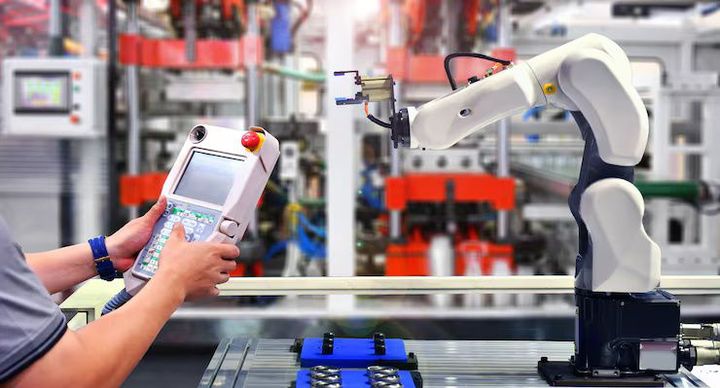
Industrial robots are widely used for tasks such as welding, assembly, material handling, packaging, and palletizing. Collaborative robots, often called cobots, are designed for applications where humans and robots may operate in closer proximity under defined safety conditions.
The International Federation of Robotics has reported continued adoption of industrial robots across manufacturing industries. Robot systems increasingly incorporate sensors, vision technologies, software integration, and data connectivity.
The important distinction is that a collaborative robot does not automatically make an entire application safe for unrestricted human interaction. The complete application, including the robot, tooling, workpiece, speed, workspace, and surrounding equipment, must be assessed.
Industrial Sensors and Machine Vision
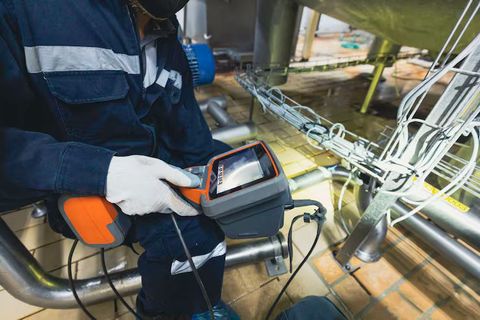
Sensors remain a central part of factory automation. Modern systems can measure position, temperature, pressure, flow, vibration, proximity, force, level, and other process variables.
Machine vision systems can inspect objects using cameras and image-processing software. These systems may identify dimensions, surface conditions, component orientation, missing parts, or other defined characteristics.
Software and Connected Automation
Factory automation software increasingly connects machine-level information with higher-level monitoring and data systems. Supervisory control and data acquisition systems, manufacturing execution systems, industrial databases, analytics platforms, and industrial communication protocols can operate at different levels of a manufacturing environment.
Edge computing can process some data closer to the machines rather than sending every measurement to a distant system. Digital twins can also represent physical equipment or processes digitally, supporting simulation, monitoring, and analysis depending on the implementation.
Artificial Intelligence in Automation
Artificial intelligence can be applied to areas such as visual inspection, predictive analysis, process optimization, anomaly detection, and production planning. However, AI-based functions require appropriate data, validation, monitoring, and defined operating boundaries.
AI should therefore be treated as one component within an automation architecture rather than as a replacement for fundamental control engineering and safety systems.
Laws or Policies
Factory automation is influenced by workplace safety laws, machinery requirements, electrical standards, and technical standards. The exact requirements depend on the country, industry, machine type, workplace, and automation configuration.
In India, occupational safety requirements are addressed through the Occupational Safety, Health and Working Conditions Code, 2020 and associated rules and implementation frameworks. The Ministry of Labour and Employment provides information and official materials relating to the Code and occupational safety requirements.
The Bureau of Indian Standards develops Indian Standards covering machinery safety, electrical equipment, industrial systems, and related technical subjects. Applicable standards depend on the equipment and application.
Internationally, standards from organizations such as the International Organization for Standardization and International Electrotechnical Commission are widely referenced in machinery and automation safety. Examples include standards addressing safety-related control systems, machinery risk assessment, emergency stops, industrial robot safety, and electrical equipment of machines.
Factory Automation Safety Factors
Safety planning should consider the entire automated system rather than an individual machine component. Important factors include:
- Risk assessment for normal operation and foreseeable misuse
- Guarding around hazardous moving equipment
- Emergency stopping arrangements
- Safety interlocks and protective devices
- Safe access for maintenance
- Lockout and isolation procedures
- Electrical safety
- Robot and conveyor movement
- Unexpected machine restart
- Operator training and instructions
- Periodic inspection and maintenance
Safety-related control functions should be designed according to the applicable standards and risk assessment for the particular installation.
Tools and Resources
Several technical resources can help readers understand factory automation and its major components.
Programmable Logic Controllers
PLC programming environments are used to configure industrial controllers. Common programming approaches include ladder logic, function block diagrams, structured text, and sequential function charts.
PLC documentation can help explain inputs, outputs, timers, counters, communication functions, diagnostics, and control sequences.
Industrial Sensors
Sensor datasheets provide information about measurement range, accuracy, response time, environmental limits, electrical characteristics, and installation requirements. These specifications are important when determining whether a sensor is appropriate for a particular application.
Industrial Communication Resources
Industrial automation systems can use communication technologies such as Ethernet-based industrial protocols, fieldbus systems, serial communication, and wireless networks. Technical documentation helps explain addressing, data structures, network architecture, and device compatibility.
Automation Standards and Guidance
Useful resources include:
- Bureau of Indian Standards resources for applicable Indian Standards
- ISO publications concerning industrial automation and machinery safety
- IEC standards concerning electrical and control-system requirements
- International Federation of Robotics information on industrial robotics
- Manufacturer manuals and technical documentation for specific automation equipment
- Workplace risk-assessment templates and machine safety checklists
A practical factory automation assessment may record the equipment involved, control functions, sensors, hazards, protective measures, maintenance requirements, and applicable standards.
| Automation element | Typical function | Example technologies |
|---|---|---|
| Sensor | Measures a process condition | Proximity, temperature, pressure |
| Controller | Processes inputs and controls outputs | PLC, industrial controller |
| Actuator | Creates physical movement | Motor, valve, pneumatic cylinder |
| Robot | Performs programmed movement | Industrial robot, cobot |
| HMI | Provides operator interface | Touchscreen, control panel |
| SCADA | Monitors and records processes | Supervisory software |
| Network | Transfers information | Industrial Ethernet, fieldbus |
| Vision system | Performs image-based inspection | Camera and vision software |
| Safety system | Controls defined hazardous conditions | Safety PLC, interlock, light curtain |
FAQs
What is factory automation?
Factory automation is the use of control systems, machines, sensors, software, robotics, and related technologies to perform or coordinate manufacturing activities with limited manual intervention.
What are the main components of factory automation?
The main components can include sensors, programmable logic controllers, actuators, motors, robots, human-machine interfaces, industrial networks, safety systems, machine vision equipment, and monitoring software.
How are robotics used in factory automation?
Robots can perform programmed tasks such as assembly, welding, packaging, material handling, inspection, and palletizing. Their application depends on the robot design, tooling, workpiece, operating environment, and safety requirements.
Why are sensors important in factory automation?
Sensors provide information about physical conditions such as position, temperature, pressure, speed, level, proximity, and force. Controllers can use this information to make programmed control decisions.
What safety factors should be considered in factory automation?
Important factors include machine guarding, emergency stopping, risk assessment, safety interlocks, electrical protection, safe maintenance procedures, unexpected restart prevention, robot movement, operator training, and applicable safety standards.
Conclusion
Factory automation combines machines, controllers, sensors, robotics, software, communication networks, and safety systems to coordinate manufacturing processes. Modern developments increasingly connect automation equipment with machine vision, industrial data systems, AI, edge computing, and digital technologies. Safety remains a fundamental part of automation design because automated equipment can create mechanical, electrical, thermal, and other hazards. The specific technologies, standards, and safety requirements depend on the equipment, workplace, industry, and applicable regulations.