Mobile cranes are lifting machines designed to move heavy loads across construction sites, industrial facilities, and infrastructure projects. Unlike stationary cranes, they are mounted on vehicles or movable platforms, allowing them to travel between locations while carrying lifting equipment. This mobility allows operators to position the crane where lifting tasks are required without permanent installation.
A guide to mobile cranes often explains how these machines evolved from early mechanical lifting devices used in ancient construction. Over time, engineering developments introduced hydraulic systems, telescopic booms, and improved vehicle stability. These changes made mobile cranes capable of handling larger loads while remaining transportable.
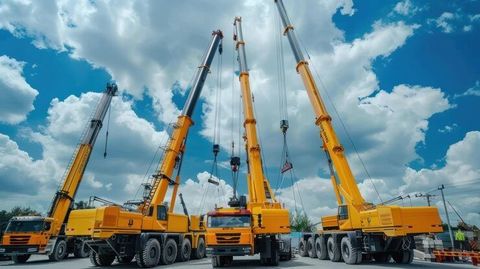
Today, mobile cranes are commonly seen in construction, bridge maintenance, equipment installation, and emergency recovery operations. Their design allows lifting tasks to be performed in areas where fixed cranes are impractical or unavailable. Understanding mobile crane types, working principles, and operational knowledge helps readers recognize how these machines function and where they are used.
Mobile cranes rely on several interconnected components, including a rotating upper structure, extendable boom, counterweights, and stabilizing outriggers. These elements work together to lift, move, and place heavy materials safely. A basic understanding of these systems provides insight into the engineering behind modern lifting operations.
Importance
Mobile cranes play an important role in modern construction and infrastructure development. Many projects involve moving large structural components, machinery, or building materials that cannot be handled manually. Mobile cranes provide a practical method for lifting and positioning such loads efficiently.
Several industries depend on mobile crane operations. Construction companies use them to lift steel beams, concrete panels, and building materials. Infrastructure projects rely on them for bridge assembly, utility installations, and road development. Energy facilities, shipyards, and manufacturing plants also use mobile cranes during equipment installation or maintenance activities.
Understanding how mobile cranes operate can help improve awareness of safety and operational planning. Lifting operations require coordination between operators, ground personnel, and engineers. Proper operational knowledge helps reduce risks associated with heavy lifting.
Another reason mobile cranes remain important is their flexibility. Because they are mounted on wheels or specialized carriers, they can move between different work sites. This mobility allows them to support temporary or short-term lifting tasks without requiring permanent structures.
The table below summarizes common types of mobile cranes and their typical applications.
| Mobile Crane Type | Key Characteristics | Typical Applications |
|---|---|---|
| Truck-mounted crane | Mounted on a standard truck chassis | Construction sites, material handling |
| Rough terrain crane | Large tires and strong suspension | Off-road construction areas |
| All-terrain crane | Combines road travel with off-road capability | Infrastructure and large projects |
| Crawler crane | Mounted on tracks for stability | Heavy lifting on large construction sites |
| Carry deck crane | Compact design with rotating boom | Industrial yards and plant maintenance |
These crane types differ in mobility, lifting capacity, and terrain capability. Each design supports different operational environments.
Recent Updates
From 2024 to 2026, developments in mobile crane technology have focused on safety systems, digital monitoring, and energy efficiency. Modern cranes increasingly include electronic load monitoring systems that help operators track lifting limits in real time. These systems provide visual and audio alerts when a lift approaches safety thresholds.
Another recent trend involves telematics and remote diagnostics. Many mobile cranes now transmit operational data to digital platforms. Engineers and maintenance teams can review equipment performance, track usage hours, and monitor system health remotely. This information helps identify mechanical issues earlier and supports preventive maintenance planning.
Hydraulic systems have also improved during recent years. Advanced hydraulic controls allow smoother boom movement and more precise load positioning. These systems enhance operational accuracy during complex lifting tasks.
Environmental considerations are also influencing crane design. Some manufacturers have introduced hybrid or electrically assisted crane systems intended to reduce fuel consumption and emissions during lifting operations. These developments reflect broader changes in construction equipment technology.
Training tools have also evolved. Virtual simulation programs now help operators practice lifting scenarios in controlled digital environments. Such systems allow trainees to understand crane controls and safety procedures before working with real equipment.
Laws or Policies
Mobile crane operation is regulated by safety standards and equipment guidelines in many countries. These regulations focus on protecting workers, equipment, and surrounding environments during lifting operations.
In the United States, crane operation safety is guided by regulations from the Occupational Safety and Health Administration. These regulations define training requirements, inspection procedures, and safe lifting practices. Operators must understand crane capacity charts and maintain safe distances from power lines and other hazards.
In Europe, mobile crane safety standards are influenced by guidelines from the European Committee for Standardization. These standards establish technical requirements for crane design, load handling systems, and operator safety measures.
Many countries also follow international recommendations from the International Organization for Standardization. ISO standards help create consistent guidelines for crane design, testing, and operational safety.
Regulations generally focus on several key areas:
- Equipment inspection requirements: cranes must undergo routine inspections to confirm structural integrity and mechanical reliability.
- Operator training requirements: operators are expected to understand crane controls, load limits, and emergency procedures.
- Load handling guidelines: lifting loads must remain within the crane’s rated capacity and follow approved lifting methods.
- Site safety considerations: construction sites must maintain clear communication and stable ground conditions during lifting activities.
These regulatory frameworks help ensure mobile cranes operate safely across different industries.
Tools and Resources
Several tools and digital resources support learning and operational planning related to mobile cranes. These resources provide technical information, safety guidance, and engineering references for crane operators and project planners.
One commonly used resource is equipment documentation from crane manufacturers. These manuals include diagrams of crane components, explanations of hydraulic systems, and instructions for safe operation. Operators use these documents to understand machine controls and maintenance procedures.
Online training platforms also provide educational materials about lifting operations. Many organizations publish safety guidelines, training modules, and instructional videos covering crane operation basics.
Engineering calculators and digital planning tools help estimate lifting capacity and load distribution. These tools assist engineers when planning crane placement and determining suitable lifting configurations.
Common resources used in crane-related learning include:
- Technical manuals explaining crane components and hydraulic systems
- Digital load calculation tools used during lift planning
- Training simulators for crane operation practice
- Safety documentation from regulatory organizations
- Equipment inspection checklists used during routine evaluations
Industry organizations also publish research papers and technical standards describing crane design and safety improvements. These materials contribute to broader operational knowledge within the construction and engineering sectors.
FAQs
What are the main types of mobile cranes?
Common types include truck-mounted cranes, rough terrain cranes, all-terrain cranes, crawler cranes, and carry deck cranes. Each type is designed for different environments and lifting conditions.
How do mobile cranes work?
Mobile cranes operate using hydraulic systems, telescopic booms, and counterweights. The hydraulic system controls boom movement, while the counterweight balances the load during lifting operations.
Why are mobile cranes important in construction?
Mobile cranes help move heavy materials such as steel beams, equipment, and structural components. Their mobility allows them to perform lifting tasks in locations where fixed cranes cannot be installed.
What safety factors are considered in mobile crane operations?
Important safety considerations include load capacity limits, ground stability, crane inspections, and operator training. Proper planning helps reduce risks associated with heavy lifting.
What knowledge is important in a guide to mobile cranes?
A guide to mobile cranes typically explains crane types, working principles, key components, and safety procedures. Understanding these elements helps readers learn how cranes function in construction and industrial environments.
Conclusion
Mobile cranes are essential machines used in construction, infrastructure development, and industrial operations. Their mobility allows heavy lifting tasks to be performed in locations where permanent cranes are not practical. Understanding the different mobile crane types, working principles, and operational knowledge provides insight into how these machines function safely. As technology evolves, improvements in digital monitoring, hydraulic systems, and training tools continue to influence crane operation and safety practices.