Homogenizer Machines: A Comprehensive Guide to Functions and Industrial Applications
Homogenizer machines are widely used in modern industries to create uniform mixtures by breaking down particles and distributing them evenly throughout a liquid. The concept of homogenization dates back to early food processing methods, where consistent texture and stability were necessary for products like milk and cream. Over time, this process has evolved into a precise mechanical technique applied across many sectors.
In simple terms, a homogenizer works by applying pressure, force, or mechanical energy to reduce particle size and ensure even dispersion. This process improves consistency, stability, and overall product quality. Today, homogenizer machines are found in industries such as food and beverage, pharmaceuticals, cosmetics, and chemical manufacturing.
Understanding how homogenizer machines function and where they are used helps explain their importance in everyday products, from packaged foods to personal care items.
Importance
Homogenizer machines play a key role in maintaining product consistency and safety. Many products used daily rely on uniform mixtures to function properly or remain stable over time. Without homogenization, liquids and particles may separate, leading to uneven textures or reduced effectiveness.
These machines address several common challenges. For example, in the food industry, they help prevent separation in dairy products, ensuring a smooth texture. In pharmaceuticals, homogenization supports uniform distribution of active ingredients, which is essential for consistent dosage. In cosmetics, it ensures creams and lotions remain stable and visually appealing.
Homogenizer machines also contribute to efficiency in production processes. By improving the uniformity of mixtures, manufacturers can reduce waste and maintain consistent quality across batches. This has practical implications for consumers, who expect reliability in the products they use.
Recent Updates
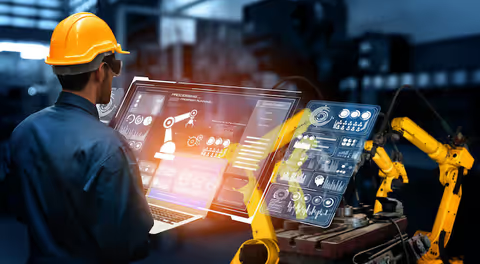
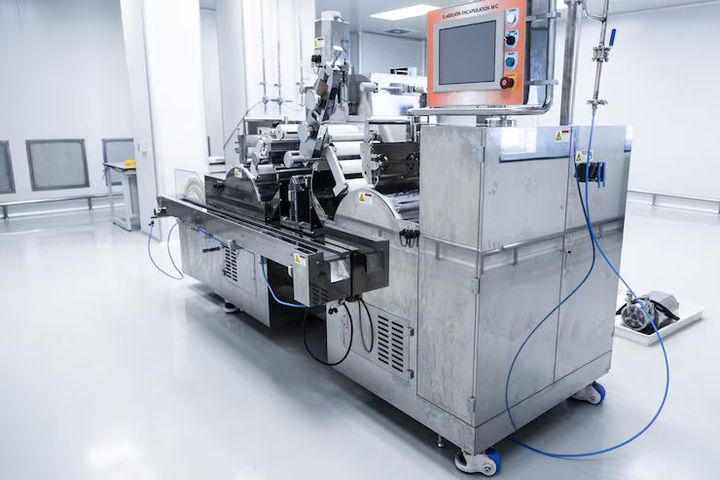
Recent developments in homogenizer machines focus on improving energy efficiency, automation, and precision. Modern systems increasingly incorporate digital controls that allow operators to monitor pressure levels, temperature, and flow rates in real time. These features help maintain consistent processing conditions and reduce variability.
Another trend is the integration of smart monitoring systems. These systems can detect changes in performance and provide alerts for maintenance needs, helping reduce downtime. Additionally, there is growing attention to environmentally conscious designs, with manufacturers working to reduce energy consumption and optimize resource use.
Compact and modular homogenizer machines are also becoming more common. These designs are suitable for facilities with limited space and can be adapted to different production requirements. Overall, the trend is toward more flexible, efficient, and digitally controlled equipment.
Laws or Policies
The use of homogenizer machines is influenced by various regulations depending on the industry and country. In India, for example, food processing equipment must comply with standards set by the Food Safety and Standards Authority of India (FSSAI). These regulations ensure that equipment used in food production maintains hygiene and does not contaminate products.
In the pharmaceutical sector, homogenizer machines must meet guidelines outlined by regulatory bodies such as the Central Drugs Standard Control Organization (CDSCO). These rules focus on maintaining product quality, consistency, and safety during manufacturing.
Environmental regulations also play a role. Industries using homogenizer machines may need to follow pollution control norms related to waste management and energy usage. Compliance with these rules helps ensure safe and responsible industrial operations.
Tools and Resources
Several tools and resources can help individuals and organizations understand and manage homogenizer machines effectively. These include technical manuals, simulation software, and industry guidelines.
Some commonly used resources include:
- Equipment manuals: Provide detailed instructions on operation, maintenance, and troubleshooting.
- Process simulation tools: Help model how homogenization affects different materials and conditions.
- Industry standards documents: Outline safety and quality requirements for various applications.
- Training modules: Offer structured learning on machine handling and process optimization.
Below is a simple comparison table of common types of homogenizer machines and their typical applications:
| Type of Homogenizer Machine | Working Principle | Common Applications |
|---|---|---|
| High-pressure homogenizer | Forces liquid through narrow gaps | Dairy processing, pharmaceuticals |
| Ultrasonic homogenizer | Uses sound waves to break particles | Laboratory research, chemicals |
| Mechanical homogenizer | Uses blades or rotors | Cosmetics, food processing |
| Microfluidizer | Uses microchannels for uniform mixing | Biotechnology, advanced materials |
These tools and classifications help users select appropriate methods for specific needs and improve understanding of how homogenizer machines function in different contexts.
FAQs
What are homogenizer machines used for?
Homogenizer machines are used to create uniform mixtures by reducing particle size and evenly distributing components in liquids. They are commonly applied in food processing, pharmaceuticals, cosmetics, and chemical industries.
How do homogenizer machines improve product quality?
By ensuring consistent particle distribution, homogenizer machines help maintain texture, stability, and effectiveness. This reduces separation and enhances the overall uniformity of products.
Where are homogenizer machines commonly applied in industry?
Homogenizer machines are widely used in dairy production, medicine manufacturing, personal care product development, and chemical processing. Their applications vary depending on the required level of uniformity.
Are homogenizer machines energy-intensive?
Energy usage depends on the type and scale of the machine. Modern homogenizer machines are designed to improve efficiency, with advanced controls that help manage power consumption effectively.
What is the difference between high-pressure and ultrasonic homogenizer machines?
High-pressure homogenizer machines use mechanical force to push liquids through narrow spaces, while ultrasonic homogenizer machines rely on sound waves to break down particles. Each method is suited to different materials and applications.
Conclusion
Homogenizer machines are essential tools for creating stable and uniform mixtures across multiple industries. Their ability to improve consistency and product quality makes them a key part of modern manufacturing processes. Advances in technology continue to enhance their efficiency and adaptability. Understanding their functions and applications helps clarify their role in everyday products and industrial systems.