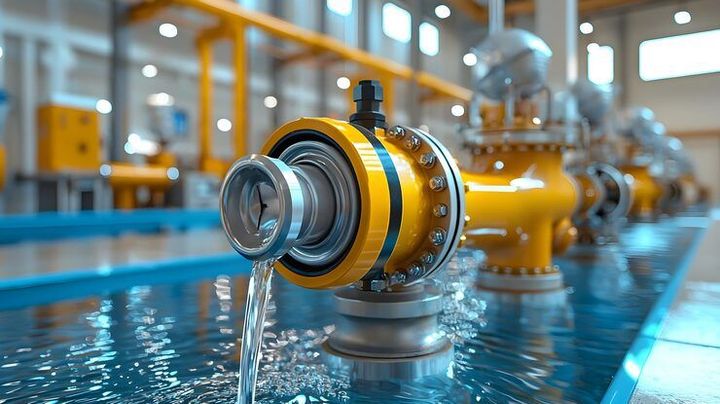
Hydraulic systems are widely used across industries because liquids are nearly incompressible. This property allows hydraulic equipment to transmit large forces with minimal energy loss. As a result, hydraulic flow equipment plays a critical role in sectors like manufacturing, construction, aerospace, agriculture, and transportation.
These systems are designed to regulate pressure, control fluid direction, and manage the speed of mechanical movement efficiently.
Key Components of Hydraulic Flow Equipment
Common hydraulic components work together to ensure smooth and controlled operations:
-
Hydraulic pumps
-
Flow control valves
-
Pressure regulators
-
Hydraulic cylinders
-
Accumulators
-
Hydraulic motors
-
Filtration units
Each component contributes to maintaining system balance and ensuring precise mechanical motion.
Real-World Applications
Hydraulic flow systems are essential in many real-world applications. In construction machinery like excavators, they control arms, buckets, and lifting systems. In industrial automation, they enable precise movement in robotic and manufacturing tools.
Hydraulic equipment provides reliable force transmission where mechanical or electrical systems alone may not be sufficient.
Why Hydraulic Flow Equipment Matters Today
Hydraulic systems remain relevant due to their high power density and reliability. They can generate strong force in compact systems, making them ideal for heavy-duty operations.
Key Drivers of Demand
Several factors contribute to the continued importance of hydraulic technology:
-
Increased automation in manufacturing
-
Expansion of global infrastructure projects
-
Growth in renewable energy equipment production
-
Rising demand for high-performance machinery
Industries That Rely on Hydraulic Systems
Hydraulic equipment is widely used across multiple industries:
-
Construction and earthmoving
-
Aerospace manufacturing
-
Automotive production
-
Agricultural machinery
-
Mining operations
-
Industrial robotics
Operational Benefits
Hydraulic systems help solve several industrial challenges:
-
Efficient power transmission for heavy loads
-
Smooth and controlled motion
-
Precise positioning of components
-
Reduced mechanical wear
Modern systems also integrate sensors to monitor pressure, temperature, and fluid flow. These systems support predictive maintenance and improve operational efficiency.
Recent Developments in Hydraulic Technology
Recent advancements have focused on automation, efficiency, and digital integration. In 2025, many systems began incorporating Industrial Internet of Things (IIoT) technologies for real-time monitoring.
Key Trends (2024–2025)
-
Smart hydraulic sensors
-
Integration with automation platforms
-
Energy-efficient hydraulic pumps
-
Environmentally friendly hydraulic fluids
-
Predictive maintenance software
Emerging Innovations
Hybrid electro-hydraulic systems combine electronic controls with traditional hydraulics. This improves responsiveness and reduces energy consumption.
Manufacturers are also developing biodegradable hydraulic fluids to reduce environmental impact. Advanced flow control valves now adjust automatically based on real-time data, improving efficiency and reducing maintenance needs.
Regulations and Policies Affecting Hydraulic Equipment
Hydraulic systems must comply with safety, environmental, and engineering standards. These regulations ensure safe operation and minimize environmental impact.
In the United States, OSHA sets workplace safety standards. In the European Union, the Machinery Directive and CE marking regulations apply to industrial equipment.
Key Standards and Regulations
| Regulation or Standard | Purpose |
|---|
| ISO 4413 | Safety requirements for hydraulic systems |
| ISO 9001 | Quality management in manufacturing |
| ISO 14001 | Environmental management standards |
| Machinery Directive (EU) | Industrial equipment safety |
Governments also promote energy-efficient systems to reduce industrial energy consumption.
Tools and Resources for Hydraulic Flow Systems
Engineers use various tools to design, analyze, and maintain hydraulic systems. These tools help ensure accuracy, efficiency, and reliability.
Common Tools Used
-
Hydraulic simulation software
-
Flow rate calculators
-
CAD design platforms
-
Pressure monitoring sensors
-
Digital maintenance dashboards
-
Fluid analysis tools
Hydraulic Components and Functions
| Hydraulic Component | Primary Function |
|---|
| Hydraulic Pump | Converts mechanical energy into fluid pressure |
| Flow Control Valve | Regulates fluid flow rate |
| Pressure Relief Valve | Prevents excessive pressure |
| Hydraulic Cylinder | Produces linear motion |
| Hydraulic Motor | Produces rotational motion |
Fluid analysis tools measure contamination, viscosity, and temperature. These insights help prevent system failures and extend equipment lifespan.
Frequently Asked Questions About Hydraulic Flow Equipment
What is hydraulic flow equipment used for?
Hydraulic flow equipment controls fluid movement and pressure in machinery. It enables systems to generate powerful force and motion.
How does a hydraulic system transmit power?
Hydraulic systems use pressurized fluid to transmit power. Pumps generate pressure, and valves direct fluid to cylinders or motors.
What industries use hydraulic systems?
Industries such as construction, manufacturing, agriculture, aerospace, and mining depend heavily on hydraulic systems.
What affects hydraulic efficiency?
Efficiency depends on fluid quality, system pressure, pump performance, valve accuracy, and maintenance practices.
What is predictive maintenance?
Predictive maintenance uses sensors and monitoring tools to detect issues early. This helps prevent unexpected system failures.
Additional Insights Into Hydraulic System Performance
Hydraulic systems operate based on Pascal’s Law. This principle states that pressure applied to a confined fluid is transmitted equally in all directions.
Modern systems often operate above 3,000 PSI in industrial environments. Advanced systems in aerospace and heavy construction may reach even higher pressures.
Benefits of Hydraulic Technology
| Feature | Benefit |
|---|
| High power density | Strong force in compact systems |
| Smooth motion control | Precise positioning |
| Flexible design | Adaptable to multiple industries |
| Reliable performance | Suitable for heavy-duty use |
These benefits demonstrate how hydraulic systems balance performance, efficiency, and adaptability.
Conclusion
Hydraulic flow equipment remains essential in modern industrial engineering. It enables powerful and precise operations across a wide range of industries.
Advancements in automation, smart sensors, and eco-friendly fluids have improved system performance. Digital monitoring and predictive maintenance have further enhanced efficiency and reliability.
As industries continue evolving toward automation and smart manufacturing, hydraulic systems will remain a key component of industrial infrastructure.