Hydraulic Power Press Guide: Explore Types, Components, Capacity, Applications, and Safety Factors
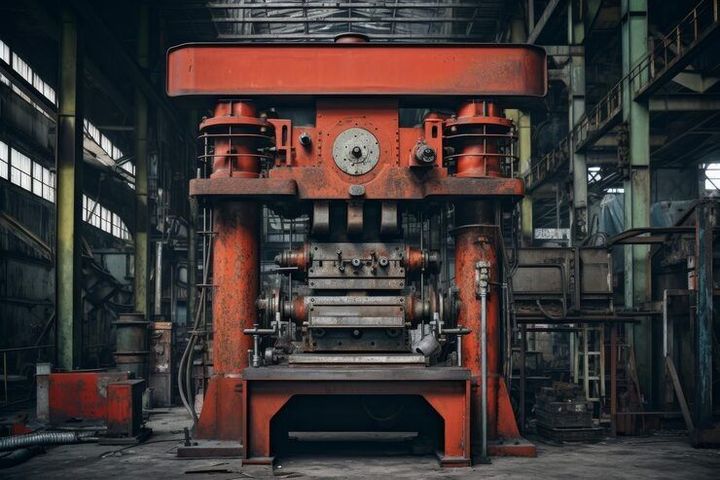
A hydraulic power press is a machine that uses hydraulic pressure to generate controlled force for shaping, forming, bending, punching, pressing, and other manufacturing operations. Unlike a mechanical press that commonly relies on a flywheel and crank mechanism, a hydraulic press uses pressurized fluid to move a piston or ram. This arrangement allows force and movement to be controlled through the hydraulic system.
The basic idea comes from hydraulic principles in which pressure applied to a confined fluid is transmitted throughout the fluid. Industrial hydraulic presses developed from this principle and became useful for applications where substantial force, controlled movement, and adjustable pressure are required.
Today, hydraulic power presses are found in metalworking, automotive manufacturing, fabrication, appliance production, plastics processing, and other industrial environments. Their size can range from relatively compact workshop equipment to large systems designed for heavy forming operations.
How a Hydraulic Power Press Works
A hydraulic power press normally contains a hydraulic pump, reservoir, valves, cylinders, piping or hoses, and a control system. The pump moves hydraulic fluid from the reservoir into the circuit, while valves regulate its direction and flow.
When pressurized fluid enters the cylinder, it acts on the piston area and creates a force that moves the ram. The ram then applies force to a tool, die, or workpiece. The relationship can be expressed generally as:
Force = Pressure × Effective Piston Area
For example, increasing hydraulic pressure or using a cylinder with a larger effective piston area can increase the force generated by the cylinder, provided the system and components are designed for those conditions.
Main Types of Hydraulic Power Presses
Hydraulic power presses can be classified according to their frame design, cylinder arrangement, application, and method of operation. Common configurations include:
- C-frame presses: Have an open front that provides relatively convenient access to the working area.
- H-frame presses: Use a rigid frame structure and are commonly associated with pressing and forming operations.
- Four-column presses: Use four vertical columns to guide the moving platen and distribute loads.
- CNC or programmable hydraulic presses: Incorporate electronic controls for repeatable movement and process settings.
- Workshop hydraulic presses: Generally used for pressing, straightening, assembly, and maintenance-related operations.
The appropriate configuration depends on the workpiece, required force, available space, tooling, production volume, and process requirements.
Importance
Hydraulic power presses are important because many manufacturing processes require controlled force rather than simple cutting or machining. A press can shape or deform a workpiece by applying force through a die, punch, platen, or specialized tooling.
These machines are used in industries where materials must be formed into specific shapes. They can also be used for tasks such as component assembly, straightening, compression, and removal or installation of tightly fitted parts.
Why Capacity Matters
Press capacity refers to the maximum force that a press is designed to generate under specified conditions. It is commonly expressed in tons or kilonewtons.
Capacity must correspond to the intended operation and tooling. A press with insufficient capacity may not complete a forming operation correctly, while operating beyond the machine's rated limits can create excessive loads on the frame, hydraulic system, tooling, and workpiece.
Capacity selection also involves more than looking at one force figure. Factors such as material strength, thickness, shape, die geometry, stroke, working area, and required pressure can affect the actual requirements.
Common Applications
Hydraulic power presses are used for many operations, including:
- Sheet-metal forming
- Bending
- Deep drawing
- Punching and blanking
- Compression molding
- Component assembly
- Straightening
- Bearing installation and removal
- Metal forming
- Powder compacting
- Plastic and composite processing
The same press may not be suitable for every operation. Tooling and control arrangements must be appropriate for the specific process.
Typical Capacity Ranges
Hydraulic presses are available in many capacity ranges. The following table provides a general classification rather than a specification for a particular machine.
| Press category | Approximate force range | Common applications |
|---|---|---|
| Small hydraulic press | Below 100 tons | Workshop pressing and light forming |
| Medium hydraulic press | 100–500 tons | Fabrication and component forming |
| Large hydraulic press | 500–2,000 tons | Heavy forming and industrial production |
| Very large press | Above 2,000 tons | Specialized heavy forming operations |
Actual capacity classifications vary among manufacturers and industries. A machine's rated capacity should always be checked against its technical documentation.
Recent Updates
From 2024 through 2026, hydraulic power press technology has continued to develop alongside broader trends in industrial automation, energy management, digital monitoring, and workplace safety.
One noticeable direction is the integration of electronic controls with hydraulic systems. Programmable controllers can manage ram position, pressure, stroke, dwell time, and operating sequences. This can make repetitive operations more consistent when the system is properly configured.
Automation and Digital Monitoring
Modern press systems may incorporate sensors that monitor pressure, position, temperature, hydraulic conditions, and other operating parameters. Data from these sensors can be displayed through human-machine interfaces or incorporated into manufacturing monitoring systems.
Some automated installations can communicate with wider factory-control systems. This allows press operations to become part of coordinated production lines rather than operating as isolated machines.
Energy and Hydraulic Efficiency
Energy efficiency is another area of development. Hydraulic systems can consume significant energy when pumps operate continuously or when pressure is maintained unnecessarily. Variable-speed drives, improved pump technology, optimized hydraulic circuits, and electronically controlled systems can help manage energy use.
The actual energy performance depends on machine design, operating cycle, load, hydraulic components, and production conditions.
Safety Technology
Safety systems are also increasingly integrated into press controls. Depending on the machine, these can include two-hand controls, presence-sensing devices, emergency stops, safety interlocks, guarded working areas, and monitoring systems.
Modern safety design increasingly treats the press, tooling, controls, and surrounding workplace as one system rather than considering the machine alone.
Laws or Policies
In India, industrial hydraulic power presses are affected by workplace safety requirements, machinery regulations, and applicable standards. The exact requirements depend on the workplace, machine configuration, industry, and operation.
The Occupational Safety, Health and Working Conditions Code, 2020 provides a broader legislative framework concerning occupational safety and working conditions. Requirements relating to machinery, workplace safety, employee protection, and employer responsibilities may apply according to the circumstances of the establishment.
The Factories Act, 1948 has historically provided detailed provisions concerning fencing of machinery, precautions around dangerous machinery, and safe working practices. Organizations should verify which current statutory framework and state-level requirements apply to their particular workplace.
Machinery and Safety Standards
The Bureau of Indian Standards develops Indian Standards covering machinery safety, industrial equipment, electrical equipment, and related subjects. Relevant standards may address areas such as risk reduction, machine guarding, control systems, hydraulic equipment, and electrical safety.
International standards can also be relevant when equipment is designed or assessed according to international requirements. ISO 12100, for example, provides principles for machinery risk assessment and risk reduction.
Because requirements can differ according to equipment and workplace conditions, general information should not be treated as a substitute for the applicable legal requirements, technical standards, risk assessment, or manufacturer's documentation.
Tools and Resources
Several resources can help users understand hydraulic power presses and assess their operating requirements.
Capacity Calculators
Hydraulic force calculations can help explain the relationship between pressure and cylinder area. A basic calculation uses:
F = P × A
Where F represents force, P represents hydraulic pressure, and A represents the effective piston area.
Real systems can have additional factors, including mechanical losses, pressure limitations, cylinder configuration, and efficiency. Therefore, theoretical calculations should not be treated as the machine's actual rated capacity.
Hydraulic Circuit Diagrams
Hydraulic circuit diagrams show the relationships between pumps, reservoirs, valves, cylinders, filters, pressure controls, and other components. They are useful for understanding how fluid moves through the system.
Machine manuals normally provide diagrams specific to the equipment. These are more useful for maintenance or troubleshooting than generic diagrams because they correspond to the actual hydraulic configuration.
Maintenance Records
A maintenance record can document inspection and operating information such as:
- Hydraulic fluid condition
- Leakage observations
- Hose and fitting condition
- Pressure readings
- Filter condition
- Cylinder movement
- Valve operation
- Guard and interlock condition
- Emergency-stop operation
- Unusual noise or vibration
Regular documentation can help identify changes in machine behavior and support structured maintenance practices.
Safety and Technical Resources
Useful reference sources include the Bureau of Indian Standards, the Ministry of Labour and Employment, occupational safety publications, hydraulic equipment manuals, and relevant machinery-safety standards.
Training materials can also help operators understand machine controls, safe working distances, tooling requirements, emergency procedures, and the hazards associated with stored hydraulic energy.
FAQs
What is a hydraulic power press?
A hydraulic power press is a machine that uses pressurized hydraulic fluid to generate controlled force. The force is transferred through a hydraulic cylinder to a ram, platen, or tool used for pressing, forming, bending, or related operations.
How is hydraulic power press capacity measured?
Hydraulic power press capacity is commonly expressed in tons or kilonewtons. It represents the force the press is designed to generate under specified operating conditions. Capacity should be evaluated together with stroke, working area, tooling, material characteristics, and pressure limits.
What are the main hydraulic power press components?
The main components generally include a hydraulic reservoir, pump, motor, valves, hydraulic cylinder, piping or hoses, pressure controls, frame, ram or platen, and control system. Safety devices and sensors may also be incorporated.
What are hydraulic power presses used for?
Hydraulic power presses are used for forming, bending, deep drawing, punching, compression, straightening, assembly, bearing work, and other operations requiring controlled mechanical force.
What safety factors are important for a hydraulic power press?
Important safety factors include appropriate machine guarding, correct tooling, pressure and capacity limits, emergency-stop systems, safe controls, hydraulic-system inspection, protection from stored energy, operator training, and appropriate workplace procedures. A formal risk assessment should consider the complete machine and its intended operation.
Conclusion
A hydraulic power press converts hydraulic pressure into controlled mechanical force for forming, pressing, bending, assembly, and related industrial processes. Its capacity depends on hydraulic pressure, cylinder dimensions, machine design, and operating limitations, while its components work together to control force and movement. Recent developments have focused on automation, electronic monitoring, energy management, and integrated safety systems. Applicable Indian laws, standards, technical documentation, and workplace procedures provide the framework for understanding and operating these machines safely.