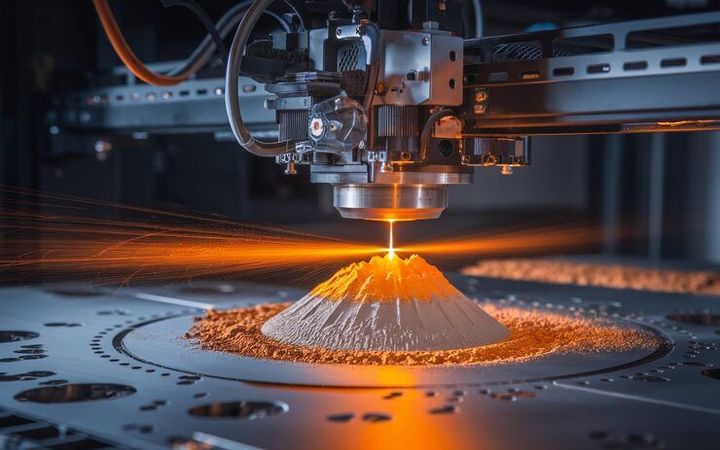
The technology was developed to address limitations in conventional production methods. Traditional processes often involve complex tooling, longer setup times, and material wastage. Industrial 3D printing emerged as a solution to produce complex shapes with high precision while reducing waste and improving efficiency.
It is commonly used in industries such as aerospace, automotive, healthcare, and electronics. Materials used in this process include metals, polymers, ceramics, and composites. The ability to create intricate designs without molds or specialized tools makes it highly adaptable for modern manufacturing needs.
Why Industrial 3D Printing Matters Today
Industrial 3D printing plays a significant role in modern manufacturing due to its flexibility and efficiency. It helps industries respond quickly to changing demands and enables innovation in product design.
Key reasons why this technology is important today include:
-
Reduced Material Waste: Additive processes use only the required material, making them more sustainable compared to subtractive methods.
-
Design Flexibility: Complex geometries that are difficult or impossible with traditional manufacturing can be easily created.
-
Faster Prototyping: Engineers can quickly produce prototypes for testing and validation.
-
Customization: Products can be tailored to specific requirements without redesigning entire production systems.
-
Supply Chain Efficiency: On-demand production reduces the need for large inventories and storage.
Industries such as healthcare benefit from customized implants, while aerospace companies use lightweight components to improve performance. This technology also supports digital manufacturing strategies, where designs are stored and produced as needed.
Below is a simple comparison of traditional manufacturing and industrial 3D printing:
| Feature |
Traditional Manufacturing |
Industrial 3D Printing |
| Material Usage |
High waste |
Minimal waste |
| Design Complexity |
Limited |
Highly flexible |
| Production Setup Time |
Longer |
Shorter |
| Customization |
Difficult |
Easy |
| Tooling Requirement |
Required |
Not required |
Recent Developments and Trends
Industrial 3D printing has seen rapid advancements over the past year, with improvements in speed, material capabilities, and integration with digital technologies.
Some notable trends include:
-
2025–2026: Expansion of Metal Printing
Metal additive manufacturing has gained traction in aerospace and automotive sectors. New alloys and improved printing techniques allow stronger and lighter components.
-
Integration with Artificial Intelligence
AI-driven design optimization is helping engineers create efficient structures, reducing material usage while maintaining strength.
-
Growth in Large-Scale Printing
Industries are adopting large-format 3D printers for construction and infrastructure applications. This includes printing building components and structural elements.
-
Sustainability Focus
Companies are exploring recyclable materials and energy-efficient processes to reduce environmental impact.
-
Automation and Smart Factories
Industrial 3D printing is increasingly integrated into automated production lines, supporting Industry 4.0 initiatives.
These developments indicate that additive manufacturing is transitioning from a prototyping tool to a core production technology.
Regulations and Policy Considerations
Industrial 3D printing is influenced by various regulations and standards to ensure safety, quality, and compliance. Governments and international organizations have introduced guidelines for its use across industries.
Some key policy areas include:
-
Quality Standards
Organizations such as ISO and ASTM have developed standards for additive manufacturing processes, materials, and testing methods. These ensure consistent quality and reliability.
-
Intellectual Property Protection
Digital designs used in 3D printing are subject to intellectual property laws. Proper licensing and protection are important to prevent unauthorized use.
-
Environmental Regulations
Governments encourage sustainable practices by regulating emissions, material usage, and waste management in manufacturing processes.
-
Industry-Specific Regulations
Sectors like healthcare and aerospace require strict certification for 3D-printed components to ensure safety and performance.
In countries like India, initiatives supporting advanced manufacturing and digital transformation encourage the adoption of technologies such as 3D printing. Policies related to innovation and research funding also contribute to its growth.
Useful Tools and Resources for Industrial 3D Printing
Several tools and platforms support industrial 3D printing, from design to production and analysis. These resources help engineers and manufacturers optimize their workflows.
Commonly used tools include:
-
CAD Software (Computer-Aided Design)
Used to create digital models for printing. Examples include advanced modeling platforms for engineering designs.
-
Slicing Software
Converts 3D models into instructions for printers by dividing them into layers.
-
Simulation Tools
Help predict performance, stress, and material behavior before printing.
-
Material Databases
Provide information on different materials, including strength, durability, and compatibility.
-
Cloud Manufacturing Platforms
Enable collaboration, data storage, and remote management of printing processes.
Below is a table summarizing key tool categories:
| Tool Type |
Purpose |
| CAD Software |
Design and modeling |
| Slicing Software |
Preparing models for printing |
| Simulation Tools |
Testing and optimization |
| Material Databases |
Selecting suitable materials |
| Cloud Platforms |
Managing and sharing production data |
These tools are essential for ensuring accuracy, efficiency, and scalability in industrial 3D printing workflows.
Frequently Asked Questions
What is industrial 3D printing used for?
Industrial 3D printing is used for producing prototypes, custom parts, and complex components in industries such as aerospace, healthcare, automotive, and manufacturing.
How is industrial 3D printing different from regular 3D printing?
Industrial 3D printing uses advanced machines, materials, and processes designed for large-scale production and high precision, while regular 3D printing is typically used for smaller, less complex tasks.
What materials are used in industrial 3D printing?
Common materials include metals, plastics, ceramics, and composite materials, depending on the application and required properties.
Is industrial 3D printing environmentally friendly?
It can be more sustainable than traditional manufacturing because it reduces material waste and supports efficient production methods, although energy consumption varies by process.
What industries benefit the most from this technology?
Industries such as aerospace, automotive, healthcare, and construction benefit significantly due to the ability to create customized and complex components.
Final Thoughts on Industrial 3D Printing
Industrial 3D printing has transformed the way products are designed and manufactured. By enabling efficient production, reducing waste, and supporting innovation, it has become a key part of modern manufacturing systems.
As technology continues to evolve, its role in digital manufacturing and automation is expected to grow. With advancements in materials, software, and integration, industrial 3D printing is likely to remain a critical tool for industries aiming to improve efficiency and adapt to changing demands.
Understanding its principles, applications, and regulations helps individuals and businesses stay informed about this rapidly developing field.