Industrial Adhesives Explained: Uses, Features & Industry Applications
Industrial adhesives have become an important part of modern manufacturing and engineering. They help join different materials together without relying only on mechanical fasteners such as screws, bolts, or rivets. From automobiles and aircraft to electronic devices and medical equipment, adhesives are used in countless products that people use every day.
As industries continue to develop lighter, stronger, and more energy-efficient products, adhesive technologies are also evolving. New formulations are designed to improve durability, environmental performance, and compatibility with advanced materials.
This article explains industrial adhesives, their importance, major applications, recent developments, regulatory considerations, useful resources, and answers to common questions in clear and simple language.
Understanding Industrial Adhesives
Industrial adhesives are specially formulated bonding materials designed to permanently or temporarily join two or more surfaces. Unlike ordinary household glues, industrial adhesives are engineered to perform under demanding conditions such as high temperatures, moisture, chemicals, vibration, and heavy loads.
These adhesives can bond a wide variety of materials including:
- Metals
- Plastics
- Glass
- Rubber
- Wood
- Composite materials
- Ceramics
- Fabrics
They are available in different forms depending on the intended application and manufacturing process.
Common Types of Industrial Adhesives
| Adhesive Type | Common Characteristics | Typical Applications |
|---|---|---|
| Epoxy | High strength and chemical resistance | Automotive, aerospace, machinery |
| Acrylic | Fast curing and durable | Metal fabrication and electronics |
| Polyurethane | Flexible and impact resistant | Construction and transportation |
| Silicone | Heat and moisture resistant | Electronics and sealing applications |
| Hot Melt | Quick bonding | Packaging and consumer goods |
| Cyanoacrylate | Rapid bonding for small components | Precision assembly |
Industrial adhesives exist because manufacturers need reliable bonding methods that reduce product weight, improve appearance, simplify assembly, and increase durability.
Why Industrial Adhesives Matter Today
Industrial adhesives play a major role across modern industries. As products become lighter and more advanced, traditional joining methods alone are often insufficient.
Supporting Modern Manufacturing
Many manufacturers now combine multiple materials within a single product. Adhesives make it possible to join materials that cannot easily be welded or mechanically fastened.
Improving Product Performance
Well-designed adhesive joints help distribute stress more evenly across bonded surfaces. This can improve structural integrity and reduce the likelihood of localized damage.
Enhancing Design Flexibility
Designers have greater freedom because adhesives allow smooth exterior surfaces without visible screws or bolts.
Increasing Efficiency
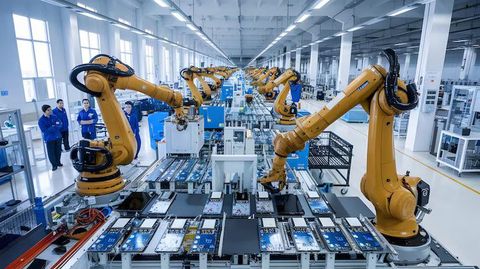
Modern adhesive technologies support automated manufacturing processes, enabling consistent application and reducing production complexity.
Industries That Commonly Use Industrial Adhesives
- Automotive manufacturing
- Aerospace engineering
- Construction
- Electronics manufacturing
- Medical device production
- Packaging industry
- Renewable energy equipment
- Furniture manufacturing
- Marine applications
- Rail transportation
Key Features of Industrial Adhesives
Industrial adhesives are selected based on the demands of each application.
Important features include:
- High bonding strength
- Chemical resistance
- Moisture resistance
- Heat resistance
- Vibration resistance
- Long-term durability
- Flexibility for dynamic loads
- Electrical insulation when required
- Lightweight bonding solutions
- Compatibility with automated manufacturing
Different industries prioritize different characteristics depending on operating conditions.
Industry Applications
Automotive Industry
Automotive manufacturers use adhesives to assemble body panels, interiors, windshields, batteries, and lightweight composite structures. Adhesives contribute to improved vehicle performance while supporting modern lightweight designs.
Aerospace Industry
Aircraft require bonding solutions that perform under extreme temperatures, pressure changes, and continuous vibration. Adhesives help reduce aircraft weight while maintaining structural performance.
Electronics Manufacturing
Electronic assemblies require precise adhesive application for securing components, thermal management, insulation, and environmental protection.
Construction Industry
Construction projects use adhesives for flooring, insulation, roofing systems, decorative panels, glazing, and structural applications.
Medical Equipment
Medical manufacturing uses specialized adhesives for disposable products, diagnostic equipment, wearable devices, and medical assemblies that require precision and reliability.
Packaging Industry
Packaging facilities rely on adhesives for carton sealing, labeling, flexible packaging, and product assembly while maintaining production speed.
Recent Updates in Industrial Adhesives
Industrial adhesive technology has continued to evolve throughout 2025.
Several important trends include:
Sustainability
Manufacturers are increasingly developing formulations with lower volatile organic compound (VOC) emissions and improved environmental performance.
Lightweight Manufacturing
Industries continue adopting adhesives that support lightweight materials such as aluminum, composites, and engineered plastics.
Smart Manufacturing
Automation systems increasingly incorporate precision adhesive dispensing equipment for consistent application during high-volume manufacturing.
Electric Vehicle Growth
The expansion of electric vehicle production has increased demand for adhesives used in battery assemblies, thermal management, and lightweight vehicle structures.
Improved Performance
Research continues to improve curing speed, bonding strength, temperature resistance, and long-term durability across industrial applications.
Laws and Policies
Industrial adhesives are subject to various regulations depending on the country and industry.
Common regulatory areas include:
Chemical Safety
Manufacturers must comply with regulations governing chemical composition, labeling, storage, and handling of industrial chemicals.
Environmental Regulations
Many countries regulate emissions from adhesives, particularly volatile organic compounds (VOCs), to reduce environmental impact.
Workplace Safety
Industrial facilities are expected to follow occupational health and safety practices for adhesive handling, ventilation, protective equipment, and employee training.
Product Standards
Certain industries, including aerospace, automotive, electronics, and healthcare, follow industry-specific standards for adhesive performance and quality assurance.
Waste Management
Many jurisdictions encourage responsible disposal and recycling practices for adhesive containers and related industrial waste.
Helpful Tools and Resources
Professionals working with industrial adhesives commonly use various resources to improve material selection and application.
Useful resources include:
- Material compatibility charts
- Adhesive selection guides
- Technical data sheets
- Safety data sheets
- Bond strength calculators
- Environmental compliance checklists
- Manufacturing process templates
- Surface preparation guides
- Quality inspection checklists
- Engineering design references
These resources help engineers, technicians, quality managers, and manufacturers make informed decisions throughout the product lifecycle.
Adhesive Selection Comparison
| Requirement | Recommended Adhesive Characteristic |
| High temperature | Heat resistant formulation |
| Outdoor exposure | UV and weather resistant |
| Heavy vibration | Flexible bonding |
| Chemical exposure | Chemical resistant adhesive |
| Fast production | Rapid curing adhesive |
| Lightweight structures | Structural bonding capability |
| Electrical insulation | Non-conductive formulation |
| Moist environments | Water resistant adhesive |
Frequently Asked Questions
What are industrial adhesives?
Industrial adhesives are specialized bonding materials designed for manufacturing, engineering, construction, and industrial assembly applications where strong, reliable bonds are required.
Which industries use industrial adhesives the most?
Automotive, aerospace, electronics, construction, healthcare, renewable energy, marine, furniture, and packaging industries are among the largest users of industrial adhesives.
Why are adhesives preferred over mechanical fasteners?
Adhesives can reduce product weight, distribute stress more evenly, improve appearance, bond different materials, and simplify manufacturing processes.
Are industrial adhesives environmentally regulated?
Yes. Many countries regulate adhesive composition, emissions, workplace safety, labeling, and environmental impact through chemical safety and environmental protection frameworks.
What factors determine adhesive selection?
Selection depends on bonded materials, operating temperature, moisture exposure, chemical resistance, curing requirements, mechanical loads, durability expectations, and manufacturing methods.
Conclusion
Industrial adhesives have become a vital part of modern manufacturing because they provide efficient, durable, and versatile bonding solutions across many industries. Their ability to join different materials while supporting lightweight designs, improved product performance, and advanced manufacturing processes has made them an important engineering technology.