Industrial Robotics Manufacturing Systems for Advanced Manufacturing
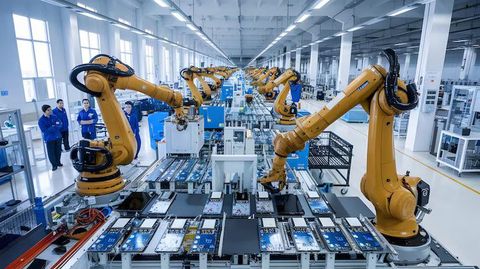
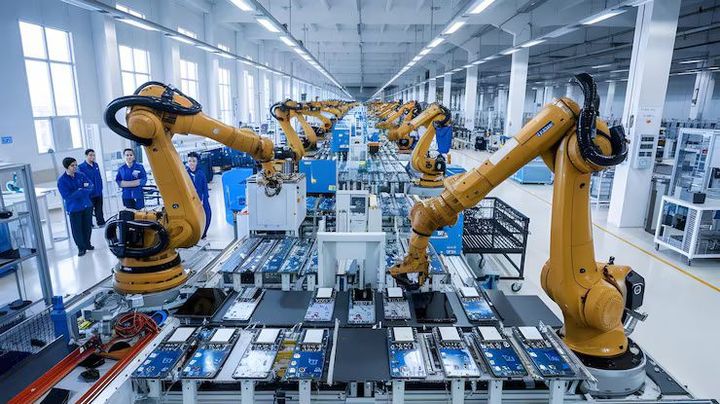
Industrial robotics systems are automated technologies designed to perform manufacturing tasks with controlled movement, repeatable accuracy, and programmed instructions. A typical system can include a robotic arm, end-of-arm tooling, sensors, controllers, machine vision, safety equipment, and industrial automation software.
The concept developed from the need to perform repetitive, physically demanding, hazardous, or highly precise manufacturing activities. Instead of relying entirely on manual movement, manufacturers can program robotic systems to carry out defined operations repeatedly.
Common applications include welding, painting, assembly, material handling, palletizing, machine tending, inspection, packaging, and component placement. More advanced systems can connect robots with programmable logic controllers, manufacturing execution platforms, industrial networks, and production data systems.
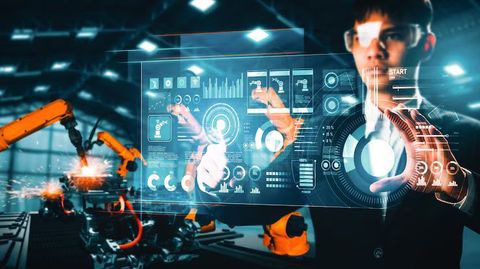
Industrial robotics is now closely connected with Industry 4.0 and smart manufacturing. Modern factories increasingly combine robotics with artificial intelligence, machine vision, Internet of Things technologies, digital twins, and data analytics.
This creates a manufacturing environment in which machines can collect information, respond to changing conditions, and communicate with other production equipment.
The basic structure of an industrial robot system can be understood through several important components:
- Robot manipulator: Provides controlled physical movement.
- Controller: Processes programmed instructions and coordinates motion.
- End-of-arm tooling: Performs the required manufacturing operation.
- Sensors: Detect position, force, temperature, distance, or other conditions.
- Machine vision: Helps identify objects, defects, positions, and orientation.
- Safety systems: Include guards, emergency stops, scanners, interlocks, and protective controls.
- Industrial software: Supports programming, monitoring, simulation, maintenance, and production analysis.
Together, these components create an integrated industrial automation system rather than an isolated robotic machine.
Why Industrial Robotics Matters in Advanced Manufacturing
Manufacturing environments are becoming more complex. Production lines may need to handle multiple product variants, shorter production cycles, higher quality expectations, and tighter process control.
Industrial robotics systems help address these challenges by providing repeatable motion and programmable automation.
One important advantage is process consistency. A properly programmed robot can repeat the same movement many times while maintaining defined operating parameters. This is particularly useful for welding, dispensing, assembly, inspection, and other processes where variation can affect product quality.
Another important factor is worker safety. Robots can be assigned to environments involving high temperatures, sharp materials, heavy components, hazardous substances, or repetitive physical movements. Human workers can instead focus on activities involving supervision, programming, quality analysis, maintenance, and process improvement.
Industrial robotics also supports manufacturing productivity. Robots can operate according to defined production schedules and can be integrated with automated material handling and machine tools.
The technology affects several groups:
- Manufacturing engineers designing production systems
- Factory operators monitoring automated equipment
- Maintenance teams responsible for robot reliability
- Quality teams analyzing inspection results
- Production managers planning manufacturing capacity
- Automation specialists developing control systems
- Small and large manufacturers adopting advanced manufacturing methods
The technology is particularly relevant to automotive, electronics, metalworking, food processing, pharmaceuticals, aerospace, logistics, and general industrial production.
Industrial Robotics Applications
| Application | Typical Robotic Function | Main Manufacturing Benefit |
|---|---|---|
| Welding | Controlled torch movement | Repeatable weld paths |
| Assembly | Component positioning | Consistent assembly |
| Machine tending | Loading and unloading | Automated material movement |
| Inspection | Camera or sensor positioning | Repeatable quality checks |
| Palletizing | Product arrangement | Organized material handling |
| Painting | Controlled spraying | Consistent application |
| Packaging | Picking and placement | Faster repetitive operations |
| Material handling | Movement of components | Reduced manual handling |
Industrial robotics can also support predictive maintenance. Sensors can collect information about vibration, temperature, motor behavior, cycle times, or other operating conditions. Analytics can then identify patterns that may indicate equipment degradation.
This approach is increasingly important because unplanned equipment downtime can interrupt an entire production line.
Recent Industrial Robotics Updates and Trends
Industrial robotics has continued to develop rapidly during 2025 and 2026.
According to the International Federation of Robotics' World Robotics 2025 report, 542,000 industrial robots were installed worldwide during 2024. The report also recorded approximately 4.66 million industrial robots operating globally in 2024. Asia represented the largest share of new deployments.
In January 2026, the International Federation of Robotics highlighted several trends influencing the next phase of industrial robotics, including artificial intelligence, autonomy, IT/OT convergence, humanoid robotics, and workforce collaboration. The organization also reported that the global market value of industrial robot installations reached approximately US$16.7 billion.
One major development is the movement from traditional rule-based automation toward AI-enabled robotics. Artificial intelligence can help robots interpret sensor information, recognize objects, identify patterns, and adapt to changing manufacturing conditions.
Machine vision is another important area. Vision systems can allow robots to identify components based on position, shape, size, or surface characteristics. This can make automated inspection and flexible picking more practical.
Digital twins are also becoming more important. A digital twin creates a virtual representation of a manufacturing process or robotic cell. Engineers can use simulation to examine movement, production sequences, potential collisions, and process changes before modifying physical equipment.
Another trend is greater human-robot collaboration. Collaborative robotic systems are designed for specific applications where people and robots may work in closer proximity, subject to appropriate risk assessment and protective measures.
The broader direction is toward connected manufacturing systems in which robotics, industrial automation software, sensors, data platforms, and artificial intelligence operate as parts of a coordinated production environment.
Laws, Standards, and Policies Affecting Industrial Robotics
Industrial robotics is affected by machinery safety, workplace safety, electrical safety, cybersecurity, and data-related requirements. Exact obligations depend on the country, application, machine design, workplace, and industry.
India
India has strengthened its occupational safety framework through the Occupational Safety, Health and Working Conditions Code, 2020. The four Labour Codes were announced for implementation from 21 November 2025, and the Ministry of Labour and Employment has subsequently published central rules and compliance material, including 2026 material relating to occupational safety and working conditions.
For industrial robotics, this means workplace risk assessment, safe machine operation, worker protection, training, and appropriate safety controls remain important considerations.
Indian standards related to industrial robotics are also evolving. BIS documentation has addressed revisions aligned with the ISO 10218 family of robotics safety requirements. These standards cover industrial robots as well as robot applications and robot cells.
Manufacturers and system integrators should therefore examine applicable Indian Standards, occupational safety requirements, electrical requirements, and sector-specific regulations before deploying an industrial robot system.
International Markets
For manufacturers operating internationally, additional regulations may apply. In the European Union, the AI regulatory framework is increasingly relevant when artificial intelligence is incorporated into machinery and automated systems. The EU has also clarified the relationship between AI rules and machinery safety requirements.
Safety standards such as the ISO 10218 series are also important references for industrial robot design and integration. Requirements may cover risk assessment, protective measures, operating modes, safeguarding, and system integration.
Because regulations can change, manufacturers should verify the latest requirements applicable to their specific country and machine configuration.
Tools and Resources for Industrial Robotics Planning
Several types of tools can help engineers, educators, technicians, and manufacturing teams understand and manage robotics systems.
Useful resources include:
- Robot simulation software: Used to model robotic movements and production cells.
- Digital twin platforms: Help represent production equipment in a virtual environment.
- Robot programming environments: Used to create and test movement sequences.
- Machine vision tools: Support image-based inspection and object recognition.
- PLC programming tools: Coordinate robots with conveyors, sensors, machines, and safety equipment.
- Robot cycle-time calculators: Help estimate production sequences and machine utilization.
- Risk-assessment templates: Help identify hazards around robotic cells.
- Maintenance checklists: Track inspection, lubrication, calibration, and component condition.
- Industrial networking tools: Help monitor communication between controllers and equipment.
- Technical standards databases: Provide access to relevant safety and engineering standards.
- Training simulators: Allow learners to practice programming and robotic cell design in controlled environments.
A practical robotics planning process usually begins with defining the manufacturing task. The next steps include selecting the robot type, identifying tooling requirements, analyzing safety risks, designing the work cell, developing control logic, testing the sequence, and monitoring performance after deployment.
FAQs About Industrial Robotics Systems
What are industrial robotics systems?
Industrial robotics systems are automated manufacturing arrangements that combine robots with controllers, tooling, sensors, safety equipment, and related automation technologies to perform defined production tasks.
Where are industrial robots commonly used?
They are commonly used for welding, assembly, machine tending, inspection, painting, packaging, palletizing, material handling, and other repetitive manufacturing operations.
How does AI improve industrial robotics?
AI can help robots interpret sensor and vision data, recognize objects, detect patterns, optimize movement, and respond to certain changes in their operating environment. Its usefulness depends on the application and quality of available data.
Are industrial robots safe for workers?
Industrial robots can be used safely when the complete robotic cell is properly designed, risk-assessed, safeguarded, installed, maintained, and operated according to applicable requirements. Safety depends on the entire system, not only the robot arm.
What is the role of robotics in smart manufacturing?
Robotics provides the physical automation layer of smart manufacturing. When connected with sensors, industrial networks, data analytics, machine vision, digital twins, and control systems, robots can become part of a more integrated production environment.
Conclusion
Industrial robotics systems have become an important part of advanced manufacturing. Their role extends beyond repetitive movement because modern robotic cells can connect with machine vision, industrial automation software, sensors, artificial intelligence, digital twins, and production control systems.