Industrial Cooling Equipment for Efficient Manufacturing Processes
Industrial cooling equipment helps control process temperatures, protect machinery, maintain product quality, and support energy-efficient manufacturing. This guide explains major cooling technologies, their importance, recent developments, Indian regulations, useful tools, and practical selection considerations.
Industrial cooling equipment refers to systems designed to remove unwanted heat from manufacturing processes, machinery, production areas, and materials. Unlike ordinary comfort cooling, industrial cooling focuses on maintaining specific operating temperatures under continuous or demanding production conditions.
Manufacturing processes can generate substantial heat through motors, compressors, furnaces, hydraulic systems, cutting operations, chemical reactions, electronics, and other equipment. If this heat is not controlled, temperatures can move outside acceptable operating ranges and affect production stability.
Common industrial cooling equipment includes:
- Industrial chillers
- Cooling towers
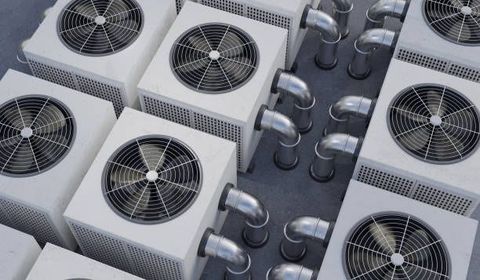
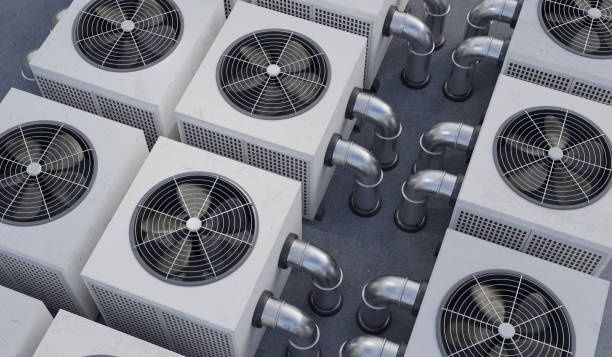
- Air-cooled and water-cooled systems
- Process cooling units
- Heat exchangers
- Evaporative cooling systems
- Refrigeration systems
- Cooling pumps and circulation systems
- Temperature-control units
A typical industrial cooling system transfers heat away from a process and rejects it into air, water, or another heat-transfer medium. The exact configuration depends on the required temperature range, heat load, operating environment, water availability, and manufacturing process.
For example, a plastic processing facility may need cooling to control molds and production equipment, while a food-processing plant may require controlled temperatures for processing and storage. Data centers, chemical plants, pharmaceutical facilities, metalworking operations, and electronics manufacturing can also require precise thermal management.
The basic cooling cycle generally involves heat absorption, heat transfer, and heat rejection. Efficient design therefore requires more than selecting a cooling machine with a large capacity. Engineers must consider the entire thermal system.
Why Industrial Cooling Equipment Matters Today
Temperature control has become an important part of industrial energy management. Manufacturing facilities increasingly monitor energy use, equipment performance, water consumption, and environmental impact alongside production requirements.
Poor temperature control can create several operational problems. Excessive heat may accelerate component wear, influence material properties, increase downtime risk, or affect product consistency. On the other hand, excessive cooling can unnecessarily increase electricity and water consumption.
Efficient industrial cooling can help manufacturers address these challenges by matching cooling capacity with actual process requirements.
Several groups can benefit from better cooling management:
- Manufacturing engineers who need stable process temperatures
- Facility managers responsible for energy performance
- Maintenance teams monitoring equipment reliability
- Quality teams concerned with production consistency
- Environmental teams tracking resource consumption
- Plant managers evaluating long-term energy performance
Energy efficiency is especially relevant in India. The Bureau of Energy Efficiency (BEE) currently reports that its Perform, Achieve and Trade programme covers 1,333 energy-intensive industrial units and represents about 55% of total industrial energy consumption.
Cooling equipment can also influence overall plant efficiency because chillers, pumps, fans, compressors, and cooling towers work together. A highly efficient chiller may still perform poorly if water flow, condenser conditions, heat exchangers, or controls are incorrectly configured.
A useful way to evaluate a cooling system is to examine both cooling output and energy input. Engineers commonly use measures such as coefficient of performance, energy efficiency ratio, kW per ton of refrigeration, and integrated part-load performance.
| Cooling element | Main purpose | Typical consideration |
|---|---|---|
| Chiller | Removes heat from process fluid | Cooling capacity and efficiency |
| Cooling tower | Rejects heat to atmosphere | Water quality and ambient conditions |
| Heat exchanger | Transfers heat between fluids | Temperature difference and fouling |
| Pump | Circulates cooling fluid | Flow rate and pressure |
| Fan | Moves air through equipment | Airflow and power consumption |
| Controls | Regulates operation | Load matching and monitoring |
Recent Industrial Cooling Trends and Updates
During 2025 and 2026, industrial cooling discussions have increasingly focused on energy efficiency, low-global-warming-potential refrigerants, heat recovery, digital monitoring, and integrated cooling systems.
One notable development in India occurred in March 2026. The Ministry of Environment, Forest and Climate Change published an expression of interest for pilot demonstration projects under the Kigali Amendment. The initiative included potential demonstrations involving low-GWP technologies and alternatives to higher-GWP refrigerants in refrigeration and air-conditioning applications.
The same 2026 initiative identified technologies such as trans-critical CO₂ systems, CO₂/NH₃ cascade systems, and R-290-based alternatives for particular applications. The focus was not simply on replacing refrigerants but also on maintaining or improving equipment efficiency.
Another important trend is the use of digital monitoring. Modern industrial plants can use sensors to track supply and return temperatures, pressure, flow, vibration, humidity, electrical consumption, and equipment status. Data can then help identify abnormal operating conditions before they significantly affect production.
Variable-speed drives are also increasingly relevant. Instead of operating pumps and fans at one fixed speed, variable-speed control can adjust operation according to changing cooling demand. This is particularly useful where production loads vary throughout the day.
Heat recovery is another area of interest. In suitable facilities, heat rejected by a cooling system may be redirected for water heating or another process requirement. The feasibility depends on temperature requirements and plant configuration.
BEE's current publications also include resources such as the District Cooling Roadmap for India, Future-Proofing India's Cooling, and the State Energy Efficiency Index 2025, showing the continued policy interest in efficient cooling and energy management.
Laws, Policies, and Regulatory Considerations in India
Industrial cooling systems in India can be affected by energy-efficiency, environmental, refrigerant, workplace, water, and equipment-related requirements. The exact requirements depend on the facility, industry, equipment type, refrigerant, and location.
The Energy Conservation Act framework is important for industrial energy efficiency. BEE was established under the Energy Conservation Act, 2001, with the objective of improving energy efficiency and reducing energy intensity across sectors.
Large energy-intensive industrial facilities may also fall within the Perform, Achieve and Trade framework, depending on their designated sector and applicable targets. BEE's 2025 programme information identifies 1,333 covered energy-intensive units.
Building-related cooling installations can also be influenced by energy-efficiency codes where applicable. BEE materials include requirements concerning minimum efficiency levels for certain cooling equipment, including chillers, under applicable building energy codes.
Refrigerants are another important regulatory consideration. India's Ozone Depleting Substances (Regulation and Control) Rules, 2000 were introduced under the Environment (Protection) Act, 1986 and have subsequently been amended. The regulatory framework supports India's commitments under the Montreal Protocol.
The transition toward lower-GWP refrigerants is also becoming increasingly important. India's 2026 pilot-project initiative under the Kigali Amendment specifically addressed transitions from HFC-based technologies toward lower-GWP alternatives.
Manufacturers and facility operators should therefore verify the latest requirements applicable to their equipment and industry rather than relying on older technical specifications.
Tools and Resources for Cooling System Planning
Several practical tools can help engineers and facility teams understand cooling requirements and monitor performance.
Cooling-load calculator:
A basic cooling-load calculation can estimate the amount of heat that must be removed from a process. Inputs may include production load, ambient temperature, fluid temperature, equipment heat generation, and operating hours.
Temperature monitoring system:
Digital temperature sensors can record supply and return temperatures continuously. Trend data can help identify unusual temperature changes.
Energy meter:
Electrical meters can help track the energy consumption of chillers, pumps, compressors, and cooling towers.
Flow meter:
Flow measurement helps determine whether the cooling circuit is receiving the required amount of water or process fluid.
Performance dashboard:
A plant dashboard can combine temperature, pressure, flow, and energy information to provide a broader view of system performance.
Maintenance checklist:
A cooling-system checklist can include condenser inspection, heat-exchanger cleaning, filter condition, pump operation, refrigerant checks, water quality, fan condition, and sensor calibration.
Engineering references:
Manufacturing teams can consult government energy-efficiency publications, technical standards, equipment manuals, refrigeration engineering references, and industrial energy-audit methodologies.
Frequently Asked Questions
What is industrial cooling equipment?
Industrial cooling equipment is machinery used to remove heat from manufacturing processes, production equipment, materials, or industrial environments. Examples include chillers, cooling towers, heat exchangers, process coolers, and refrigeration systems.
How is industrial cooling different from ordinary air conditioning?
Industrial cooling is primarily designed around process requirements rather than human comfort. It may need to maintain a specific fluid temperature continuously and handle substantial heat loads generated by machinery or production processes.
Which factors influence industrial cooling system selection?
Important factors include cooling capacity, required temperature, heat-load variation, ambient conditions, water availability, fluid characteristics, operating schedule, equipment efficiency, maintenance requirements, and refrigerant considerations.
How can a cooling system improve energy efficiency?
Efficiency can be supported through correct system sizing, variable-speed operation, clean heat-transfer surfaces, appropriate water flow, effective controls, regular monitoring, and operation that matches cooling output with actual process demand.
Why are refrigerants important in modern cooling systems?
Refrigerants directly influence cooling performance and environmental impact. Regulations and international agreements have encouraged the transition away from ozone-depleting substances and toward refrigerants with lower environmental impact where technically appropriate.
Conclusion
Industrial cooling equipment is an important part of modern manufacturing because stable temperature control supports production processes, equipment operation, product consistency, and energy management.