Industrial Auto Gear Manufacturing Systems Complete Guide
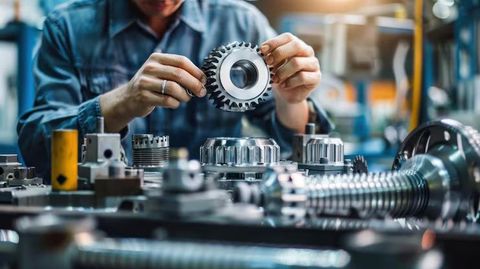
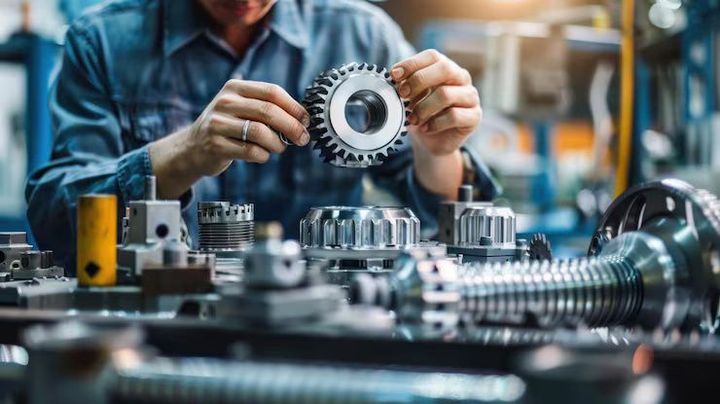
Industrial auto gear manufacturing systems are specialized production systems designed to manufacture gears used in automobiles, industrial machinery, heavy equipment, agricultural machines, robotics, and precision engineering applications. Gears play a critical role in transmitting power and controlling speed, torque, and direction within mechanical systems.
Gears are essential mechanical components that transfer motion and power between rotating shafts. Their design directly affects efficiency, durability, noise levels, and overall machine performance. Modern manufacturing systems have evolved from manually operated machines to highly automated production lines using digital technologies.
Today's industrial gear production includes several manufacturing stages, including:
- Material preparation
- CNC machining
- Gear hobbing
- Gear shaping
- Gear grinding
- Heat treatment
- Surface finishing
- Quality inspection
- Packaging and traceability
High-precision manufacturing has become increasingly important because industries demand better energy efficiency, lower maintenance requirements, and longer equipment life.
Typical Gear Manufacturing Workflow
| Manufacturing Stage | Primary Purpose |
|---|---|
| Raw Material Selection | Provides strength and durability |
| Turning & Milling | Creates initial gear blank |
| Gear Cutting | Forms gear teeth accurately |
| Heat Treatment | Improves hardness and wear resistance |
| Gear Grinding | Enhances dimensional accuracy |
| Inspection | Confirms quality standards |
| Assembly & Testing | Verifies functional performance |
Why Industrial Auto Gear Manufacturing Systems Matter
Modern industries depend on precision gears to keep production equipment operating efficiently. Manufacturing systems capable of producing consistent, high-quality gears help reduce equipment downtime and improve operational reliability.
Industries benefiting from advanced gear manufacturing include:
- Automotive manufacturing
- Industrial automation
- Robotics
- Wind energy
- Mining equipment
- Agricultural machinery
- Aerospace engineering
- Marine equipment
- Construction machinery
- Material handling systems
The adoption of automated gear manufacturing also supports:
- Higher production consistency
- Improved dimensional accuracy
- Reduced material waste
- Better energy efficiency
- Digital quality monitoring
- Faster production cycles
- Predictive maintenance
- Improved workplace safety
Many organizations are also integrating Industrial Internet of Things (IIoT), Artificial Intelligence (AI), Machine Learning, Industrial Automation Systems, Smart Manufacturing, Predictive Maintenance Software, Digital Twin Technology, CNC Gear Manufacturing, Precision Engineering, Industrial Robotics, Manufacturing Analytics, Industrial Quality Control, and Computer-Aided Manufacturing (CAM) to optimize production efficiency.
Industrial Applications of Auto Gear Manufacturing
| Industry | Common Gear Applications |
| Automotive | Transmission systems, differential gears |
| Robotics | Precision motion control |
| Aerospace | Flight control mechanisms |
| Renewable Energy | Wind turbine gearboxes |
| Manufacturing | Industrial machinery |
| Mining | Heavy-duty drive systems |
| Agriculture | Tractor transmission systems |
| Marine | Propulsion systems |
Recent Updates and Industry Trends
The gear manufacturing industry has experienced significant technological development during 2025 and early 2026 as manufacturers continue investing in digital transformation and automation.
Several important trends include:
- Greater adoption of AI-assisted quality inspection using computer vision.
- Increased use of Industrial IoT sensors for machine monitoring.
- Expansion of digital twin simulations for production planning.
- Improved multi-axis CNC machining centers capable of reducing production time.
- Growing implementation of predictive maintenance software.
- Increased focus on energy-efficient manufacturing processes.
- Wider use of collaborative robots (cobots) in precision assembly.
- Continued investment in smart factory technologies aligned with Industry 4.0 initiatives.
Manufacturers are also emphasizing sustainability by improving material utilization, reducing scrap generation, optimizing energy consumption, and increasing recycling of metal waste.
Manufacturing Technology Evolution
Traditional Machines
        │
        ▼
CNC Automation
        │
        ▼
Industrial Robotics
        │
        ▼
IIoT Connectivity
        │
        ▼
AI Quality Inspection
        │
        ▼
Smart Factory Integration
Laws, Standards, and Policies
Industrial gear manufacturing is influenced by engineering standards, workplace safety regulations, environmental policies, and quality management systems. While requirements differ between countries, many manufacturers follow internationally recognized standards.
Important standards include:
- ISO 9001 for Quality Management Systems.
- ISO 14001 for Environmental Management.
- ISO 45001 for Occupational Health and Safety.
- AGMA (American Gear Manufacturers Association) standards for gear design and manufacturing practices.
- DIN gear standards widely used in engineering industries.
- ISO gear accuracy classifications for precision manufacturing.
Many governments also encourage:
- Smart manufacturing adoption
- Industrial automation initiatives
- Digital manufacturing programs
- Energy efficiency improvements
- Sustainable production methods
- Advanced manufacturing research
Environmental regulations increasingly require manufacturers to improve waste management, emissions control, industrial recycling, and responsible energy usage during production.
Helpful Tools and Resources
Engineers, manufacturers, researchers, and students often use specialized software and digital platforms throughout gear manufacturing.
Common tools include:
- CAD software for gear design
- CAM software for machining programs
- CNC programming software
- Gear calculation software
- Finite Element Analysis (FEA) tools
- Manufacturing Execution Systems (MES)
- Enterprise Resource Planning (ERP)
- Industrial IoT monitoring dashboards
- Digital twin simulation platforms
- Coordinate Measuring Machine (CMM) inspection software
Useful resources for learning include:
- Engineering standards organizations
- Manufacturing research institutes
- Mechanical engineering journals
- Industrial automation publications
- University engineering resources
- Professional manufacturing associations
These resources help professionals understand gear design principles, production optimization, quality assurance, industrial automation, and manufacturing innovations.
Frequently Asked Questions
What is an industrial auto gear manufacturing system?
It is an integrated manufacturing process that combines machining, automation, inspection, and quality control technologies to produce precision gears used in industrial equipment and machinery.
Why is CNC technology important in gear manufacturing?
CNC machines improve dimensional accuracy, production consistency, repeatability, and manufacturing efficiency while reducing manual errors.
Which industries use industrial gears most frequently?
Automotive, aerospace, robotics, renewable energy, mining, agriculture, construction, marine engineering, and industrial manufacturing all rely extensively on precision gears.
How does automation improve gear manufacturing?
Automation enhances production speed, improves inspection accuracy, reduces human error, supports predictive maintenance, and enables continuous monitoring of manufacturing processes.
What quality standards are commonly followed?
Manufacturers commonly follow ISO 9001, ISO 14001, ISO 45001, AGMA standards, DIN standards, and ISO gear accuracy classifications depending on their industry requirements.
Conclusion
Industrial auto gear manufacturing systems have become an essential part of modern manufacturing by combining precision engineering, automation, digital monitoring, and advanced quality control. As industries continue adopting smart manufacturing technologies, AI-driven inspection, Industrial IoT, predictive maintenance, and digital twin solutions, gear production is becoming more efficient, accurate, and sustainable.