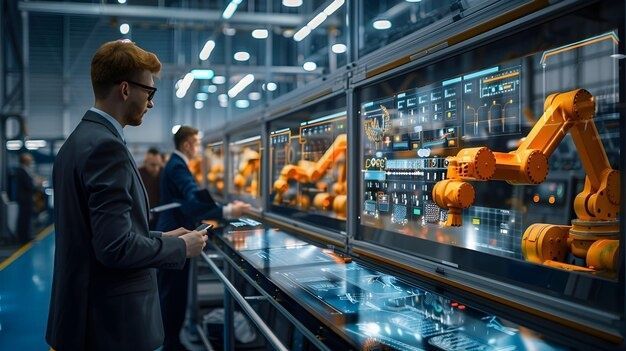
Industrial Automation Solutions for Modern Production Lines Guide
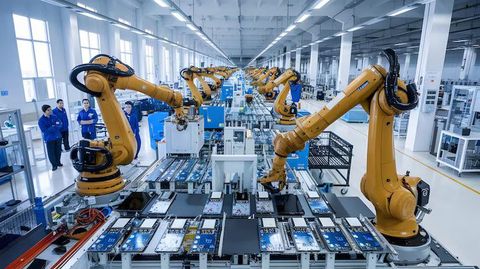
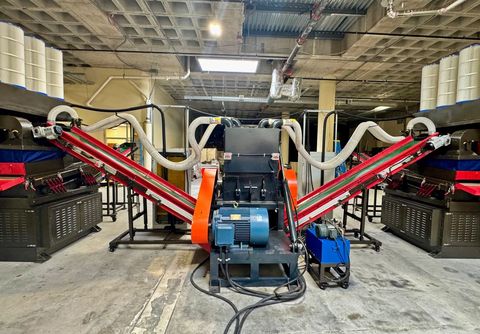
Industrial automation refers to the use of control systems, machines, and software to operate manufacturing processes with minimal human intervention. It includes technologies such as programmable logic controllers (PLCs), robotics, sensors, and industrial Internet of Things (IIoT) systems.
The main goal of automation is to improve efficiency, accuracy, and consistency in production lines. Traditional manufacturing relied heavily on manual labor, which often led to variability in quality and slower output. Automation was introduced to address these limitations by enabling machines to perform repetitive and precise tasks continuously.
Modern production lines now integrate smart systems that can monitor performance, detect issues, and adjust operations in real time. This evolution supports industries such as automotive, electronics, pharmaceuticals, and food processing, where precision and speed are essential.
Why Industrial Automation Matters Today
Industrial automation plays a significant role in today’s global manufacturing environment. As demand increases and supply chains become more complex, businesses require reliable and scalable production systems.
Key reasons why automation is important include:
- Improved productivity through continuous operation
- Enhanced product quality with reduced human error
- Better workplace safety by handling hazardous tasks
- Data-driven decision-making using real-time analytics
Automation affects a wide range of stakeholders:
- Manufacturers seeking efficiency and consistency
- Workers adapting to new technical roles
- Governments aiming to boost industrial growth
- Consumers expecting high-quality products
Common problems that automation helps solve:
- Production delays caused by manual processes
- Inconsistent product quality
- High operational downtime
- Limited scalability in manufacturing
Below is a simple comparison table showing manual vs automated production:
| Factor | Manual Production | Automated Production |
|---|---|---|
| Speed | Slower | Faster |
| Accuracy | Variable | High precision |
| Labor Requirement | High | Lower |
| Error Rate | Higher | Lower |
| Scalability | Limited | Highly scalable |
Recent Trends and Updates in Industrial Automation
Over the past year (2025–2026), several important developments have shaped industrial automation:
-
Increased adoption of AI-driven automation systems
Artificial intelligence is now integrated into production lines to enable predictive maintenance and intelligent decision-making. -
Growth of Industrial IoT (IIoT) networks
Factories are using connected devices to collect and analyze data for improved efficiency and reduced downtime. -
Expansion of collaborative robots (cobots)
Cobots are designed to work alongside humans safely, improving flexibility in manufacturing environments. -
Focus on sustainability and energy efficiency
Many industries are adopting automation systems that optimize energy use and reduce waste. -
Cloud-based automation platforms
Remote monitoring and control systems have become more common, allowing centralized management of multiple production units.
A simple trend overview:
| Trend | Description | Impact |
|---|---|---|
| AI Integration | Smart decision-making systems | Improved efficiency |
| IIoT Expansion | Connected machines and sensors | Real-time insights |
| Cobots | Human-robot collaboration | Flexible operations |
| Sustainability Focus | Energy-efficient automation | Reduced environmental impact |
| Cloud Automation | Remote system management | Better scalability |
These trends highlight a shift toward smarter, more connected, and sustainable manufacturing systems.
Regulations and Policies Affecting Automation
Industrial automation is influenced by various national and international regulations. In India, several policies guide the adoption and implementation of automation technologies.
Key frameworks include:
-
Industry 4.0 initiatives
Government programs encourage digital transformation in manufacturing through smart technologies. -
Make in India program
Promotes domestic manufacturing and supports the adoption of advanced automation systems. -
Data protection and cybersecurity regulations
As automation relies on connected systems, companies must follow guidelines for data security and privacy. -
Workplace safety standards
Regulations ensure that automated systems are designed to protect workers, especially when using robotics. -
Environmental compliance rules
Industries must ensure that automated processes meet emission and waste management standards.
These policies aim to balance technological advancement with safety, sustainability, and economic growth.
Tools and Resources for Industrial Automation
A wide range of tools and platforms support industrial automation systems. These resources help engineers, technicians, and organizations design, implement, and manage automated production lines.
Common tools include:
-
Programmable Logic Controllers (PLCs)
Used to control machinery and processes in real time. -
Supervisory Control and Data Acquisition (SCADA) systems
Monitor and control industrial operations from a central interface. -
Human-Machine Interface (HMI) software
Allows operators to interact with machines and visualize data. -
Industrial IoT platforms
Enable connectivity between devices and provide analytics dashboards. -
Simulation and design software
Helps in planning production lines before physical implementation. -
Robotics programming tools
Used to configure and manage robotic systems in manufacturing.
Examples of useful resources:
- Online learning platforms for automation basics
- Technical documentation and industry standards
- Automation system templates and frameworks
- Data analytics dashboards for production insights
These tools support high-value keywords such as industrial automation software, smart manufacturing systems, and AI in manufacturing, which are commonly used in digital content and search optimization.
Frequently Asked Questions
What is industrial automation in simple terms?
Industrial automation is the use of machines and software to perform manufacturing tasks automatically, reducing the need for manual work.
How does automation improve production efficiency?
Automation increases speed, reduces errors, and allows continuous operation, which leads to higher productivity and consistent output.
What industries use automation the most?
Industries such as automotive, electronics, pharmaceuticals, and food processing widely use automation due to their need for precision and large-scale production.
Is automation replacing human workers?
Automation changes the nature of work rather than completely replacing it. It creates new roles in system management, programming, and maintenance.
What are the main challenges of automation?
Challenges include high initial setup complexity, need for skilled workforce, and integration with existing systems.
Conclusion
Industrial automation solutions are transforming modern production lines by introducing efficiency, accuracy, and scalability. As industries continue to adopt smart technologies, automation becomes a key driver of growth and innovation.
Recent advancements such as AI integration, IIoT connectivity, and cloud-based systems are shaping the future of manufacturing. At the same time, regulations and policies ensure that these technologies are implemented responsibly.
Understanding automation tools and trends helps individuals and organizations stay informed in a rapidly evolving industrial landscape. With ongoing developments, industrial automation will continue to play a central role in modern production systems.