Industrial Dryers: Complete Guide to Drying Systems, Types, and Industrial Applications
Industrial dryers are essential machines used across many industries to remove moisture from raw materials, finished products, and manufactured components.
They play an important role in improving product quality, extending storage life, supporting efficient production, and preparing materials for packaging or further processing.
Many industries, including food processing, pharmaceuticals, chemicals, mining, agriculture, textiles, plastics, and construction, rely on industrial drying equipment to achieve consistent moisture levels. Proper drying not only improves product performance but also helps prevent spoilage, corrosion, mold growth, and material degradation.
Modern industrial drying systems use advanced temperature control, airflow management, and energy-efficient technologies to deliver reliable and consistent results. This guide explains industrial dryers, their working principles, major types, applications, advantages, and future industry developments.
Understanding the Concept
An industrial dryer is a machine designed to remove moisture, water, or solvents from materials using controlled heat, airflow, pressure, or other drying methods. The goal is to achieve a desired moisture content without damaging the material being processed.
Different materials require different drying methods. For example, food products need gentle drying to preserve nutrients, while minerals may require high-temperature drying for efficient processing.
Industrial drying equipment is commonly integrated into manufacturing systems, allowing materials to move continuously through production while maintaining consistent quality.
Key Types or Categories
Several types of industrial dryers are available, each designed for specific materials and production requirements.
Rotary Dryers
Rotary dryers use a rotating cylindrical drum combined with heated air to remove moisture.
Common applications include:
- Sand
- Minerals
- Fertilizers
- Agricultural products
- Biomass materials
These dryers are widely used because they can process large material volumes continuously.
Fluid Bed Dryers
Fluid bed dryers suspend particles in a stream of heated air, creating efficient and uniform drying.
They are commonly used for:
- Pharmaceutical products
- Food ingredients
- Chemicals
- Granules
- Powders
Fluid bed technology provides excellent temperature control and consistent drying.
Spray Dryers
Spray dryers convert liquid materials into dry powder by spraying fine droplets into a chamber filled with hot air.
Typical applications include:
- Milk powder
- Coffee powder
- Nutritional supplements
- Food ingredients
- Chemical products
This process produces uniform particle sizes and high-quality powders.
Vacuum Dryers
Vacuum dryers remove moisture under reduced pressure, allowing materials to dry at lower temperatures.
They are suitable for:
- Heat-sensitive materials
- Pharmaceutical ingredients
- Specialty chemicals
- Laboratory applications
Lower drying temperatures help preserve product quality.
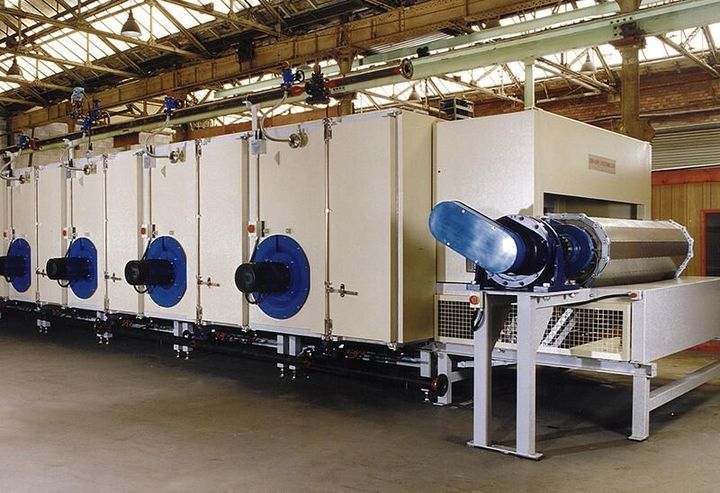
Conveyor Dryers
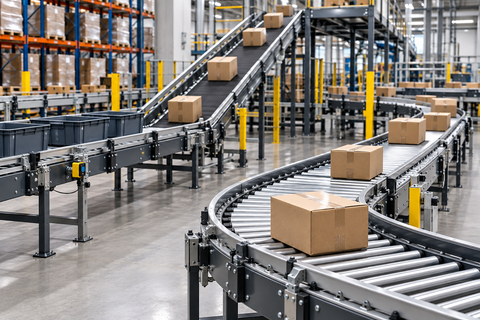
Conveyor dryers move products through a heated chamber using a conveyor belt.
They are widely used for:
- Food products
- Textiles
- Automotive components
- Electronic parts
- Packaging materials
Continuous movement supports high production capacity.
Important Subsections
Heat Source
Industrial dryers may use different heat sources, including:
- Electric heating
- Natural gas
- Steam
- Biomass
- Thermal oil
The appropriate heat source depends on production requirements and energy availability.
Airflow System
Proper airflow distributes heat evenly throughout the drying chamber.
Efficient airflow improves:
- Drying consistency
- Energy efficiency
- Product quality
- Production speed
Temperature Control
Modern industrial drying systems include automatic temperature monitoring.
Accurate temperature control helps prevent:
- Overheating
- Product damage
- Uneven drying
- Excessive energy consumption
Moisture Monitoring
Many advanced dryers use moisture sensors to monitor material conditions throughout the drying process.
Continuous monitoring improves drying accuracy and production consistency.
How It Works
Industrial dryers operate through a structured drying process.
Step 1: Material Loading
Wet materials enter the drying system through automated feeding equipment or manual loading.
The material is distributed evenly to promote uniform drying.
Step 2: Heat Generation
The dryer generates controlled heat using the selected heating method.
The temperature is adjusted according to the material's properties.
Step 3: Moisture Removal
Heated air flows around or through the material, causing moisture to evaporate.
Exhaust systems remove humid air while maintaining proper airflow inside the dryer.
Step 4: Moisture Monitoring
Sensors continuously measure moisture content and temperature.
Control systems automatically adjust operating conditions when necessary.
Step 5: Product Discharge
After reaching the desired moisture level, dried materials leave the system for packaging, storage, or additional manufacturing processes.
Benefits and Advantages
Industrial dryers provide numerous operational advantages.
Improved Product Quality
Consistent drying produces uniform products with better appearance, texture, and performance.
Higher Production Efficiency
Continuous drying systems support large-scale manufacturing while reducing processing time.
Extended Storage Life
Removing excess moisture helps prevent spoilage, microbial growth, corrosion, and material deterioration.
Better Energy Efficiency
Modern industrial drying equipment incorporates energy-saving technologies that optimize heat usage and airflow.
Consistent Production
Automated controls help maintain stable operating conditions, improving production consistency.
Reduced Material Waste
Accurate moisture control minimizes product damage caused by under-drying or over-drying.
Real-World Examples or Applications
Industrial dryers are widely used across many industries.
Food Processing
Food manufacturers use industrial drying equipment for:
- Fruits
- Vegetables
- Grains
- Herbs
- Dairy products
- Coffee
Drying improves storage stability while maintaining product quality.
Pharmaceutical Manufacturing
Pharmaceutical facilities use fluid bed dryers and vacuum dryers to process tablets, powders, and active ingredients under carefully controlled conditions.
Chemical Industry
Chemical manufacturers dry powders, crystals, pigments, fertilizers, and specialty compounds before packaging or additional processing.
Mining Industry
Mining operations use rotary dryers to remove moisture from minerals, ores, and aggregates before transportation or refining.
Textile Industry
Textile manufacturers dry fabrics after washing, dyeing, or finishing processes to prepare materials for further production.
Important Factors to Understand
Several considerations influence industrial dryer performance.
Material Characteristics
Different materials respond differently to heat and airflow.
Selecting the appropriate drying technology helps maintain product quality.
Production Capacity
Dryer size should match production requirements to ensure efficient operation.
Energy Consumption
Energy-efficient drying systems reduce operating expenses while supporting sustainable manufacturing.
Maintenance
Regular inspection of heating elements, airflow systems, sensors, and moving components helps maintain reliable performance.
Safety
Industrial dryers should include safety features such as:
- Temperature monitoring
- Emergency shutdown systems
- Fire protection
- Overheat protection
- Ventilation controls
These features improve operational safety.
Future Trends and Industry Insights
Industrial drying technology continues advancing through automation and intelligent manufacturing.
Smart Drying Systems
Modern industrial dryers increasingly include intelligent control systems capable of adjusting temperature and airflow automatically based on real-time production data.
Artificial Intelligence
Artificial intelligence supports predictive maintenance, process optimization, and improved moisture control through continuous data analysis.
Internet of Things Integration
Connected industrial dryers allow operators to monitor equipment remotely using sensors and cloud-based monitoring platforms.
Energy-Efficient Technologies
Manufacturers continue developing heat recovery systems, improved insulation, and advanced airflow designs to reduce energy consumption.
Sustainable Manufacturing
Growing environmental awareness encourages industries to adopt drying technologies that reduce emissions, improve energy utilization, and minimize production waste.
Conclusion
Industrial dryers are essential components of modern manufacturing, supporting efficient moisture removal across industries such as food processing, pharmaceuticals, chemicals, mining, agriculture, textiles, and construction. By combining controlled heat, airflow, and automated monitoring, these systems improve product quality, production efficiency, and long-term material stability.
Choosing the appropriate drying technology depends on material characteristics, production capacity, energy requirements, and operational goals. As automation, artificial intelligence, and smart monitoring technologies continue evolving, industrial drying systems will become even more efficient, reliable, and environmentally responsible, helping manufacturers achieve consistent production and improved operational performance.