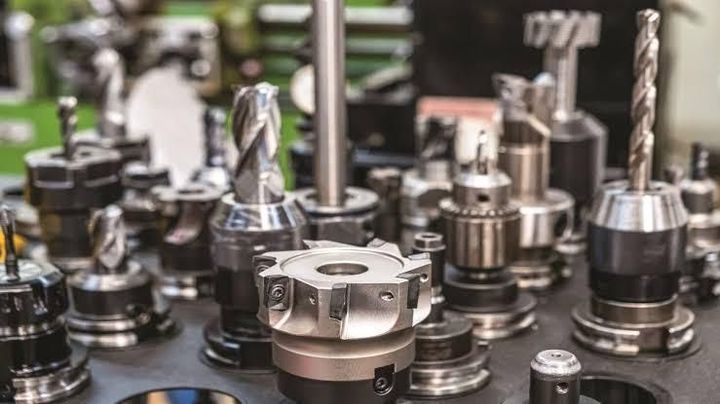
Industrial Machine Tools Explore Guide: Discover Modern Manufacturing Technology and Precision Engineering
Industrial machine tools are essential to modern manufacturing because they help shape, cut, drill, grind, and finish materials with accuracy. From small workshops to large production facilities, these machines support the development of metal components, automotive parts, industrial equipment, and precision engineering products.
Understanding industrial machine tools provides useful knowledge about manufacturing processes, technology, and production quality.
This guide explores industrial machine tools, their importance, recent technological developments, relevant regulations, and useful educational resources. It also explains how CNC technology, automation, precision measurement, and digital manufacturing influence modern industrial operations. The information is intended for students, engineers, manufacturers, and readers interested in understanding manufacturing technology.
Context
Industrial machine tools are mechanical or computer-controlled machines used to process materials into specific shapes and dimensions. They commonly work with metals, plastics, composites, and other engineering materials. Their main purpose is to support accurate manufacturing while maintaining consistent component dimensions and surface quality.
The history of machine tools is closely connected to industrial development. Early manufacturing relied heavily on manual tools and mechanical equipment. Over time, improvements in mechanical engineering, electric motors, measurement systems, and computer technology introduced more advanced manufacturing methods.
Today, industrial machine tools include conventional equipment and computer numerical control (CNC) systems. CNC technology uses programmed instructions to control machine movements, cutting operations, and positioning.
Common industrial machine tools include:
Lathes for producing cylindrical components.
Milling machines for shaping surfaces and creating complex features.
Drilling machines for producing holes.
Grinding machines for improving surface finish and dimensional accuracy.
Boring machines for enlarging and finishing existing holes.
CNC machining centers for performing multiple operations within one setup.
Machine tools are used across industries such as automotive manufacturing, aerospace engineering, electronics, construction equipment, medical equipment manufacturing, and metal fabrication.
Their purpose is not limited to shaping materials. They also support repeatability, production planning, quality inspection, and the development of components with precise engineering requirements.
Importance
Industrial machine tools play an important role in manufacturing because many engineering products depend on accurately shaped components. Even small dimensional differences can affect how parts fit together, operate, and withstand mechanical loads.
Precision engineering is particularly important in applications involving rotating components, mechanical assemblies, and equipment that operates under demanding conditions.
Machine tools also influence manufacturing productivity. CNC equipment can repeat programmed movements across multiple production cycles, helping maintain consistent dimensions when the machine is properly configured and monitored.
Several groups benefit from understanding industrial machine tools:
Engineers use machine tools to develop components and evaluate manufacturing methods.
Production teams use them to manage machining operations and maintain process consistency.
Quality professionals inspect dimensions, surface characteristics, and component specifications.
Students use machine tools to understand mechanical engineering and manufacturing principles.
Industrial researchers study machine performance, automation, and advanced materials.
Another important benefit is manufacturing flexibility. Modern CNC systems can accommodate different component designs through programming, tooling changes, and machine configuration.
However, machine performance depends on several factors, including machine rigidity, tool condition, material properties, operator knowledge, and environmental conditions.
For example, temperature changes can affect machine geometry and component dimensions. Tool wear can also influence surface quality and machining accuracy.
Understanding these factors helps manufacturers identify suitable machining methods and establish appropriate inspection procedures.
Recent Updates
Industrial machine tools continue to develop through digital technology, automation, advanced control systems, and improved manufacturing methods.
One important development is the integration of CNC machining with digital manufacturing platforms. These systems connect design information, machining instructions, production monitoring, and inspection data.
Modern manufacturing facilities increasingly use digital models to prepare machining operations and evaluate component geometry before physical production begins.
CNC Automation and Smart Manufacturing
CNC technology has expanded beyond basic programmed machining. Modern equipment can include automatic tool changers, workpiece positioning systems, robotic loading, and integrated measurement equipment.
These capabilities help reduce manual handling and support repeatable manufacturing processes.
Smart manufacturing also uses machine data to understand equipment performance. Sensors can monitor vibration, temperature, spindle activity, and other operating conditions.
When combined with suitable analytical methods, this information can help identify unusual operating patterns and support maintenance planning.
Artificial Intelligence and Predictive Maintenance
Artificial intelligence is increasingly studied in manufacturing applications involving machine monitoring, process optimization, and quality inspection.
AI systems can analyze historical and current machine data to identify patterns associated with equipment condition or machining performance.
Predictive maintenance uses information such as vibration measurements, temperature readings, and operating history to estimate when maintenance may be necessary.
These methods do not eliminate the need for technical inspection. Their usefulness depends on data quality, appropriate models, and validation under actual operating conditions.
Advanced Machining and Precision Measurement
Manufacturing research also includes improvements in high-speed machining, multi-axis machining, laser-assisted processes, and advanced grinding techniques.
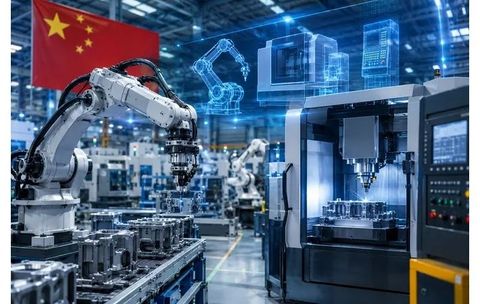
Five-axis CNC machines can move a cutting tool or workpiece along multiple coordinated axes. This enables the production of complex geometries and may reduce the number of separate setups.
Precision measurement technologies, including coordinate measuring machines and laser measurement systems, help verify component dimensions.
The following table summarizes several machine tool technologies.
| Machine Tool | Main Purpose | Common Applications |
|---|---|---|
| CNC Lathe | Turning cylindrical materials | Shafts, bushings, threaded parts |
| CNC Milling Machine | Producing flat and complex surfaces | Housings, brackets, mechanical parts |
| Grinding Machine | Improving surface finish and accuracy | Precision components, hardened materials |
| Drilling Machine | Producing holes | Structural parts, mechanical assemblies |
| Five-Axis Machine | Machining complex geometries | Aerospace components, specialized tooling |
| CNC Machining Center | Combining multiple machining operations | Industrial components, production parts |
These technologies are selected according to material properties, component geometry, tolerances, production requirements, and inspection needs.
Laws or Policies
Industrial machine tools are subject to different regulations and technical standards depending on their location, design, application, and operating environment.
Manufacturers and industrial facilities should understand the requirements that apply to machinery safety, electrical systems, workplace conditions, and environmental protection.
Machinery Safety
Machine tool safety includes guarding, emergency stopping systems, electrical protection, safe operating procedures, and appropriate training.
In India, the Occupational Safety, Health and Working Conditions Code, 2020, provides a legislative framework for occupational safety and working conditions. Its practical application depends on the relevant provisions, implementation status, and applicable rules.
Industrial facilities should consult the appropriate central and state authorities to determine their current obligations.
Internationally, ISO 12100 provides principles for machinery safety and risk assessment. It helps manufacturers identify hazards, evaluate risks, and consider appropriate risk-reduction measures.
ISO 13850 addresses emergency stop functions, while ISO 13849 covers safety-related parts of control systems.
These standards provide technical guidance, but the applicable legal requirements depend on the jurisdiction and machinery category.
Technical Standards and Quality Requirements
Machine tool manufacturers and users may refer to ISO standards covering machine accuracy, testing methods, measurement systems, and technical documentation.
ISO 230 is a series of standards addressing machine tool testing.
ISO 9001 provides a framework for quality management systems. Its principles can support documented processes, inspection procedures, corrective actions, and continuous improvement.
For industrial facilities in India, the Bureau of Indian Standards (BIS) provides information about Indian Standards and applicable conformity requirements.
Relevant considerations include:
Machinery risk assessment and safety documentation.
Electrical installation and equipment protection.
Workplace safety and operator training.
Environmental requirements for industrial operations.
Quality inspection and measurement procedures.
Regulatory requirements can change, so current official publications should be consulted before establishing compliance procedures.
Tools and Resources
Several technical resources help readers understand industrial machine tools, manufacturing processes, and engineering standards.
The following platforms provide educational information, technical references, and manufacturing guidance.
| Resource | Useful Information |
|---|---|
| NIST | Manufacturing research, measurement science, and technical publications |
| ISO | International standards and information about standardization |
| BIS | Indian Standards and national conformity information |
| Autodesk | CAD, CAM, machining, and manufacturing education |
| Siemens | CNC technology, automation, and industrial digitalization |
| Sandvik Coromant | Cutting tools, machining knowledge, and technical guidance |
| Manufacturing Extension Partnership | Manufacturing improvement and technical education |
These resources can support learning and technical research. Their information should be evaluated according to the intended application and relevant engineering requirements.
Useful Manufacturing Tools
Industrial machine tool operations commonly use several digital and physical tools.
CAD software supports the creation of engineering drawings and three-dimensional component models.
CAM software converts design information into machining instructions and toolpaths.
CNC simulation software helps evaluate machining sequences, tool movements, and potential collisions before actual machining begins.
Measurement instruments include:
Digital calipers for measuring external and internal dimensions.
Micrometers for precision dimensional measurements.
Dial indicators for checking alignment and runout.
Coordinate measuring machines for inspecting complex geometry.
Surface roughness instruments for evaluating surface characteristics.
These tools contribute to manufacturing accuracy when used correctly and maintained according to appropriate procedures.
FAQs
1. What are industrial machine tools?
Industrial machine tools are machines used to shape, cut, drill, grind, or finish materials into components with specified dimensions and geometry.
2. What is the difference between CNC and conventional machine tools?
Conventional machine tools generally require direct operator control of machine movements. CNC machine tools use programmed instructions to control movements and machining operations.
3. Which industries use industrial machine tools?
Automotive, aerospace, electronics, construction equipment, medical equipment, metal fabrication, and general manufacturing industries use machine tools for component production.
4. How does automation improve machine tool operations?
Automation can reduce manual handling, support repeatable machining sequences, improve production monitoring, and help maintain consistent manufacturing processes.
5. What skills are useful for learning machine tool technology?
Useful skills include mechanical engineering fundamentals, technical drawing, CNC programming, machining knowledge, measurement techniques, safety awareness, and basic computer skills.
Conclusion
Industrial machine tools remain essential to modern manufacturing and precision engineering. CNC technology, automation, advanced measurement, and digital manufacturing are expanding their capabilities while supporting consistent component production. Understanding machine types, operating principles, safety requirements, and technical standards helps readers develop a practical foundation in manufacturing technology.
Machine tool development will continue to depend on engineering research, reliable equipment, skilled operators, and effective quality management. Learning about these technologies provides valuable knowledge for students, engineers, manufacturing professionals, and anyone interested in industrial production.