Industrial Roof Coating & Waterproofing: Overview and Applications
Industrial buildings are exposed to constant environmental conditions such as sunlight, rainfall, wind, humidity, and temperature fluctuations.
Over time, these factors can affect roof performance and lead to issues such as water penetration, surface deterioration, and reduced structural protection.
Industrial roof coating and waterproofing are important solutions used to protect roofing systems from environmental exposure. These protective systems help improve roof durability, reduce maintenance requirements, and support long-term building performance.
From warehouses and manufacturing facilities to logistics centers and commercial complexes, roof protection technologies play a significant role in modern industrial infrastructure.
Quick Facts About Industrial Roof Coating & Waterproofing
| Feature | Description |
|---|---|
| Primary Purpose | Roof protection and moisture resistance |
| Common Applications | Factories, warehouses, industrial buildings |
| Protection Areas | Water, UV exposure, weather conditions |
| Installation Method | Surface coating or membrane application |
| Typical Roof Types | Metal, concrete, modified bitumen |
| Performance Goal | Enhanced roof durability |
| Maintenance Requirement | Periodic inspection and upkeep |
| Industry Relevance | Industrial and commercial infrastructure |
What Is Industrial Roof Coating?
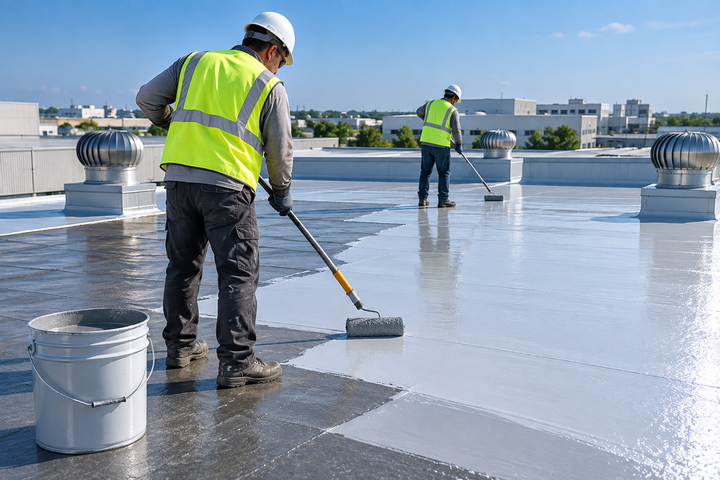
Industrial roof coating is a protective layer applied to roofing surfaces to improve resistance against weather exposure, moisture, and surface degradation.
These coatings create a protective barrier that helps shield roofing materials from environmental stress. Depending on the roofing system and environmental conditions, different coating technologies may be used.
Roof coatings are commonly applied to:
- Metal roofs
- Concrete roofs
- Industrial sheds
- Manufacturing facilities
- Logistics centers
- Storage warehouses
What Is Roof Waterproofing?
Roof waterproofing refers to methods used to prevent water infiltration through roofing systems.
Waterproofing solutions help protect building interiors and structural components from moisture-related issues. These systems may involve liquid coatings, waterproof membranes, sealants, or specialized protective materials.
Effective waterproofing is an important consideration in regions that experience heavy rainfall, seasonal storms, or high humidity levels.
Understanding the Difference
| Aspect | Roof Coating | Roof Waterproofing |
|---|---|---|
| Primary Goal | Surface protection | Water resistance |
| Function | Protects roof surface | Prevents water penetration |
| Application Method | Protective coating layer | Membrane or coating system |
| UV Protection | Commonly included | May vary |
| Moisture Protection | Moderate to high | Primary purpose |
| Long-Term Performance | Supports roof durability | Supports moisture protection |
Industrial Roof System Architecture
Understanding roof system architecture helps explain how coating and waterproofing technologies work together.
Roof Deck
The roof deck provides structural support for the roofing system.
Insulation Layer
Insulation helps manage thermal performance.
Waterproofing Layer
This layer helps prevent moisture penetration.
Protective Coating Layer
The coating protects the roof surface from environmental exposure.
Drainage Components
Drainage systems help remove rainwater from the roof surface.
Structural Framework
Supports the overall roofing assembly.
Main Types of Industrial Roof Coatings
Acrylic Roof Coatings
Acrylic coatings are commonly used because of their weather resistance and reflective properties.
Characteristics
- UV resistance
- Reflective surface
- Suitable for various roof types
- Water-based formulation
Silicone Roof Coatings
Silicone coatings perform well in environments exposed to moisture.
Characteristics
- Moisture resistance
- Weather durability
- Flexible performance
- Suitable for ponding water conditions
Polyurethane Roof Coatings
Polyurethane systems provide durable surface protection.
Characteristics
- Strong adhesion
- Impact resistance
- Surface durability
- Industrial suitability
Asphalt-Based Coatings
Used for specific roofing applications requiring additional protection.
Characteristics
- Protective barrier
- Weather resistance
- Compatible with various roof systems
Types of Roof Waterproofing Systems
Liquid Waterproofing Systems
Applied as liquid materials that form a continuous waterproof layer.
Bituminous Waterproofing
Uses modified bitumen materials for moisture protection.
Polyurethane Waterproofing
Provides flexible waterproof protection.
Cementitious Waterproofing
Often used on concrete roof structures.
Membrane Waterproofing
Uses pre-formed waterproof membranes for moisture resistance.
Roof Coating Comparison
| Coating Type | UV Resistance | Moisture Resistance | Flexibility |
|---|---|---|---|
| Acrylic | High | Moderate | Good |
| Silicone | High | High | Excellent |
| Polyurethane | Good | High | High |
| Asphalt-Based | Moderate | Good | Moderate |
How Industrial Roof Coating Works
Step 1: Surface Preparation
The roof surface is cleaned and inspected.
Step 2: Repair Work
Cracks, joints, and damaged areas are addressed.
Step 3: Primer Application
A primer may be applied depending on the roofing system.
Step 4: Coating Installation
The coating material is applied evenly.
Step 5: Curing Process
The coating cures to form a protective layer.
Step 6: Final Inspection
The completed system is inspected for uniform coverage.
How Waterproofing Systems Work
Moisture Barrier Formation
Waterproofing materials create a barrier against water penetration.
Seam Protection
Joints and seams receive additional protection.
Surface Coverage
The waterproof layer covers vulnerable areas.
Drainage Support
Proper drainage helps reduce standing water.
Benefits and Advantages
Moisture Protection
Waterproofing systems help reduce water penetration risks.
UV Resistance
Roof coatings help protect against sunlight exposure.
Surface Durability
Protective layers support long-term roof performance.
Weather Resistance
Industrial roofs face varying weather conditions throughout the year.
Structural Protection
Moisture control contributes to building protection.
Maintenance Support
Protective systems help reduce premature roof deterioration.
Environmental Considerations
Sustainability has become an important consideration in industrial construction.
Reflective Roof Coatings
Reflective coatings may help reduce roof surface temperatures.
Extended Roof Life
Protective systems can contribute to longer roof usability.
Resource Efficiency
Longer-lasting roofing systems may reduce material replacement frequency.
Reduced Waste Generation
Roof preservation can help minimize construction waste.
Industry Standards and Safety
Industrial roofing systems are typically installed according to recognized engineering practices and building requirements.
Material Testing
Roof coatings and waterproofing materials undergo performance evaluations.
Adhesion Testing
Tests help evaluate coating attachment to roofing surfaces.
Water Resistance Evaluation
Waterproofing systems are assessed for moisture protection performance.
Weather Exposure Testing
Materials may be evaluated under simulated environmental conditions.
Surface Preparation Requirements
Proper preparation supports system performance.
Real-World Applications
Manufacturing Facilities
Protect large roof structures exposed to environmental conditions.
Warehouses
Support moisture protection for stored materials.
Logistics Centers
Help maintain roof integrity across large facilities.
Industrial Plants
Provide protection in demanding operational environments.
Commercial Buildings
Support building envelope performance.
Application Comparison
| Facility Type | Common Objective |
|---|---|
| Warehouse | Moisture protection |
| Manufacturing Plant | Roof durability |
| Distribution Center | Weather resistance |
| Commercial Building | Surface preservation |
| Storage Facility | Water management |
Common Challenges and Practical Solutions
| Challenge | Practical Solution |
|---|---|
| Water Ponding | Improve drainage design |
| Surface Cracking | Routine inspections |
| UV Exposure | Apply UV-resistant coatings |
| Moisture Intrusion | Strengthen waterproofing layers |
| Thermal Expansion | Use flexible coating systems |
| Aging Roof Materials | Periodic maintenance planning |
Maintenance Schedule
| Maintenance Activity | Recommended Frequency | Purpose |
|---|---|---|
| Visual Inspection | Periodically | Identify surface issues |
| Drainage Check | Periodically | Ensure water flow |
| Joint Inspection | Periodically | Monitor vulnerable areas |
| Surface Cleaning | Periodically | Remove debris |
| Coating Assessment | Periodically | Evaluate performance |
| Waterproofing Review | Periodically | Maintain protection |
Best Practices
Perform Regular Inspections
Routine inspections help identify issues early.
Maintain Drainage Systems
Proper drainage reduces standing water.
Monitor Roof Penetrations
Equipment mounts and penetrations should be inspected regularly.
Address Minor Damage Promptly
Early intervention can prevent larger issues.
Follow Manufacturer Guidelines
Proper installation and maintenance support system performance.
Expert Insights
Roofing professionals generally recommend selecting roof coating and waterproofing systems based on roof type, environmental exposure, building design, and operational requirements.
Successful roof protection strategies often combine surface coatings, waterproof barriers, drainage planning, and routine maintenance programs.
Key Facts About Industrial Roof Coating & Waterproofing
- Roof coatings provide protective surface barriers.
- Waterproofing systems focus on moisture resistance.
- Reflective coatings can support thermal management.
- Industrial facilities commonly use multi-layer roof protection strategies.
- Regular maintenance contributes to long-term roof performance.
- Drainage management is an important component of roof protection.
Future Trends and Industry Insights
Advanced Coating Technologies
New formulations continue to improve durability and performance.
Smart Roof Monitoring
Sensor-based monitoring technologies are becoming more common.
Sustainable Roofing Materials
Environmental considerations continue to influence product development.
Improved Reflective Surfaces
Reflective technologies are evolving to support energy-conscious building design.
Enhanced Waterproof Membranes
Manufacturers continue developing stronger and more flexible membrane systems.
Frequently Asked Questions
What is industrial roof coating?
A protective layer applied to roofing surfaces to improve durability and environmental resistance.
What is roof waterproofing?
A process used to prevent water penetration through roofing systems.
Why is waterproofing important?
It helps protect buildings from moisture-related issues.
Which roofs can use coatings?
Metal, concrete, and various industrial roofing systems.
What is membrane waterproofing?
A waterproofing method that uses protective membrane materials.
How does roof coating help?
It provides protection against weather exposure and surface degradation.
What causes roof deterioration?
Environmental exposure, moisture, UV radiation, and aging materials.
Why is drainage important?
Proper drainage helps reduce standing water accumulation.
How often should roofs be inspected?
Periodic inspections are recommended to identify potential issues.
What future developments are expected?
Advanced coatings, smart monitoring systems, and improved waterproofing materials.
Conclusion
Industrial roof coating and waterproofing play a critical role in protecting modern industrial and commercial buildings. These systems help improve roof durability, manage moisture exposure, support structural protection, and enhance long-term building performance.
As roofing technologies continue to evolve, innovations in coatings, waterproof membranes, monitoring systems, and sustainable materials are expected to further improve the effectiveness of industrial roof protection strategies.