Industrial Strapping Machines Guide: Types, Working, Applications & Latest Technology
Industrial strapping machines are packaging equipment designed to secure products with plastic or steel straps before storage or transportation. Their primary purpose is to hold packages firmly together, preventing movement and reducing the risk of damage during handling.
As manufacturing and logistics industries expanded, businesses required faster and more reliable packaging methods than manual strapping. Industrial strapping machines were developed to automate the process, improve consistency, and reduce physical effort. Today, these machines are commonly used across warehouses, factories, distribution centers, and shipping facilities.
Modern industrial packaging depends heavily on secure load handling. Whether transporting heavy machinery, cartons, construction materials, food products, or consumer goods, properly strapped packages help maintain product stability throughout the supply chain.
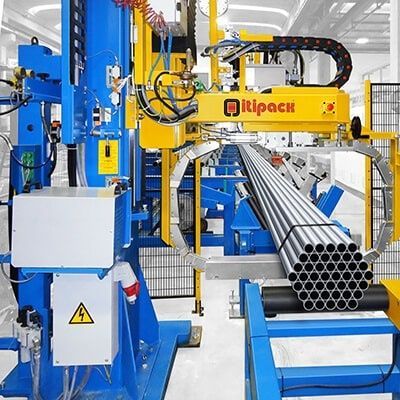
Different industries require different strapping solutions depending on package size, material, production speed, and transportation requirements. As a result, manufacturers have introduced semi-automatic, fully automatic, and robotic strapping systems that improve packaging efficiency while maintaining consistent strap tension.
Types of Industrial Strapping Machines
The following table summarizes the common types of industrial strapping machines and their primary applications.
| Machine Type | Working Style | Common Applications | Strap Material |
|---|---|---|---|
| Semi-Automatic | Manual package placement with automatic tightening | Small manufacturing units | Polypropylene (PP) |
| Fully Automatic | Conveyor-based automatic operation | High-volume production lines | PP |
| Automatic Arch Machine | Products pass through machine arch | Cartons and boxes | PP |
| Pallet Strapping Machine | Secures loaded pallets | Warehousing and logistics | PET or Steel |
| Horizontal Strapping Machine | Applies straps horizontally | Long products and timber | PET |
| Vertical Strapping Machine | Applies straps vertically | Heavy pallet loads | Steel or PET |
| Mobile Strapping Machine | Portable battery-powered equipment | Large industrial products | PET |
How Industrial Strapping Machines Work
Although machine designs vary, most industrial strapping systems follow a similar operating sequence.
- The package is positioned inside or beneath the machine.
- The machine feeds the strap around the package.
- Automatic tensioning tightens the strap.
- Heat sealing, friction welding, or metal sealing joins the strap.
- Excess strap is trimmed automatically.
- The secured package moves to the next packaging stage.
Modern systems use programmable controls, sensors, and automation technology to ensure accurate strap positioning and consistent sealing quality.
Importance
Industrial strapping machines play an important role in modern packaging operations because they improve packaging consistency, reduce manual handling, and help protect products during transportation.
Their importance has increased alongside global manufacturing growth, warehouse automation, and expanding e-commerce distribution networks.
Major benefits include:
- Improved package stability
- Faster packaging processes
- Consistent strap tension
- Reduced packaging errors
- Better warehouse productivity
- Enhanced transportation safety
- Lower material wastage
- Improved supply chain efficiency
Several industries rely heavily on industrial strapping technology, including:
- Manufacturing
- Logistics
- Warehousing
- Food processing
- Pharmaceutical packaging
- Automotive production
- Construction materials
- Paper and printing
- Textile manufacturing
- Metal fabrication
Common Industrial Applications
| Industry | Typical Products |
|---|---|
| Manufacturing | Machine parts, equipment |
| Logistics | Shipping cartons |
| Warehousing | Palletized goods |
| Food Industry | Beverage cartons |
| Pharmaceuticals | Medical packaging |
| Automotive | Components and spare parts |
| Construction | Bricks, tiles, steel products |
| Paper Industry | Paper bundles |
| Textile Industry | Fabric rolls |
Latest Technology and Recent Updates
Industrial packaging technology has evolved significantly over the past year as manufacturers continue adopting smart factory solutions and automated production systems.
Recent developments during 2025–2026 include:
- Increased adoption of Industry 4.0 integration for packaging equipment.
- Greater use of intelligent sensors for strap tension monitoring.
- Expansion of automated conveyor-based packaging systems.
- Energy-efficient motors that reduce electricity consumption.
- Touchscreen Human Machine Interface (HMI) controls becoming standard.
- AI-assisted maintenance monitoring to identify potential machine issues before failures occur.
- Increased use of recyclable PET strapping materials to support sustainability initiatives.
- Remote equipment monitoring through Industrial Internet of Things (IIoT) platforms.
- Improved friction-weld sealing systems replacing older heat-based methods in many applications.
- Enhanced safety sensors that automatically stop machine operation when obstructions are detected.
Another growing trend is modular machine design, allowing manufacturers to upgrade packaging lines without replacing entire systems.
Industrial automation continues to increase demand for programmable packaging equipment capable of operating continuously with minimal operator intervention.
Comparison of Traditional and Modern Strapping Technology
| Feature | Traditional Systems | Modern Systems |
|---|---|---|
| Operation | Manual | Fully Automated |
| Monitoring | Visual inspection | Smart Sensors |
| Controls | Mechanical | Digital Touchscreen |
| Maintenance | Scheduled | Predictive |
| Connectivity | None | IIoT Enabled |
| Energy Use | Higher | More Efficient |
| Production Speed | Moderate | High-Speed |
Laws or Policies
Industrial strapping machines are generally subject to workplace safety, machinery operation, and industrial equipment regulations. Requirements vary by country, but several common regulatory areas apply.
Common regulatory considerations include:
- Workplace machinery safety standards
- Electrical equipment safety regulations
- Industrial operator safety requirements
- Packaging material environmental guidelines
- Machine guarding requirements
- Emergency stop system compliance
- Occupational health and safety regulations
- Equipment maintenance documentation
- Noise and vibration control standards
- Industrial waste management policies
Many countries encourage manufacturers to adopt energy-efficient equipment and recyclable packaging materials to reduce environmental impact.
Factories operating automated packaging lines often implement routine safety inspections, operator training programs, and preventive maintenance schedules to support compliance with workplace regulations.
Safety Practices for Operators
Good operating practices help improve workplace safety and equipment reliability.
- Inspect straps before operation.
- Keep work areas clean.
- Follow machine operating instructions.
- Wear appropriate personal protective equipment.
- Avoid placing hands near moving components.
- Inspect emergency stop switches regularly.
- Perform routine maintenance checks.
- Replace worn components promptly.
- Monitor strap tension settings.
- Maintain proper machine lubrication.
Tools and Resources
Several general tools and learning resources help professionals understand industrial strapping technology and packaging processes.
Useful resources include:
- Packaging calculators
- Production efficiency calculators
- Preventive maintenance checklists
- Machine inspection templates
- Packaging material selection guides
- Industrial automation learning platforms
- Engineering design software
- Equipment maintenance scheduling tools
- Industrial safety training materials
- Manufacturing productivity dashboards
- Packaging process flow templates
- Energy consumption tracking tools
These resources support better planning, machine maintenance, operator training, and production optimization.
Frequently Asked Questions
What is an industrial strapping machine?
An industrial strapping machine is packaging equipment used to secure products using plastic or steel straps before storage or transportation.
Which industries commonly use industrial strapping machines?
Manufacturing, logistics, warehousing, pharmaceuticals, food processing, construction, printing, automotive, and textile industries commonly use these machines.
What types of strapping materials are used?
The most common materials include polypropylene (PP), polyester (PET), and steel strapping, depending on package weight and application.
What is the difference between semi-automatic and fully automatic machines?
Semi-automatic machines require manual package positioning, while fully automatic systems complete the strapping process with minimal operator involvement.
Why is automation becoming popular in industrial strapping?
Automation improves packaging consistency, production speed, workplace safety, equipment monitoring, and overall operational efficiency while reducing repetitive manual tasks.
Conclusion
Industrial strapping machines have become an essential part of modern packaging and logistics operations. They provide reliable package stabilization for a wide range of industries while supporting efficient transportation and warehouse management.