Industrial Water Pump Basics: Types, Uses and Principles
Industrial water pumps are mechanical devices designed to move water or other fluids from one location to another. They play an essential role in modern industries by ensuring a steady flow of water for manufacturing processes, cooling systems, wastewater management, irrigation, and infrastructure operations.
The concept of pumping water dates back thousands of years. Early civilizations developed simple water-lifting devices to support agriculture and daily activities. Over time, engineering advancements transformed these basic tools into highly efficient industrial systems capable of handling large volumes of water under varying pressure conditions.
Today, industrial water pumps are found in factories, power plants, water treatment facilities, construction sites, mining operations, and agricultural systems. Their primary purpose is to transport water efficiently, maintain pressure, and support critical industrial processes.
At their core, pumps convert mechanical energy into hydraulic energy. This conversion enables water to move through pipelines, storage systems, and processing equipment. Without industrial pumps, many sectors would struggle to maintain operational efficiency and water management standards.
Why Industrial Water Pumps Matter in Modern Industries
Industrial water pumps are vital because water remains one of the most important resources in economic development and industrial production. Many industries rely on controlled water movement for production, cleaning, cooling, and environmental management.
Several key sectors depend heavily on industrial water pumps:
- Manufacturing facilities
- Water treatment plants
- Agricultural irrigation systems
- Energy generation stations
- Construction projects
- Mining operations
- Municipal infrastructure
These pumps solve several operational challenges, including:
- Transporting water across long distances
- Maintaining consistent pressure levels
- Supporting cooling and heating systems
- Managing wastewater and drainage
- Improving irrigation efficiency
- Preventing flooding in industrial environments
The increasing focus on water conservation has also elevated the importance of efficient pumping systems. Modern pumps help organizations reduce water waste while maintaining productivity.
Common Benefits of Industrial Water Pumps
| Benefit | Description |
|---|---|
| Reliable Water Flow | Ensures continuous movement of water |
| Improved Efficiency | Reduces energy consumption |
| Pressure Management | Maintains stable operating conditions |
| Water Conservation | Supports efficient resource usage |
| Operational Support | Enables critical industrial processes |
As industries continue expanding, demand for reliable pumping technology remains strong across both developed and emerging markets.
Major Types of Industrial Water Pumps
Industrial water pumps are generally categorized based on how they move fluids.
Centrifugal Pumps
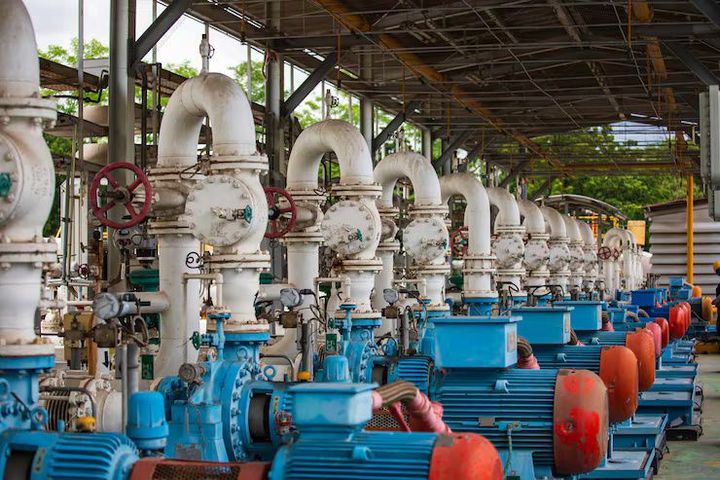
Centrifugal pumps are among the most widely used industrial pumps. They use a rotating impeller to create centrifugal force, which moves water through the system.
Typical applications include:
- Water supply systems
- Cooling circuits
- Industrial processing
- Irrigation networks
These pumps are known for their simple design and ability to handle large volumes of water.
Positive Displacement Pumps
Positive displacement pumps move water by trapping a fixed amount of fluid and forcing it through the system.
Common examples include:
- Gear pumps
- Diaphragm pumps
- Piston pumps
- Rotary pumps
These pumps are particularly useful when precise flow control is required.
Submersible Pumps
Submersible pumps operate while fully submerged in water. The motor and pump assembly are sealed to prevent water damage.
Common uses include:
- Groundwater extraction
- Sewage management
- Drainage applications
- Deep well operations
Axial Flow Pumps
Axial flow pumps move water parallel to the pump shaft. They are often used when large quantities of water must be moved with relatively low pressure requirements.
Applications include:
- Flood control systems
- Irrigation canals
- Water circulation projects
Multistage Pumps
These pumps contain multiple impellers arranged in sequence. Each stage increases pressure, making them suitable for high-pressure applications.
Industries use them for:
- Boiler feed systems
- High-rise building water supply
- Industrial pressure systems
How Industrial Water Pumps Work
Although pump designs vary, most industrial water pumps operate using the same basic principle: transferring energy to water so it can move through a system.
The operating process generally includes the following steps:
- Water enters the pump through an inlet.
- Mechanical energy is supplied by an electric motor or engine.
- Internal components increase fluid velocity or pressure.
- Water exits through an outlet and travels through pipes.
Simplified Pump Operation Flow
| Stage | Function |
| Intake | Water enters the pump |
| Energy Transfer | Motor powers the pump |
| Pressure Generation | Water gains velocity or pressure |
| Discharge | Water exits the system |
The efficiency of a pump depends on factors such as design, operating conditions, maintenance, and system requirements.
Recent Industry Updates and Trends
The industrial water pump sector has experienced several important developments during 2025 and early 2026.
Energy-Efficient Pump Technologies
Throughout 2025, manufacturers increasingly focused on high-efficiency pump designs that reduce electricity consumption. Energy optimization has become a major priority due to rising operational costs and sustainability goals.
Smart Monitoring Systems
Industrial facilities are adopting digital monitoring technologies that track pump performance in real time.
These systems can monitor:
- Flow rates
- Pressure levels
- Temperature
- Energy usage
- Maintenance requirements
Predictive maintenance solutions have become more common during 2025, helping operators identify potential failures before they occur.
Water Conservation Initiatives
Many regions expanded water management programs during 2025, encouraging industries to improve water efficiency. As a result, demand for advanced pumping systems designed to minimize waste has continued to grow.
Integration with Automation
Industrial automation remains a major trend in 2026. Modern pumps are increasingly integrated into automated control systems that adjust performance based on operational needs.
Growth of Sustainable Infrastructure Projects
Governments worldwide continue investing in infrastructure projects focused on water supply, wastewater treatment, and environmental protection. These initiatives have contributed to growing interest in efficient pumping technologies.
Industry Trend Snapshot
| Trend | Impact |
| Smart Monitoring | Improved reliability |
| Predictive Maintenance | Reduced downtime |
| Energy Efficiency | Lower power consumption |
| Automation Integration | Better operational control |
| Water Conservation | Enhanced resource management |
Regulations and Policy Considerations
Industrial water pump usage is influenced by various regulations related to water management, energy efficiency, environmental protection, and workplace safety.
Water Resource Regulations
Many countries have introduced policies designed to promote responsible water usage. Industrial facilities often must comply with water withdrawal, discharge, and conservation requirements.
Environmental Standards
Environmental regulations commonly govern:
- Wastewater disposal
- Water pollution prevention
- Resource conservation
- Industrial emissions
These standards help protect natural ecosystems and public water supplies.
Energy Efficiency Frameworks
Governments and regulatory bodies increasingly encourage the adoption of energy-efficient industrial equipment. Pumps are often included within broader industrial energy management programs.
Occupational Safety Requirements
Industrial facilities must follow workplace safety standards related to:
- Equipment operation
- Electrical systems
- Maintenance procedures
- Emergency shutdown processes
These requirements help reduce operational risks and improve worker safety.
Infrastructure Development Programs
Many national infrastructure strategies prioritize:
- Water treatment modernization
- Irrigation improvements
- Flood management projects
- Municipal water distribution upgrades
Such initiatives continue driving technological advancements in pumping systems worldwide.
Helpful Tools and Learning Resources
Understanding industrial water pumps becomes easier when supported by educational tools and resources.
Useful resources include:
- Pump performance calculators
- Hydraulic system simulators
- Flow rate estimation tools
- Pressure conversion calculators
- Energy consumption assessment tools
- Engineering training modules
- Technical specification templates
- Maintenance planning checklists
Common Resource Categories
| Resource Type | Purpose |
| Flow Calculators | Estimate water movement |
| Pressure Tools | Evaluate system requirements |
| Efficiency Calculators | Analyze energy usage |
| Maintenance Checklists | Support equipment upkeep |
| Training Guides | Improve technical knowledge |
These resources help engineers, students, facility managers, and maintenance personnel better understand pump operation and performance.
Frequently Asked Questions
What is the main purpose of an industrial water pump?
An industrial water pump moves water from one location to another while maintaining the required flow rate and pressure for industrial operations.
Which type of industrial water pump is most commonly used?
Centrifugal pumps are among the most widely used because they efficiently handle large volumes of water in many industrial applications.
How do industrial water pumps improve efficiency?
Modern pumps help optimize water movement, reduce energy consumption, maintain stable pressure levels, and support automated control systems.
What industries use industrial water pumps?
Industries including manufacturing, agriculture, mining, power generation, construction, wastewater treatment, and municipal infrastructure rely heavily on water pumps.
Why is pump maintenance important?
Regular maintenance helps improve reliability, reduce downtime, extend equipment lifespan, and maintain efficient operation.
Conclusion