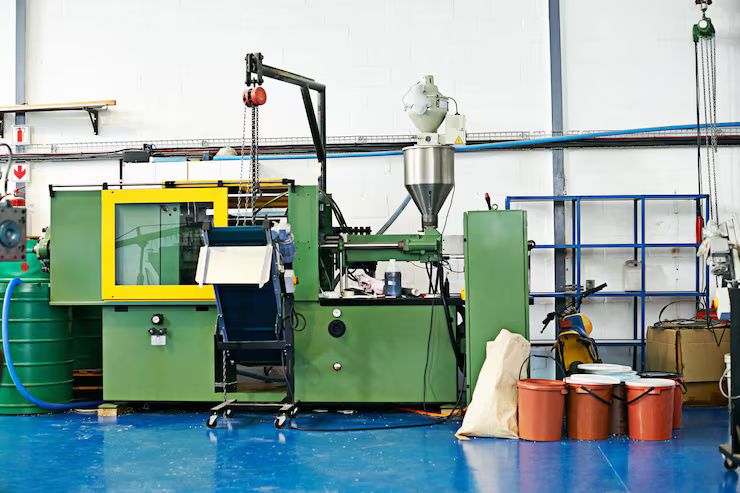
Injection molding machines are industrial systems used to manufacture plastic components by injecting molten material into a precisely shaped mold cavity. Once the material cools and solidifies, it forms a finished part that matches the mold’s design. This process enables the mass production of identical components with high precision and consistency.
The concept of injection molding emerged during the early development of polymer materials in the late nineteenth and early twentieth centuries. As plastics became widely used in consumer products, electronics, automotive parts, and medical equipment, manufacturers required a reliable method to produce complex shapes quickly and repeatedly. Injection molding machines were developed to meet this need.
These machines exist because traditional machining or manual forming methods cannot efficiently produce large quantities of identical plastic parts. Injection molding allows manufacturers to create intricate designs, thin walls, and detailed textures while maintaining consistent quality across production cycles.
Today, injection molding machines are a central element of modern manufacturing systems, producing components ranging from small connectors to large industrial housings.
Importance: Why Injection Molding Machines Matter Today
Injection molding machines are essential in modern industry because they enable the efficient production of plastic components used in countless products and systems.
Why this topic matters today
-
High-volume manufacturing: Injection molding supports large-scale production with minimal variation between parts.
-
Complex design capability: The process can produce intricate shapes that are difficult to achieve through other methods.
-
Material versatility: A wide range of polymers can be processed for different applications.
-
Cost efficiency at scale: Once molds are prepared, production cycles become highly efficient.
-
Industrial reliability: The process produces consistent parts suitable for technical applications.
Who it affects
Injection molding machines influence many sectors including automotive manufacturing, consumer electronics, packaging, healthcare equipment, household products, and industrial machinery. Engineers, production managers, quality inspectors, and product designers rely on these machines to transform design concepts into physical components.
Problems the technology solves
-
Inconsistent production from manual forming methods
-
Difficulty producing complex plastic geometries
-
Slow manufacturing speeds for large quantities
-
Limited repeatability in traditional fabrication methods
Injection molding addresses these challenges by combining automation, precision tooling, and controlled heating systems.
Working Process: How Injection Molding Machines Operate
The injection molding process follows several coordinated stages inside the machine.
| Stage | Description |
|---|---|
| Material feeding | Plastic pellets enter a heated barrel |
| Melting and mixing | The material is heated and mixed by a rotating screw |
| Injection | Molten plastic is injected into the mold cavity |
| Cooling | The material solidifies within the mold |
| Ejection | The finished part is released from the mold |
The main components involved in this process include:
-
Injection unit: Melts and injects the plastic material
-
Clamping unit: Holds the mold securely during injection
-
Mold tool: Defines the shape of the final component
-
Control system: Regulates temperature, pressure, and timing
This coordinated process allows manufacturers to produce thousands or millions of identical parts with minimal variation.
Recent Updates: Industry Trends and Developments (2024–2025)
Injection molding technology has continued to evolve over the past year, driven by automation, energy efficiency, and sustainability goals.
| Year | Trend or Development | Industrial Impact |
|---|---|---|
| 2024 | Increased adoption of electric injection molding machines | Improved energy efficiency and reduced noise |
| 2024 | Advanced mold cooling systems | Faster production cycles and better surface finish |
| 2025 | Integration of real-time monitoring systems | Improved quality control and production transparency |
| 2025 | Growth in recycled and bio-based polymer usage | Enhanced sustainability in plastic manufacturing |
Manufacturers are also focusing on precision control, automated material handling, and improved robotics integration for part removal and inspection.
These developments help factories maintain higher productivity while reducing environmental impact.
Laws and Policies Affecting Injection Molding Machines
Injection molding operations are influenced by environmental regulations, workplace safety standards, and manufacturing compliance policies.
Common regulatory frameworks include:
-
Industrial safety regulations governing machinery operation and worker protection
-
Environmental laws controlling plastic waste management and emissions
-
Energy efficiency programs encouraging the use of modern electric molding machines
-
Product quality standards for industries such as automotive, electronics, and healthcare
In many countries, government programs promote sustainable plastic production through recycling initiatives and responsible material management. Manufacturers must often document energy consumption, waste handling procedures, and equipment safety compliance.
These policies encourage safer working environments and more environmentally responsible manufacturing practices.
Tools and Resources for Understanding Injection Molding
Several tools and educational resources help engineers and learners understand injection molding processes.
Technical resources
-
Polymer engineering textbooks
-
Manufacturing process handbooks
-
Mold design reference manuals
-
Industrial training courses on plastics processing
Practical tools
-
Injection pressure calculators
-
Cooling time estimation charts
-
Mold flow simulation platforms
-
Material selection guides
Industry knowledge sources
-
Manufacturing engineering journals
-
Industrial automation publications
-
Plastics technology research reports
-
Technical conferences and training workshops
These resources help professionals evaluate mold design, optimize production cycles, and understand material behavior during injection molding.
Frequently Asked Questions
What materials are commonly used in injection molding machines?
Most injection molding machines process thermoplastic polymers such as polyethylene, polypropylene, ABS, nylon, and polycarbonate.
Why is mold design important in injection molding?
The mold determines the final shape, surface quality, and dimensional accuracy of the produced component.
How long does an injection molding cycle take?
Cycle times vary depending on part size and material, but many production cycles range from a few seconds to several minutes.
Are injection molding machines suitable for complex parts?
Yes. The process can produce highly detailed components with thin walls and intricate internal features.
How does cooling affect the process?
Cooling time directly influences production speed and part quality, making efficient mold cooling systems essential.
Conclusion
Injection molding machines are a cornerstone of modern manufacturing, enabling the efficient production of complex plastic components across numerous industries. Their ability to deliver high precision, consistent quality, and scalable production makes them indispensable in fields ranging from automotive engineering to consumer electronics.
As technology advances, injection molding systems are becoming more energy-efficient, automated, and environmentally conscious. Understanding how these machines operate, the regulations surrounding them, and the resources available for learning provides valuable insight into one of the most important manufacturing processes in the global industrial landscape.