IoT Sensors & Actuators Guide for Smart Systems and Automation Basics
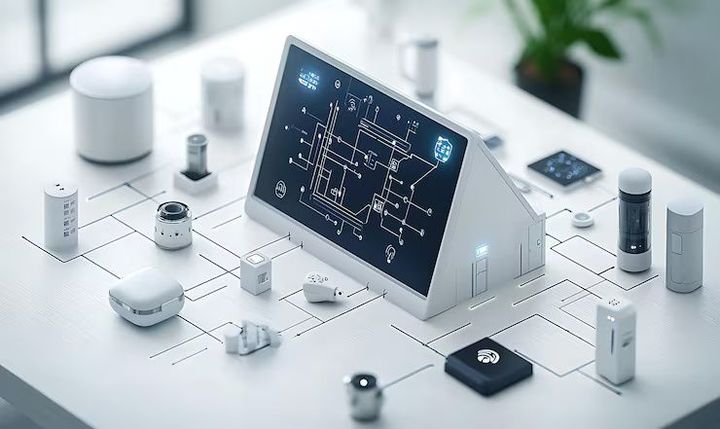
The Internet of Things (IoT) connects physical devices to digital systems, enabling them to collect data and perform actions automatically. At the core of this ecosystem are sensors and actuators. Sensors detect environmental conditions such as temperature, humidity, motion, or pressure. Actuators, on the other hand, convert digital signals into physical actions, such as turning on a motor, opening a valve, or adjusting lighting.
IoT sensors and actuators bridge the gap between the physical and digital worlds. Sensors collect real-world data, while actuators respond to instructions from software or control systems. Together, they enable automated environments that improve efficiency, safety, and decision-making.
These components are widely used across industries, homes, healthcare, agriculture, and transportation. From smart thermostats to industrial automation systems, they form the foundation of connected technologies.
Why IoT Sensors & Actuators Matter Today
The increasing reliance on data-driven systems has made IoT components essential. Sensors provide real-time monitoring, while actuators enable immediate responses without human intervention.
Key Benefits
- Improved efficiency: Reduces manual work and optimizes processes
- Better decision-making: Enables faster responses using real-time data
- Enhanced safety: Detects risks and triggers preventive actions
- Energy optimization: Adjusts usage based on real conditions
- Scalability: Expands easily across applications and industries
Industries That Benefit
- Manufacturing and industrial automation
- Smart cities and infrastructure
- Healthcare monitoring systems
- Agriculture and environmental monitoring
- Home automation and security
Common Problems Solved
- Lack of real-time data visibility
- Delayed responses in critical systems
- Inefficient energy consumption
- Manual errors in monitoring and control
Types of IoT Sensors and Actuators
IoT systems include a variety of sensors and actuators, each designed for specific tasks.
Common Types and Functions
| Category | Type | Function | Example Use Case |
|---|---|---|---|
| Sensors | Temperature Sensor | Measures heat levels | HVAC systems |
| Sensors | Motion Sensor | Detects movement | Security systems |
| Sensors | Pressure Sensor | Measures force or pressure | Industrial machinery |
| Sensors | Light Sensor | Detects light intensity | Smart lighting |
| Actuators | Motor | Produces mechanical movement | Conveyor belts |
| Actuators | Relay Switch | Controls electrical circuits | Smart appliances |
| Actuators | Valve | Regulates fluid flow | Water systems |
| Actuators | Servo Motor | Provides precise motion control | Robotics |
Recent Updates and Trends (2024–2025)
IoT technologies have evolved rapidly with advancements in connectivity, artificial intelligence, and system architecture.
Key Developments
- Edge computing adoption (2025): Enables local data processing for faster response
- AI-powered IoT systems (2025): Supports predictive maintenance and automation
- 5G expansion (2024–2025): Improves connectivity speed and reliability
- Energy-efficient sensors (2025): Reduces power consumption for sustainability
- Digital twin integration (2024): Enables simulation and monitoring of systems
Emerging Trends
- Smart factories using real-time sensor networks
- Wearable health devices with advanced sensing
- Autonomous systems relying on precise actuators
- Stronger cybersecurity measures for connected devices
These trends show how IoT systems are becoming more intelligent and efficient.
Laws and Policies Affecting IoT Systems
IoT technologies are governed by regulations related to data privacy, cybersecurity, and device standards.
Key Regulations in India
- Digital Personal Data Protection Act (2023)
- National Smart Grid Mission
- MeitY IoT Policy Framework
- Bureau of Indian Standards (BIS) guidelines
Global Standards
- GDPR (Europe) for data protection
- ISO standards for interoperability
- Cybersecurity frameworks for connected systems
These policies ensure safe, secure, and reliable deployment of IoT systems.
Tools and Resources for IoT Development
Various tools help developers design, test, and deploy IoT systems effectively.
Popular Tools and Platforms
- Arduino IDE for microcontroller programming
- Raspberry Pi for IoT prototyping
- Node-RED for workflow automation
- MATLAB IoT Toolbox for data analysis
- ThingSpeak for cloud-based data visualization
Additional Resources
- Online IoT simulators
- Sensor datasheets and documentation
- Open-source libraries
- IoT monitoring dashboards
Simple IoT System Workflow
A typical IoT system follows a structured process from data collection to action.
Workflow Overview
| Stage | Function |
|---|---|
| Data Collection | Sensors gather real-world data |
| Data Transmission | Network sends data |
| Data Processing | Cloud or edge system analyzes |
| Action Execution | Actuators perform required task |
This workflow enables automated and intelligent system behavior.
Frequently Asked Questions
What is the difference between a sensor and an actuator?
A sensor collects data from the environment, while an actuator performs actions based on commands.
Where are IoT sensors commonly used?
They are used in:
- Smart homes
- Industrial automation
- Healthcare devices
- Agriculture systems
- Environmental monitoring
Do IoT devices always need internet connectivity?
No. Some systems use local networks or edge computing for processing without continuous internet access.
What are the challenges in IoT systems?
- Data security risks
- Device compatibility issues
- Power consumption concerns
- Network reliability challenges
How do actuators improve automation?
Actuators enable automatic responses, reducing manual effort and improving accuracy in operations.
Conclusion
IoT sensors and actuators are fundamental to modern connected systems. They allow machines to sense, process, and respond to real-world conditions, enabling smarter automation.
Advancements in AI, 5G, and energy-efficient technologies continue to enhance their capabilities. At the same time, regulations ensure safe and responsible deployment.
Understanding these components provides a strong foundation for exploring IoT systems and their real-world applications across industries.