Lab Equipment Guide for Understanding Essential Tools Used in Scientific Research
Scientific research relies on accuracy, consistency, and careful observation. Whether researchers are studying chemical reactions, analyzing biological samples, or testing material properties, the quality of results often depends on the tools used throughout the process. Even the most advanced research methods require reliable equipment to generate meaningful and repeatable findings.
Laboratories across educational institutions, healthcare facilities, industrial environments, and research organizations use a wide range of specialized instruments to support scientific investigations. From simple measuring devices to advanced analytical systems, each piece of equipment serves a specific purpose within the research process.
What really matters is not simply owning laboratory tools. Understanding how different types of lab equipment contribute to experimentation, measurement, and data collection helps reveal their importance in modern scientific research.
This guide explores the basics of lab equipment, explains the role of essential laboratory tools, and highlights how these instruments support scientific discovery across multiple disciplines.
Understanding Lab Equipment
Lab equipment refers to the instruments, devices, and tools used to conduct scientific experiments, analyze samples, and support research activities.
Some equipment performs basic functions such as measuring volume, temperature, or mass. Other instruments carry out complex analytical tasks that help researchers identify substances, evaluate properties, or monitor experimental conditions.
This matters because scientific research depends heavily on precision. Small measurement errors can influence experimental outcomes and affect the reliability of results.
A practical example is a chemistry laboratory where accurate measurements of liquids and compounds are necessary to ensure consistent experimental conditions.
Why Lab Equipment Is Important in Scientific Research
Scientific investigations require controlled environments where observations can be measured and verified accurately.
Lab equipment helps researchers collect data, monitor variables, and maintain consistency throughout experiments. Without appropriate tools, many scientific procedures would become difficult or impossible to perform reliably.
The real difference appears when researchers compare experimental results across multiple studies. Standardized equipment helps improve reproducibility and supports more reliable conclusions.
A real-world example is medical research, where laboratory instruments assist scientists in analyzing biological samples and identifying important health-related information.
Common Categories of Lab Equipment
Laboratory tools are often grouped according to their primary function within the research process.
Measuring Equipment
Measuring instruments help determine quantities such as volume, mass, temperature, and pressure. Accurate measurements are fundamental to nearly every scientific experiment.
Analytical Instruments
These devices help researchers identify substances, evaluate chemical compositions, and analyze material properties. Analytical equipment often supports detailed scientific investigations.
Sample Handling Tools
Laboratories use various tools to collect, transfer, mix, and store samples safely during research activities.
Safety Equipment
Safety tools help protect laboratory personnel and maintain safe working conditions during experimental procedures.
Each category contributes to different stages of scientific research and laboratory operations.
Essential Lab Equipment Used in Research
Many laboratories rely on a core group of instruments that support routine scientific work.
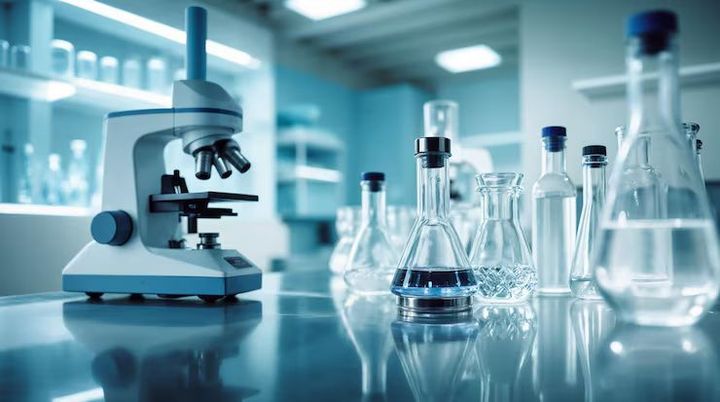
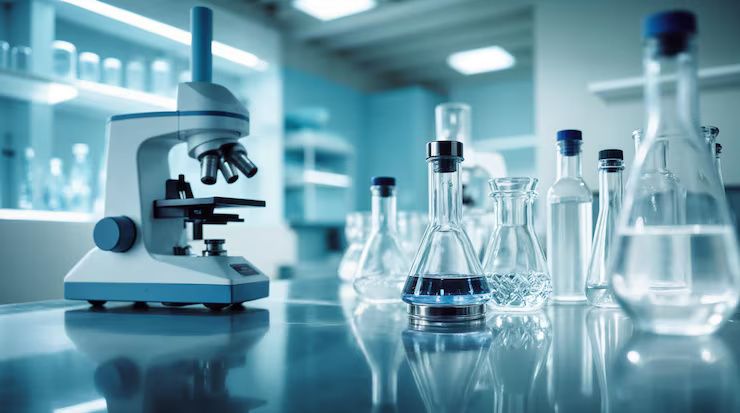
Microscopes allow researchers to observe structures that are not visible to the naked eye. They are widely used in biology, healthcare, and materials science.
Balances help measure mass accurately and are essential in chemistry and pharmaceutical research.
Centrifuges separate substances based on density, making them valuable for biological and medical investigations.
Laboratory glassware supports mixing, measuring, and storing materials throughout experimental procedures.
Commonly used laboratory tools include:
- Microscopes
- Analytical balances
- Centrifuges
- Laboratory glassware
Together, these instruments form the foundation of many research environments.
How Modern Technology Has Improved Laboratory Equipment
Laboratory technology has advanced significantly over the past several decades.
Traditional instruments often relied heavily on manual operation and visual observation. Modern equipment increasingly incorporates digital controls, automated processes, and advanced data analysis capabilities.
This matters because automation improves consistency while reducing the potential for human error during complex procedures.
A practical example is digital laboratory systems that automatically record measurements and generate data reports for researchers.
These technological improvements help increase efficiency while supporting more detailed scientific analysis.
Laboratory Safety and Equipment Usage
Safety remains one of the most important considerations in any laboratory environment.
Many scientific procedures involve chemicals, biological materials, heat sources, or mechanical equipment that require careful handling. Proper equipment usage helps reduce risks while protecting both researchers and experimental integrity.
Safety equipment often includes protective eyewear, ventilation systems, gloves, and emergency response tools.
A real-world example is chemical laboratories where protective equipment helps minimize exposure to potentially hazardous substances.
Understanding safe equipment operation is essential for maintaining effective research environments.
Decision Guide for Selecting Lab Equipment
Choosing laboratory equipment depends on several practical considerations.
Research objectives are often the most important factor because different scientific investigations require different capabilities.
Accuracy requirements also influence equipment selection. Some studies need extremely precise measurements, while others focus on broader observations.
Operational complexity should be considered as well because advanced instruments may require specialized training and maintenance.
A practical example is comparing educational laboratories with professional research facilities. Both use laboratory equipment, but their operational requirements often differ significantly.
In many cases, the real difference appears when equipment capabilities align closely with research goals and experimental needs.
Real-World Applications of Laboratory Equipment
Lab equipment supports scientific work across numerous industries and disciplines.
Healthcare laboratories use analytical instruments for diagnostics and medical research.
Environmental scientists rely on laboratory tools to study water quality, air samples, and ecological conditions.
Industrial research teams use testing equipment to evaluate materials, product performance, and manufacturing processes.
Educational institutions depend on laboratory instruments to support scientific learning and experimentation.
A clear example is pharmaceutical research, where specialized equipment helps scientists develop and evaluate new treatments.
Future Trends in Laboratory Technology
Scientific research continues driving innovation in laboratory equipment.
Automation is becoming increasingly common as laboratories seek greater efficiency and consistency.
Artificial intelligence is beginning to support data interpretation and experimental analysis.
Remote monitoring systems are improving accessibility by allowing researchers to observe equipment and experiments from different locations.
Advanced sensors and digital integration technologies are also helping improve measurement precision and operational control.
What really matters is how these innovations enhance research quality while supporting faster and more reliable scientific discoveries.
FAQ
1. What is lab equipment?
Lab equipment includes the tools and instruments used to conduct experiments, analyze samples, and support scientific research.
2. Why is laboratory equipment important?
It helps researchers collect accurate data, perform experiments safely, and generate reliable scientific results.
3. What are the most common laboratory instruments?
Microscopes, balances, centrifuges, and laboratory glassware are among the most widely used tools.
4. How has technology improved lab equipment?
Digital systems, automation, and advanced analytical capabilities have increased efficiency and accuracy.
5. Which industries use laboratory equipment?
Healthcare, education, environmental science, manufacturing, and pharmaceutical research all rely heavily on laboratory tools.
Conclusion
Lab equipment forms the foundation of scientific research by enabling accurate measurement, observation, analysis, and experimentation. From basic laboratory tools to highly advanced analytical systems, these instruments help researchers explore complex questions and generate reliable data.
As technology continues advancing, laboratory equipment is becoming more intelligent, automated, and capable of supporting increasingly sophisticated research. The future of scientific discovery may depend not only on innovative ideas but also on how effectively researchers utilize the tools that make those discoveries possible.