Laser Welding Machines Overview: Key Features, Industrial Uses, and Expert Tips
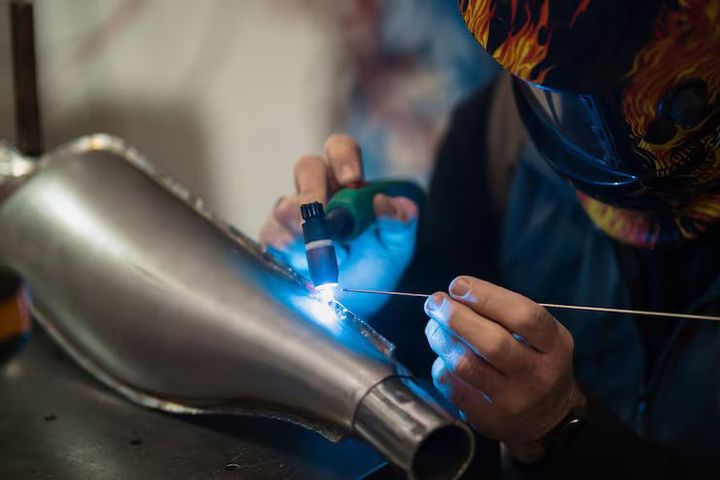
Laser welding machines are advanced manufacturing tools that use concentrated laser beams to join metal or thermoplastic components. The laser produces intense heat at a precise point, melting the material and forming a strong bond when it cools. This process allows manufacturers to create accurate and consistent welds, even on very small or delicate components.
Laser welding technology was developed to overcome the limitations of traditional methods such as arc welding and gas welding. Conventional techniques often produce wider heat-affected zones, which can lead to distortion or structural stress.
In contrast, laser welding uses a highly focused beam to deliver energy precisely where needed. This enables controlled, accurate joining with minimal impact on surrounding material.
Laser welding is widely used in industries that demand precision and consistency, including automotive, aerospace, medical devices, electronics, and battery manufacturing.
Key Characteristics of Laser Welding Machines
Laser welding machines offer several important features that make them suitable for modern manufacturing:
- Highly focused laser beam for precise welding
- Computer-controlled automation systems
- Reduced heat-affected zones
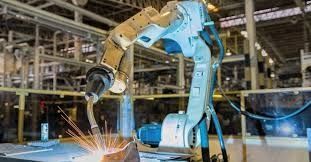
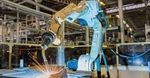
- Compatibility with robotic systems
- Ability to weld thin or delicate materials
These capabilities make laser welding an essential technology in advanced production environments.
Why Laser Welding Technology Matters Today
Modern industries require faster production, smaller components, and stronger materials. Traditional welding methods can struggle to meet these demands, especially when working with lightweight alloys or intricate parts.
Laser welding addresses these challenges by enabling high precision, efficiency, and adaptability in manufacturing processes.
Key Benefits in Modern Manufacturing
Laser welding provides several advantages:
- Precision engineering: Enables welding of very small components without damage
- Production efficiency: Automated systems ensure consistent results
- Material compatibility: Works well with aluminum, titanium, and stainless steel
Industries Benefiting from Laser Welding
- Automotive manufacturing (especially electric vehicles)
- Aerospace and aviation
- Medical device production
- Electronics and semiconductors
- Industrial equipment fabrication
The growing demand for electric vehicles and advanced electronics has further increased the importance of laser welding solutions.
Recent Developments and Technology Trends
Laser welding technology has evolved rapidly in recent years. Manufacturers are focusing on automation, efficiency, and smarter monitoring systems to improve performance.
In 2025, fiber laser systems have gained popularity due to their high efficiency and low maintenance requirements.
Emerging Trends
- Increased adoption of fiber laser welding
- Integration of artificial intelligence for real-time monitoring
- Growth of robotic welding systems
- Development of hybrid laser-arc welding methods
- Expansion in electric vehicle battery manufacturing
AI-powered systems can now detect issues such as misalignment or material inconsistencies during production. This helps improve quality and reduce defects.
Smart Manufacturing Innovations
Modern systems are increasingly connected and data-driven. Some key innovations include:
- Smart sensors for tracking weld quality
- Digital twin technology for simulation
- Real-time monitoring dashboards
These advancements align with Industry 4.0, where automation and data integration play a central role.
Regulations and Safety Policies
Laser welding involves high-energy beams and automated machinery, making safety regulations essential. Many countries follow international standards such as those developed by the IEC.
These standards classify lasers based on their power levels and potential hazards.
Key Safety Measures
- Protective enclosures around equipment
- Use of laser safety glasses
- Emergency stop systems
- Proper ventilation and fume extraction
Workplace safety and environmental regulations also influence how laser welding systems are used in industrial settings.
Role of Quality Standards
Quality frameworks such as ISO standards ensure consistent production and proper documentation. Government initiatives supporting smart manufacturing also encourage the adoption of laser technologies.
Tools and Resources for Laser Welding Technology
Manufacturers rely on various digital tools to design, simulate, and monitor welding processes. These tools improve efficiency and reduce errors before production begins.
Common Tools Used
- CAD software for component design
- CAM software for welding path control
- Welding simulation platforms
- Process monitoring dashboards
- Industrial automation systems
Typical Workflow
- Design components using CAD tools
- Generate welding paths with CAM software
- Simulate welding conditions
- Configure machine parameters
- Monitor performance using sensor data
Comparison of Laser Welding Technologies
| Laser Type | Typical Characteristics | Common Applications |
|---|---|---|
| Fiber Laser | High efficiency, strong beam quality | Automotive parts, electronics |
| CO₂ Laser | Suitable for thicker materials | Heavy manufacturing |
| Diode Laser | Compact and energy efficient | Plastic welding, electronics |
Industry Feature Priorities
| Technology Feature | Industry Priority |
|---|---|
| Precision Control | High |
| Automation Integration | High |
| Energy Efficiency | Moderate |
| Data Monitoring | High |
These priorities reflect the increasing shift toward intelligent and automated manufacturing systems.
Frequently Asked Questions
What is laser welding used for?
Laser welding is used to join metals and thermoplastics in industries such as automotive, aerospace, electronics, and medical manufacturing.
How does it differ from traditional welding?
Laser welding uses a focused light beam, while traditional methods use arcs or flames. It offers higher precision and smaller heat-affected zones.
What materials can be welded?
Common materials include:
- Stainless steel
- Aluminum
- Titanium
- Copper
- Certain thermoplastics
Is it suitable for automation?
Yes. Laser welding integrates well with robotic systems and automated production lines.
Why is it important for electric vehicles?
Electric vehicle batteries require precise connections. Laser welding ensures accurate and reliable joining of battery components.
Conclusion
Laser welding machines play a critical role in modern manufacturing. Their ability to deliver precise, strong, and efficient welds makes them ideal for advanced industrial applications.
As industries continue to adopt automation and smart technologies, laser welding will remain essential. Ongoing innovations in fiber lasers, AI monitoring, and digital manufacturing systems will further enhance its capabilities in the future.