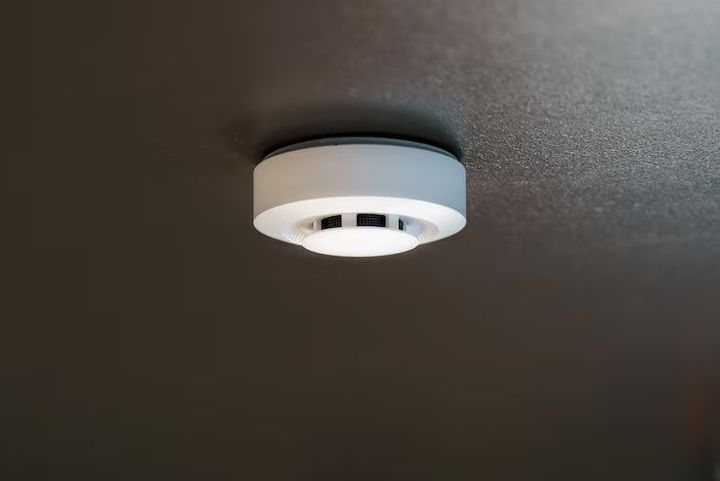
Motion Detection with PIR Sensors: Complete Guide to How Passive Infrared Sensors Work
Motion detection technology plays an important role in modern security systems, smart home automation, and energy management solutions. One of the most widely used technologies for detecting movement is the Passive Infrared (PIR) sensor.
A PIR sensor detects changes in infrared radiation emitted by objects, especially humans and animals. Unlike active sensors, it does not emit energy but instead measures heat variations in its surroundings. When a warm object moves across its detection range, the sensor triggers a response.
PIR motion detection systems were developed to provide reliable and energy-efficient monitoring solutions. Today, they are widely used in smart homes, security systems, and industrial environments.
Common Applications of PIR Sensors
PIR sensors are integrated into a wide range of systems across industries. Their ability to detect motion efficiently makes them highly versatile.
- Smart home automation systems
- Motion detection security cameras
- Building automation systems
- Energy-efficient lighting control
- Industrial monitoring environments
In most setups, PIR sensors are connected to microcontrollers or smart platforms. These systems process signals and trigger actions like alarms, lighting, or system logs.
Key Components of a PIR Motion Detection System
A typical PIR system includes several components that work together to detect motion accurately. Each part plays a specific role in sensing and processing data.
| Component | Function |
|---|---|
| PIR Sensor Element | Detects infrared radiation changes |
| Fresnel Lens | Expands the detection field |
| Signal Processing Circuit | Interprets movement signals |
| Control Module | Connects to automation or security systems |
These components ensure that motion is detected efficiently while minimizing false triggers.
Why PIR Motion Detection Matters Today
Motion detection technology plays a key role in modern digital infrastructure. PIR sensors are especially valuable because they provide accurate detection with low energy consumption.
They are widely used in smart homes, commercial buildings, and security systems. Their ability to automate responses improves both convenience and safety.
Key Benefits of PIR Motion Detection
PIR sensors help address several real-world challenges across industries. They are essential for improving efficiency and automation.
- Reducing energy consumption in buildings
- Enhancing security monitoring systems
- Automating environmental controls
- Supporting intelligent infrastructure management
As smart cities and IoT systems continue to grow, PIR sensors are becoming standard components in automated environments.
Recent Developments in PIR Sensor Technology
Recent advancements have significantly improved PIR sensor performance and integration. New technologies are enhancing accuracy, reliability, and system intelligence.
In 2024 and 2025, trends such as AI integration and hybrid sensing systems have shaped the evolution of motion detection technologies.
Key Technology Trends
Modern PIR systems are evolving beyond basic motion detection. They now incorporate advanced technologies for smarter performance.
| Technology Trend | Description | Impact |
|---|---|---|
| AI Motion Analysis | Smart algorithms analyze movement patterns | Fewer false alarms |
| Hybrid Sensors | Combined with microwave or radar detection | Higher accuracy |
| IoT Integration | Connected to smart devices and platforms | Improved automation |
| Edge Processing | Local data analysis at device level | Faster response |
These innovations demonstrate how PIR sensors are becoming intelligent monitoring tools.
Regulations and Policies Affecting Motion Detection Systems
Motion detection systems must comply with various regulatory standards. These ensure safety, privacy, and reliable operation across environments.
Different countries enforce regulations related to electronic safety and data protection. These rules help prevent misuse and ensure system compatibility.
Common Regulatory Frameworks
Several regulations influence how PIR systems are designed and used globally.
- Electronic equipment safety standards
- Electromagnetic compatibility (EMC) regulations
- Environmental directives for electronic components
- Data privacy laws for surveillance systems
Government initiatives promoting energy efficiency also encourage the adoption of motion-activated systems.
Helpful Tools and Resources for PIR Motion Detection
Developers and engineers use various tools to design and implement PIR systems. These tools help in testing, simulation, and integration.
Modern platforms make it easier to build smart and automated motion detection systems.
Common Tools Used
- Microcontroller development platforms
- Electronic circuit simulation software
- IoT development environments
- Smart home automation platforms
- Embedded systems programming tools
PIR System Architecture Overview
A typical PIR motion detection system is structured in layers. Each layer performs a specific function in the overall system.
| System Layer | Function |
|---|---|
| Sensor Layer | Detects infrared radiation changes |
| Processing Layer | Interprets motion signals |
| Control Layer | Activates system responses |
| Application Layer | Connects to automation or security platforms |
These resources help users build and manage efficient motion detection systems.
Frequently Asked Questions About PIR Motion Sensors
What does PIR stand for?
PIR stands for Passive Infrared. It means the sensor detects infrared radiation without emitting energy.
How do PIR sensors detect motion?
PIR sensors measure changes in infrared radiation levels. When a warm object moves across the detection zone, the sensor detects a shift in heat patterns and triggers a signal.
Where are PIR sensors commonly used?
PIR sensors are used in multiple environments due to their flexibility.
- Smart home automation systems
- Motion-activated lighting
- Security alarm systems
- Building automation platforms
- Industrial monitoring environments
What affects PIR sensor accuracy?
Several environmental factors can influence performance.
- Temperature fluctuations
- Direct sunlight exposure
- Airflow from heating systems
- Pets or small animals
Advanced systems reduce these issues using filtering and pattern recognition technologies.
Are PIR sensors suitable for outdoor use?
Yes, many PIR sensors are designed for outdoor environments. They often include protective housings and calibration features to minimize weather-related interference.
Conclusion
PIR motion detection is a foundational technology in modern automation and security systems. It provides reliable monitoring by detecting infrared radiation changes while maintaining low energy consumption.
With the rise of smart homes and IoT ecosystems, PIR sensors are becoming increasingly essential. They support applications ranging from security monitoring to energy-efficient building management.
Advancements such as AI integration, hybrid sensing, and edge computing are expanding their capabilities. At the same time, regulatory standards ensure safe and responsible implementation.
Understanding PIR motion detection helps individuals and organizations adopt smarter, more efficient technologies. It remains a key component in the future of intelligent infrastructure.