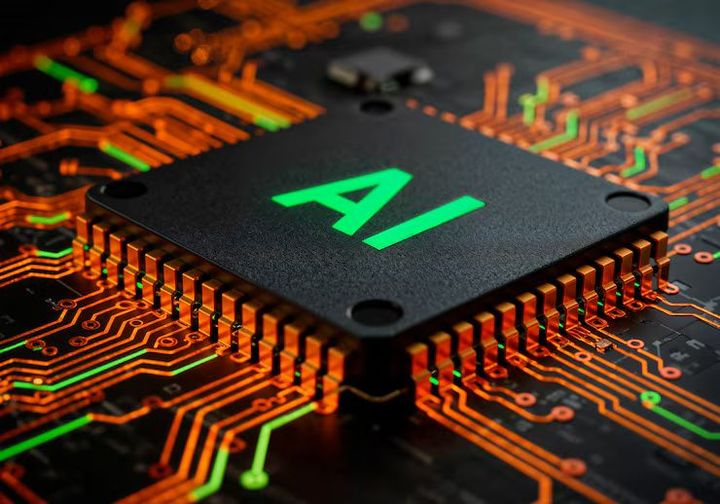
Neuromorphic chips are advanced computing systems inspired by the structure and function of the human brain. These chips aim to replicate how biological neurons process and transmit information efficiently.
The concept originates from neuroscience and artificial intelligence research. Scientists observed that the human brain processes large amounts of data using minimal energy compared to traditional computing systems.
How Neuromorphic Chips Work
Neuromorphic computing replicates brain-like communication patterns using specialized hardware. Unlike traditional systems, these chips use event-driven processing, meaning they activate only when signals are present.
Key Functional Principles
-
Mimic neuron firing through spiking signals
-
Process data only when required (event-driven)
-
Integrate neural networks directly into hardware
-
Enable parallel signal processing
Core Characteristics
-
Spiking neural network architectures
-
Parallel signal processing
-
Event-driven data transmission
-
Energy-efficient computing models
-
Adaptive learning capabilities
These features allow neuromorphic chips to deliver real-time processing with lower latency and improved efficiency.
Why Neuromorphic Chips Matter in AI
Artificial intelligence is expanding rapidly across industries such as healthcare, robotics, and autonomous systems. These applications require fast decision-making and efficient data processing.
Neuromorphic chips help address key limitations of traditional AI hardware.
Key Benefits
-
Lower energy consumption compared to GPU-based systems
-
Faster real-time processing for dynamic environments
-
Improved scalability for edge computing
-
Adaptive learning from real-world data
Industry Applications
-
Autonomous transportation systems
-
Edge computing and IoT devices
-
Robotics and automation
-
Medical diagnostics and brain-machine interfaces
-
Smart sensors and environmental monitoring
These chips are particularly useful in edge AI, where data is processed locally instead of relying on cloud infrastructure.
Recent Developments (2024–2025)
Neuromorphic computing has seen rapid progress in recent years. Research institutions and technology companies are actively developing new architectures and scalable models.
Key Trends
-
Expansion of neuromorphic prototypes for robotics
-
Development of low-power AI processors
-
Integration with edge computing systems
-
Growth in academic and industry collaborations
Researchers are also exploring hybrid systems that combine traditional AI with neuromorphic approaches for better performance.
Comparison: Traditional AI vs Neuromorphic Chips
| Feature | Traditional AI Hardware | Neuromorphic Chips |
|---|
| Processing Model | Sequential or GPU parallel computing | Brain-inspired spiking networks |
| Energy Efficiency | Moderate to high power consumption | Very energy efficient |
| Data Processing | Batch processing | Event-driven processing |
| Learning Mechanism | Deep learning training models | Adaptive synaptic learning |
This comparison highlights the efficiency and adaptability of neuromorphic systems.
Regulations and Government Policies
Neuromorphic computing is influenced by global AI regulations and semiconductor policies. Governments are focusing on responsible AI development and technological independence.
Key Regulatory Areas
-
AI governance frameworks
-
Semiconductor manufacturing policies
-
Data privacy regulations
-
Technology export controls
Policies promoting energy-efficient computing also support the growth of neuromorphic technologies.
Tools and Resources for Research
Various tools and platforms help researchers develop and test neuromorphic systems. These resources support simulation, modeling, and experimentation.
Common Tools
| Tool | Purpose |
|---|
| NEST Simulator | Simulation of large spiking neural networks |
| Brian2 | Neural network modeling framework |
| PyTorch (SNN extensions) | Machine learning experiments with spiking networks |
| NeuroML | Standard format for neural models |
Additional Resources
-
Academic research papers and journals
-
University neuroscience labs
-
AI research conferences
-
Open datasets for training
Workflow Example
-
Sensor Input
-
Spike Encoding
-
Neuromorphic Processor
-
Pattern Recognition
-
Output Decision
This workflow shows how brain-inspired systems process real-world data.
Frequently Asked Questions
What are neuromorphic chips used for?
They are used for pattern recognition, sensory processing, robotics, and edge AI applications.
How are they different from traditional processors?
Traditional processors rely on sequential or GPU-based computation. Neuromorphic chips use event-driven, brain-like processing models.
Why are they energy efficient?
They operate only when signals are present, reducing unnecessary computations and saving energy.
Are they replacing traditional AI hardware?
No, they currently complement existing systems like CPUs and GPUs rather than replacing them.
Which industries benefit the most?
Industries such as robotics, healthcare, autonomous systems, and IoT benefit significantly.
Conclusion
Neuromorphic chips represent a promising advancement in artificial intelligence hardware. By mimicking biological neural networks, they offer improved efficiency, real-time processing, and adaptive learning.
Recent developments highlight growing interest in this technology across multiple industries. Government initiatives, research collaborations, and sustainability goals are further driving innovation.
Although still emerging, neuromorphic computing has the potential to reshape future AI systems. Continued advancements in neuroscience and semiconductor technology will play a key role in its adoption.