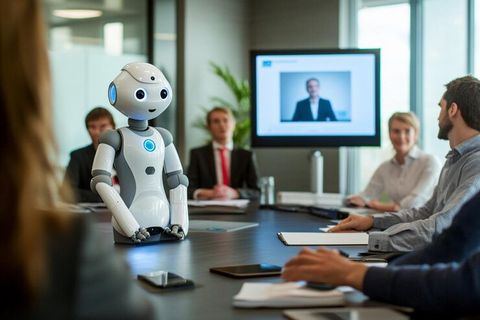
Vision sensor object recognition is a technology that enables machines to identify and analyze objects using visual data. It combines hardware and software systems to replicate human vision in automated environments. This approach is widely used in industries where precision and speed are critical.
This technology exists because many industries require automated inspection, monitoring, and identification tasks that would otherwise depend on human observation. Vision sensors combine hardware and software to detect objects quickly and accurately.
Core Components of Vision-Based Systems
At the core of object recognition systems are multiple integrated components that work together to process visual information. These components ensure accurate detection and efficient performance across applications.
Key Components
-
Digital cameras or vision sensors
-
Image processing software
-
Artificial intelligence or machine learning algorithms
-
Lighting systems for image clarity
-
Data processing units
When a camera captures an image, the system processes and compares it with predefined models or trained datasets. If a match is identified, it can trigger actions such as sorting, tracking, or measurement.
Applications of Vision Sensor Object Recognition
Vision-based object recognition is widely used across multiple industries. It plays a vital role in improving automation, accuracy, and operational efficiency.
Key Industry Applications
-
Manufacturing automation
-
Autonomous vehicles
-
Medical diagnostics and imaging
-
Logistics and warehouse automation
-
Smart city monitoring systems
In manufacturing, vision sensors help detect defects and verify product assembly. In logistics, they enable barcode reading, package identification, and inventory tracking.
Healthcare applications include analyzing medical images and laboratory samples. In robotics, vision sensors allow machines to navigate environments and interact with objects more effectively.
Why Vision Sensor Object Recognition Matters Today
Object recognition technology is becoming increasingly important due to the demand for automation and data-driven decision-making. It reduces manual inspection and enhances accuracy across industries.
Organizations benefit from improved efficiency, reduced errors, and better quality control. These systems also support scalability in operations, especially in high-volume environments.
The integration of artificial intelligence and advanced processors has further enhanced system capabilities. This enables faster and more reliable object recognition in complex scenarios.
Recent Developments in Vision Sensor Technology
Recent advancements have significantly improved the performance and capabilities of vision-based systems. These developments focus on speed, accuracy, and real-time processing.
Key Trends in 2025
-
Increased adoption of edge AI for on-device processing
-
Development of high-resolution 3D vision sensors
-
Expansion of machine vision in electronics manufacturing
-
Improvements in embedded vision systems
Edge AI reduces dependency on cloud systems, improving both speed and data privacy. Meanwhile, 3D vision sensors enhance depth perception and spatial awareness.
Timeline of Recent Developments
| Time Period | Development Description |
|---|
| January 2025 | Adoption of edge AI chips in industrial automation |
| March 2025 | Advancements in real-time neural network models |
| Mid-2025 | Growth in semiconductor machine vision systems |
| Late 2025 | Improvements in smart camera processing |
Collaborative robotics is another growing trend, where robots work alongside humans safely. Deep learning models now allow systems to recognize objects under varying conditions, including poor lighting and partial visibility.
Regulations and Policies Affecting Vision Technology
Vision sensor technologies are influenced by global regulations related to safety, privacy, and artificial intelligence. These policies ensure responsible development and deployment.
Key Regulatory Areas
-
Workplace safety standards
-
Data protection and privacy laws
-
AI governance frameworks
For example, industrial systems must comply with workplace safety regulations. Data protection laws such as GDPR regulate how visual data is collected and stored.
Governments are also promoting AI innovation through research programs and digital initiatives. Standards organizations provide guidelines to maintain system reliability and performance.
Tools and Resources for Development
Developers use various tools and platforms to build and deploy object recognition systems. These tools support model training, simulation, and real-world implementation.
Common Tools
-
Computer vision frameworks
-
AI model training platforms
-
Machine learning datasets
-
Industrial automation software
-
Simulation environments
Popular Frameworks
-
OpenCV
-
TensorFlow
-
PyTorch
-
MATLAB Computer Vision Toolbox
These tools help developers create models for detection, classification, and segmentation tasks.
Vision System Components Table
| Component | Function | Application Example |
|---|
| Vision Sensor | Captures visual data | Manufacturing inspection |
| AI Processing Unit | Runs recognition algorithms | Robotics navigation |
| Lighting System | Improves image quality | Quality control systems |
| Software Platform | Analyzes images | Machine learning training |
Example Workflow of Object Recognition
| Step | Description |
|---|
| Image Capture | Vision sensor records image data |
| Preprocessing | Noise reduction and image enhancement |
| Feature Extraction | Identifying shapes, edges, and textures |
| Model Analysis | AI algorithm identifies object patterns |
| Decision Output | System triggers action or classification |
Frequently Asked Questions
What is a vision sensor in object recognition systems?
A vision sensor is a device that captures images and processes them to detect or identify objects. It integrates camera hardware with processing software.
How does object recognition work in machine vision?
It works by analyzing features such as shapes, colors, and patterns. Machine learning models compare these features with trained datasets to identify objects.
What industries use vision-based recognition systems?
Industries include manufacturing, healthcare, robotics, transportation, agriculture, and smart infrastructure.
What is the difference between computer vision and machine vision?
Computer vision is a broader field focused on enabling machines to interpret visual data. Machine vision is typically used in industrial automation for inspection and monitoring.
Can vision sensors operate in real time?
Yes, modern systems use advanced processors and AI accelerators to enable real-time detection and decision-making.
Additional Insights on Vision System Performance
The performance of vision systems depends on multiple technical and environmental factors. These factors influence detection accuracy and processing efficiency.
Key Performance Factors
-
Detection accuracy
-
Processing speed
-
Lighting conditions
-
Dataset quality
-
Algorithm efficiency
Factors Affecting Accuracy
| Factor | Impact on Recognition Accuracy |
|---|
| Image Resolution | High |
| Training Dataset Quality | High |
| Lighting Conditions | Medium |
| Processing Power | High |
| Algorithm Optimization | High |
Advances in deep learning have significantly improved system performance. These improvements enable accurate recognition even in complex and dynamic environments.
Conclusion
Vision sensor object recognition is a critical component of modern automation and artificial intelligence systems. It enables machines to interpret visual data and perform tasks with high precision.
Recent advancements in edge AI, 3D sensing, and deep learning are expanding the capabilities of these systems. Regulatory frameworks are also ensuring responsible and safe deployment.
As technology continues to evolve, object recognition systems will become more accurate and widely integrated. Understanding these systems helps highlight their role in shaping the future of intelligent automation.