Order Fulfillment Guide: Process, Methods & Best Practices
Order fulfillment is one of the most important parts of modern commerce.
Once a customer places an order, every step that follows—from inventory management to packaging and final delivery—affects the overall customer experience. An efficient fulfillment process helps businesses maintain accurate inventory, improve operational efficiency, and ensure products reach customers on time.
As online shopping and global supply chains continue to expand, businesses of all sizes rely on effective order fulfillment strategies to manage growing demand. This guide explains how order fulfillment works, its key stages, common methods, benefits, challenges, and future trends shaping modern logistics.
What Is Order Fulfillment?
Order Fulfillment is the complete process of receiving, processing, packing, shipping, and delivering customer orders. It begins when an order is placed and ends when the product successfully reaches the customer.
The process involves inventory management, warehouse operations, packaging, transportation, and order tracking. A well-organized fulfillment system helps improve operational efficiency while reducing delays and inventory errors.
Why Order Fulfillment Is Important
An efficient fulfillment process supports smooth business operations and customer satisfaction. Accurate order processing helps reduce shipping errors, improve inventory visibility, and streamline warehouse activities.
As businesses expand into multiple markets, effective fulfillment systems become essential for handling larger order volumes while maintaining consistent delivery performance. Well-managed fulfillment also supports stronger supply chain coordination and better inventory planning.
How the Order Fulfillment Process Works
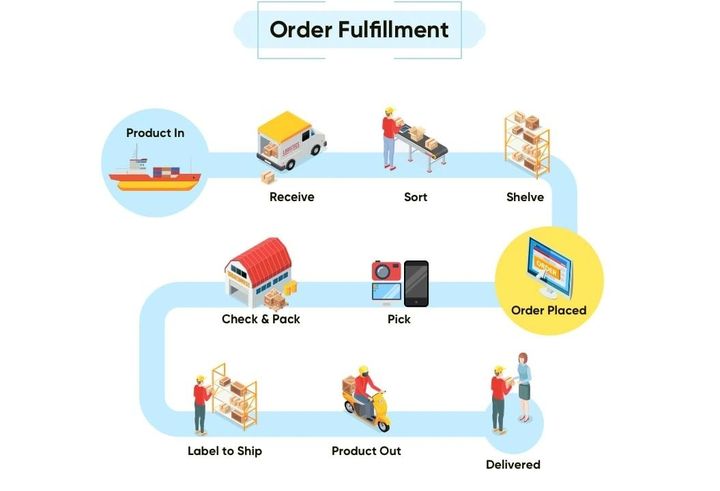
Order fulfillment follows a series of connected steps that move products from storage to the customer.
Order Processing
The process begins when a customer places an order through an online store, marketplace, or business system. The order information is verified before moving to the warehouse.
Inventory Picking
Warehouse staff or automated systems locate the requested products and prepare them for packing.
Packing
Products are carefully packed using suitable packaging materials to help protect them during transportation.
Shipping
Packed orders are transferred to transportation partners for delivery through road, air, rail, or other logistics networks.
Delivery and Confirmation
The order reaches the customer, and the fulfillment process is completed after delivery confirmation and record updates.
Common Order Fulfillment Methods
Businesses use different fulfillment models depending on their operations and customer requirements.
Common methods include:
- In-house fulfillment
- Third-party logistics (3PL)
- Dropshipping
- Hybrid fulfillment
- Multi-warehouse fulfillment
- Automated fulfillment centers
Each approach offers different advantages depending on inventory volume, business size, and distribution strategy.
Key Components of an Effective Fulfillment System
Several elements contribute to efficient order fulfillment.
Important components include:
- Inventory management
- Warehouse organization
- Order management systems
- Barcode scanning
- Packaging processes
- Shipping coordination
- Order tracking
- Returns management
When these components work together, businesses can improve operational efficiency and maintain accurate order processing.
Benefits of Efficient Order Fulfillment
A well-managed fulfillment process helps businesses improve inventory accuracy, reduce operational delays, and streamline warehouse activities. Faster order processing also contributes to a better customer experience by reducing waiting times and improving shipment visibility.
Efficient fulfillment supports better inventory planning, allowing businesses to maintain appropriate stock levels while reducing unnecessary storage challenges. Real-time tracking also provides greater visibility throughout the delivery process, improving communication between businesses and customers.
As operations grow, scalable fulfillment systems help organizations manage increasing order volumes without significantly disrupting daily workflows.
Challenges in Order Fulfillment
Managing fulfillment operations can become increasingly complex as order volumes increase.
Inventory inaccuracies, warehouse congestion, seasonal demand fluctuations, transportation delays, and supply chain disruptions can all affect fulfillment performance. Businesses must also coordinate inventory across multiple storage locations while maintaining accurate order records.
Investing in organized warehouse processes, digital inventory systems, and reliable logistics planning helps reduce many of these operational challenges.
Future Trends in Order Fulfillment
Technology continues transforming fulfillment operations across the logistics industry.
Artificial intelligence is improving demand forecasting and inventory planning, while warehouse automation is increasing picking and packing efficiency. Robotics, autonomous mobile systems, and smart conveyor technologies are becoming more common in modern fulfillment centers.
Cloud-based order management platforms, Internet of Things (IoT) devices, and predictive analytics are also helping businesses improve inventory visibility and optimize supply chain performance.
As customer expectations continue evolving, fulfillment operations are expected to become faster, smarter, and more connected.
Frequently Asked Questions
What is Order Fulfillment?
Order Fulfillment is the process of receiving, processing, packing, shipping, and delivering customer orders while managing inventory and warehouse operations.
Which industries rely on order fulfillment?
Retail, e-commerce, manufacturing, healthcare, wholesale distribution, consumer goods, and logistics organizations all depend on efficient fulfillment systems.
What technologies improve order fulfillment?
Barcode scanning, warehouse management systems, artificial intelligence, automation, robotics, cloud platforms, and inventory tracking technologies all contribute to improved fulfillment efficiency.
Why is inventory management important?
Accurate inventory management helps prevent stock shortages, improves order accuracy, and supports efficient warehouse operations.
How is order fulfillment evolving?
Modern fulfillment increasingly relies on automation, robotics, real-time tracking, predictive analytics, and connected warehouse technologies to improve operational efficiency.
Conclusion
Order Fulfillment is a critical part of modern supply chain management, connecting inventory, warehouse operations, transportation, and final delivery into one coordinated process. An organized fulfillment strategy helps improve efficiency, maintain inventory accuracy, and support reliable customer experiences.
As technology continues to advance, automation, artificial intelligence, and smart logistics systems will further improve fulfillment operations, enabling businesses to manage growing demand with greater accuracy and operational flexibility.