Precision Machining Guide to Materials, Equipment, and Production Methods
Precision machining is one of the most important manufacturing technologies used across industries that demand accuracy, consistency, and high-quality components.
From aerospace and automotive parts to medical devices and industrial equipment, precision machining enables manufacturers to produce complex parts with tight tolerances and repeatable results.
Advancements in digital manufacturing, computer-controlled equipment, and precision engineering have transformed machining into a highly efficient production process capable of handling everything from one-off prototypes to large-scale manufacturing. As industries continue to demand greater reliability and performance, precision machining remains at the center of modern precision manufacturing.
This guide explains what precision machining is, how it works, the materials involved, the equipment used, common production methods, quality considerations, applications, challenges, and future trends.
What Is Precision Machining?
Precision machining is a manufacturing process that removes material from a workpiece to create parts with highly accurate dimensions, smooth surface finishes, and tight tolerances. The process relies on advanced machine tools, computer programming, and skilled engineering to ensure every component meets detailed design specifications.
Unlike conventional machining, which may focus on general shaping, high precision machining emphasizes repeatability, dimensional accuracy, and consistency across multiple production runs.
Today, CNC precision machining has become the industry standard because computer-controlled systems significantly improve efficiency, accuracy, and production reliability.
Why Precision Machining Is Important
Many modern products contain components that must fit together with minimal variation. Even a small dimensional difference can affect performance, safety, or product lifespan.
Precision machining supports manufacturing by providing:
- High dimensional accuracy
- Consistent product quality
- Excellent repeatability
- Smooth surface finishes
- Efficient material utilization
- Reliable component performance
- Compatibility with automated production systems
These advantages make precision manufacturing essential for industries where accuracy directly influences product performance.
How Precision Machining Works
Precision machining begins with a digital design created using Computer-Aided Design (CAD) software. Engineers define the exact dimensions, material requirements, and tolerances needed for the finished component.
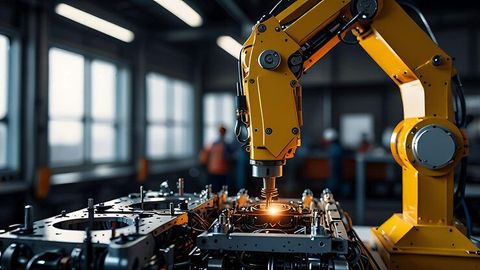
The design is then converted into machining instructions using Computer-Aided Manufacturing (CAM) software. These instructions guide CNC machines through precise cutting operations.
During production, cutting tools gradually remove material while sensors and control systems monitor positioning, speed, and cutting conditions. After machining is complete, the finished part undergoes inspection to verify that it meets quality standards.
The combination of digital design, automated equipment, and rigorous inspection allows manufacturers to produce highly accurate components consistently.
Common Materials Used in Precision Machining
Material selection plays an important role in determining machining performance, durability, and final application.
Metals
Metals are among the most frequently machined materials because of their strength and versatility.
Common examples include:
- Aluminum
- Stainless steel
- Carbon steel
- Titanium
- Brass
- Copper
- Tool steel
Each material offers different characteristics related to strength, corrosion resistance, weight, machinability, and thermal performance.
Plastics
Engineering plastics are widely used where lightweight construction, electrical insulation, or chemical resistance is required.
Common materials include:
- PEEK
- Nylon
- Acetal
- PTFE
- Polycarbonate
- ABS
Plastic machining requires careful control to prevent heat-related deformation during cutting.
Composite Materials
Some advanced industries use composite materials that combine lightweight construction with high mechanical strength. These materials often require specialized cutting tools and machining strategies.
Equipment Used in CNC Precision Machining
Modern machining facilities utilize a variety of specialized equipment depending on production requirements.
CNC Milling Machines
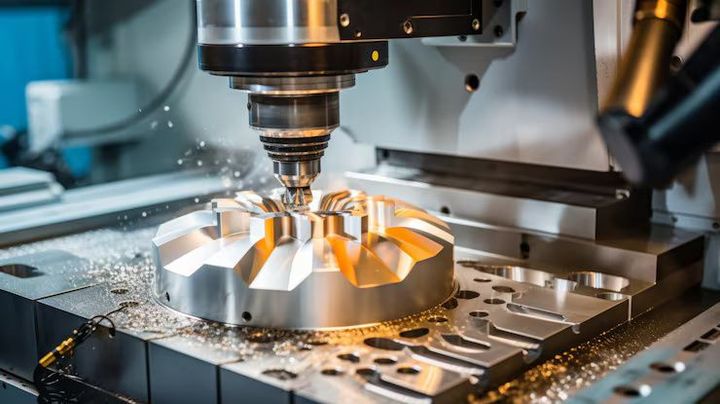
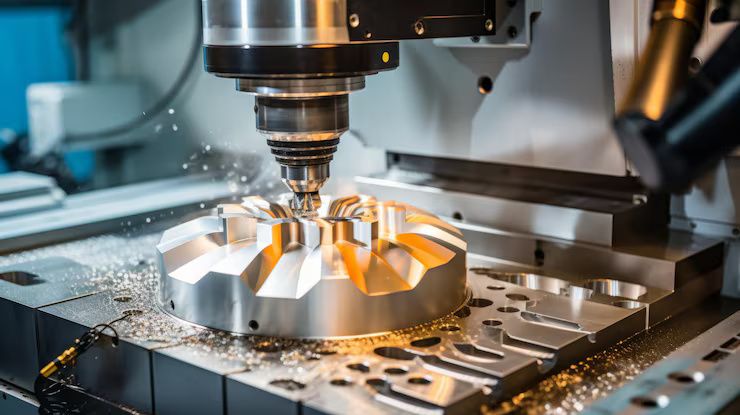
CNC milling removes material using rotating cutting tools capable of producing complex three-dimensional shapes, slots, pockets, and precision surfaces.
CNC Lathes
Lathes rotate the workpiece while stationary cutting tools shape cylindrical components such as shafts, bushings, and threaded parts.
Machining Centers
Vertical and horizontal machining centers combine multiple operations into one setup, improving efficiency while reducing repositioning errors.
Grinding Machines
Grinding provides extremely fine dimensional control and smooth surface finishes for components requiring exceptional precision.
Electrical Discharge Machining (EDM)
EDM removes material using controlled electrical discharges, making it suitable for complex geometries and hard materials that may be difficult to machine conventionally.
Coordinate Measuring Machines (CMM)
After production, CMM equipment verifies dimensions with extremely high accuracy to ensure compliance with engineering specifications.
Common Precision Machining Processes
Precision manufacturing often involves multiple machining operations to achieve the desired geometry and finish.
| Process | Primary Purpose | Typical Applications |
|---|---|---|
| Milling | Flat surfaces and complex shapes | Machine components, housings |
| Turning | Cylindrical parts | Shafts, pins, fittings |
| Drilling | Hole creation | Fastener locations, assemblies |
| Boring | Enlarging existing holes | Precision internal diameters |
| Grinding | Fine finishing | High-accuracy surfaces |
| EDM | Complex geometries | Precision tooling and molds |
Selecting the appropriate combination of processes depends on part geometry, material properties, production volume, and quality requirements.
The Role of Precision Engineering
Precision engineering extends beyond machining itself. It involves designing products that can be manufactured accurately while maintaining functionality and reliability.
Engineers consider numerous factors, including:
- Material behavior
- Thermal expansion
- Assembly requirements
- Load distribution
- Surface finish
- Dimensional tolerances
- Manufacturing efficiency
By addressing these considerations early in the design stage, manufacturers can improve production consistency while reducing unnecessary complexity.
Understanding Tolerances in Precision Manufacturing
Tolerance refers to the allowable variation from a specified dimension.
For example, a component may require extremely small dimensional variation to fit correctly within a larger assembly. Precision machining enables manufacturers to achieve these tight tolerances consistently.
Factors influencing dimensional accuracy include:
- Machine calibration
- Tool wear
- Material stability
- Temperature control
- Cutting parameters
- Operator expertise
- Inspection methods
Maintaining consistent tolerances is essential for products used in industries with demanding quality requirements.
Industries That Depend on Precision Machining
Precision machining supports a wide range of industries where reliability and accuracy are essential.
Aerospace
Aircraft components require lightweight construction combined with exceptional dimensional accuracy and structural integrity.
Medical Technology
Medical instruments, surgical equipment, and implantable devices often require highly precise manufacturing to meet strict performance standards.
Automotive
Modern vehicles contain numerous machined components used in engines, transmissions, braking systems, and steering assemblies.
Electronics
Electronic equipment relies on precisely manufactured housings, connectors, cooling components, and structural parts.
Industrial Equipment
Manufacturing machinery depends on accurately machined gears, bearings, shafts, hydraulic components, and mechanical assemblies.
Energy
Energy production systems use precision components designed to operate reliably under demanding environmental and mechanical conditions.
Quality Control in High Precision Machining
Quality assurance is integrated throughout the manufacturing process rather than being limited to final inspection.
Manufacturers commonly perform:
- Incoming material verification
- Machine calibration
- In-process measurement
- Dimensional inspection
- Surface finish evaluation
- Functional testing
- Final documentation
Modern inspection technologies help identify deviations early, reducing waste and improving production efficiency.
Challenges in Precision Machining
Although technology has advanced considerably, precision machining continues to present several engineering challenges.
Material Complexity
Advanced alloys and composite materials often require specialized cutting tools and machining strategies.
Tool Wear
Cutting tools gradually wear during production, affecting dimensional accuracy if not monitored properly.
Thermal Effects
Heat generated during machining can influence both the cutting tool and workpiece dimensions.
Complex Geometries
Modern product designs frequently include intricate features that require advanced machining techniques and multiple production steps.
Skilled Programming
Successful CNC precision machining depends on accurate programming, process planning, and continuous optimization.
Overcoming these challenges requires collaboration between engineers, machinists, programmers, and quality specialists.
Emerging Trends in Precision Manufacturing
Manufacturing technologies continue to evolve as industries seek greater efficiency and consistency.
Important developments include:
- Artificial intelligence-assisted machining optimization
- Digital twins for process simulation
- Predictive machine maintenance
- Advanced cutting tool materials
- Greater manufacturing automation
- Real-time production monitoring
- Smart factory integration
- Hybrid manufacturing combining additive and subtractive processes
These innovations improve productivity while supporting increasingly complex manufacturing requirements.
Choosing the Right Precision Machining Process
Selecting an appropriate machining approach depends on several factors rather than a single solution.
Key considerations include:
- Material type
- Part geometry
- Required tolerances
- Surface finish expectations
- Production volume
- Assembly requirements
- Inspection standards
Evaluating these factors early helps engineers develop efficient production strategies while maintaining product quality.
Frequently Asked Questions
What is precision machining?
Precision machining is a manufacturing process that removes material from a workpiece to produce highly accurate components with tight tolerances and consistent quality.
What is CNC precision machining?
CNC precision machining uses computer-controlled machines to automate cutting operations, improving accuracy, repeatability, and manufacturing efficiency.
Which materials can be precision machined?
Common materials include aluminum, stainless steel, titanium, brass, engineering plastics, copper, tool steel, and certain composite materials.
What industries use precision manufacturing?
Precision manufacturing supports aerospace, automotive, medical technology, electronics, industrial equipment, energy, and many other advanced manufacturing sectors.
Why is precision engineering important?
Precision engineering ensures products are designed for accurate manufacturing, reliable performance, efficient assembly, and long-term durability.
Conclusion
Precision machining continues to be a cornerstone of modern manufacturing, enabling industries to produce highly accurate, reliable, and consistent components for increasingly demanding applications. Through the combination of CNC precision machining, advanced materials, sophisticated equipment, and precision engineering principles, manufacturers can achieve exceptional quality while supporting efficient production.
As automation, artificial intelligence, digital manufacturing, and smart factory technologies continue to advance, precision manufacturing is becoming even more capable of meeting future engineering challenges. Understanding the materials, equipment, production methods, and quality practices behind precision machining provides valuable insight into one of the world's most essential manufacturing technologies and its growing role in shaping the future of industrial production.