Robotic Pick-and-Place Systems: Complete Industry Guide
Robotic pick-and-place systems have become an essential part of modern industrial automation. These intelligent machines are designed to pick up objects from one location and place them accurately in another. They help manufacturers improve productivity, reduce errors, and maintain consistent quality across production lines.
Industries such as electronics, automotive, food processing, pharmaceuticals, logistics, and packaging increasingly rely on robotic automation to handle repetitive tasks. As smart factories continue to grow, advanced robotic solutions are becoming a key investment for businesses focused on efficiency and digital transformation.
What Are Robotic Pick-and-Place Systems?
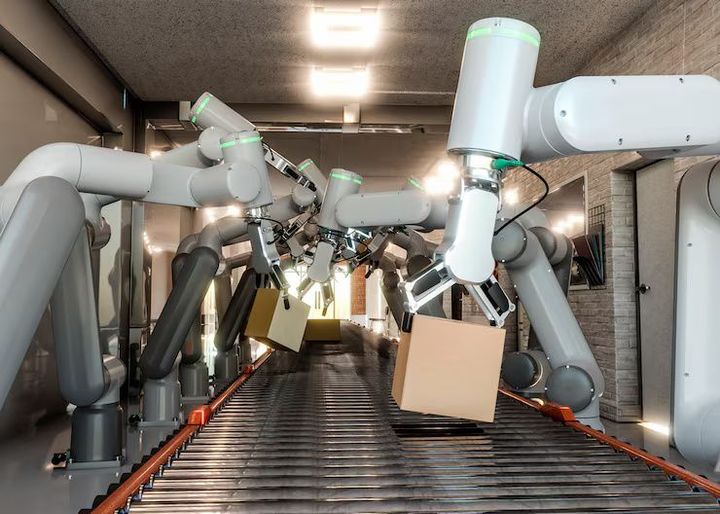
A robotic pick-and-place system is an automated machine that moves products, components, or materials from one position to another. The robot uses sensors, cameras, and intelligent software to identify objects and handle them with precision.
These systems are commonly integrated with industrial control systems, machine vision technology, and automated manufacturing equipment to create highly efficient production environments.
The main goal is simple: improve speed, accuracy, and operational reliability while reducing manual handling.
How Robotic Pick-and-Place Systems Work
Object Detection
The process starts when sensors or machine vision cameras detect an item. Advanced image processing technology identifies the object's size, shape, and location.
Position Calculation
The robotic controller calculates the best path to reach the object. Artificial intelligence and motion control software help optimize movement.
Picking Operation
A robotic gripper, vacuum suction cup, or specialized end-of-arm tool securely picks up the object.
Placement Operation
The robot moves the item to the target position and places it with high precision. The cycle then repeats continuously.
This automated workflow supports high-speed manufacturing and industrial process optimization.
Main Components of a Pick-and-Place Robot
Robotic Arm
The robotic arm provides movement and flexibility. Depending on the application, it may have multiple axes for complex operations.
End Effector
The end effector is the tool attached to the robot. Common options include vacuum grippers, magnetic grippers, and mechanical claws.
Vision System
Machine vision systems use cameras and software to inspect and locate products accurately.
Control Unit
The controller acts as the robot's brain, processing data and coordinating every movement.
Sensors
Modern sensors improve safety, precision, and object recognition while supporting predictive maintenance strategies.
Common Types of Pick-and-Place Robots
Cartesian Robots
These robots move along straight X, Y, and Z axes. They are widely used for packaging and assembly operations.
SCARA Robots
SCARA robots are known for high speed and excellent horizontal movement, making them popular in electronics manufacturing.
Delta Robots
Delta robots are lightweight and extremely fast. They are often used in food packaging and pharmaceutical production.
Articulated Robots
These robots have multiple joints and offer maximum flexibility for complex industrial applications.
Industries Using Pick-and-Place Automation
Robotic pick-and-place technology supports a wide range of industries worldwide.
The electronics sector uses robots for circuit board assembly and semiconductor handling.
Automotive manufacturers rely on automation for component installation and material transfer.
Food and beverage companies use robotic systems for sorting, packaging, and palletizing.
Pharmaceutical facilities benefit from precise handling of medical products and laboratory materials.
Warehouses and logistics centers depend on robotic automation for inventory management and order fulfillment.
Key Benefits of Robotic Pick-and-Place Systems
Higher Productivity
Robots work continuously with minimal interruptions, increasing production output.
Better Accuracy
Automated systems reduce human errors and improve product consistency.
Improved Workplace Safety
Robots handle repetitive and hazardous tasks, reducing workplace injuries.
Flexible Manufacturing
Modern robots can be programmed for multiple tasks, making production lines more adaptable.
Lower Maintenance Risks
Predictive maintenance software and industrial monitoring systems help prevent unexpected downtime.
Smart Technologies Driving Innovation
Artificial intelligence is making robotic systems smarter and more efficient. AI algorithms help robots learn patterns and improve decision-making.
Machine learning supports adaptive automation by analyzing production data and optimizing workflows.
Industrial Internet of Things technology connects robots with factory networks, enabling real-time monitoring and performance analysis.
Cloud-based automation platforms allow remote supervision and advanced data analytics for better operational control.
These innovations are transforming traditional factories into intelligent manufacturing environments.
Challenges in Robotic Automation
Despite the advantages, organizations may face several challenges.
Initial system integration can be complex, especially in older manufacturing facilities.
Employee training is important to ensure smooth operation and maintenance.
Cybersecurity has become a growing concern because connected industrial systems require strong data protection.
Regular software updates and equipment monitoring help maintain long-term performance.
Future Trends in Pick-and-Place Robotics
The future of robotic automation looks promising. Collaborative robots, often called cobots, are designed to work safely alongside human operators.
Advanced 3D vision systems are improving object recognition and handling accuracy.
Artificial intelligence will continue enhancing robotic intelligence and adaptive learning.
Smart factories will increasingly combine robotics, cloud computing, and Industrial IoT to create highly connected production environments.
Industry experts expect automation technologies to play a major role in improving global manufacturing efficiency over the coming years.
Conclusion
Robotic pick-and-place systems are changing the way industries operate. Their ability to deliver speed, precision, and reliability makes them an important part of modern automation strategies.
With advances in artificial intelligence, machine vision, Industrial IoT, and smart manufacturing, these systems are becoming even more capable and intelligent. Businesses that understand robotic automation trends can better prepare for the future of industrial production and digital transformation.