Self-Driving Car Sensors Guide: Understanding the Technology Behind Autonomous Vehicles
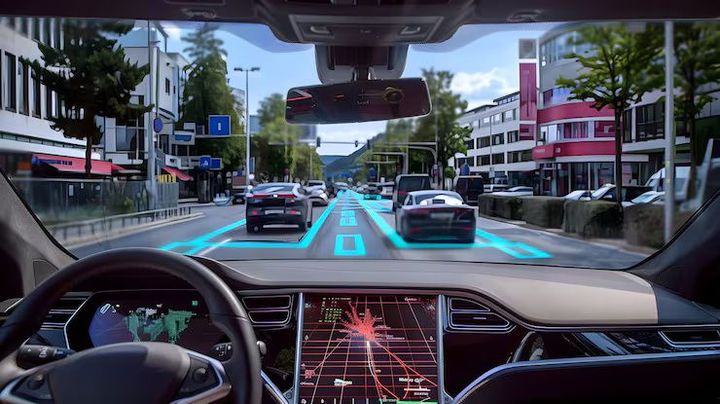
Self-driving car sensors are advanced technologies that allow vehicles to detect their surroundings and make driving decisions without constant human control. These sensors gather real-time data about road conditions, nearby vehicles, pedestrians, traffic signals, and obstacles. The information collected is processed by onboard software systems that interpret the environment and guide the vehicle’s actions.
Autonomous driving technology has evolved alongside artificial intelligence, machine learning, and smart mobility systems. As urban populations grow and transportation demands increase, the need for safer and more efficient travel solutions has become more urgent.
Self-driving vehicles rely on advanced sensor systems because machines cannot interpret the environment like humans. Instead, they use cameras, radar, LiDAR, ultrasonic sensors, and GPS to create a digital representation of their surroundings.
These sensors work together to provide a comprehensive understanding of the road. By combining their data, vehicles can make accurate and reliable driving decisions.
Importance of Self-Driving Car Sensors
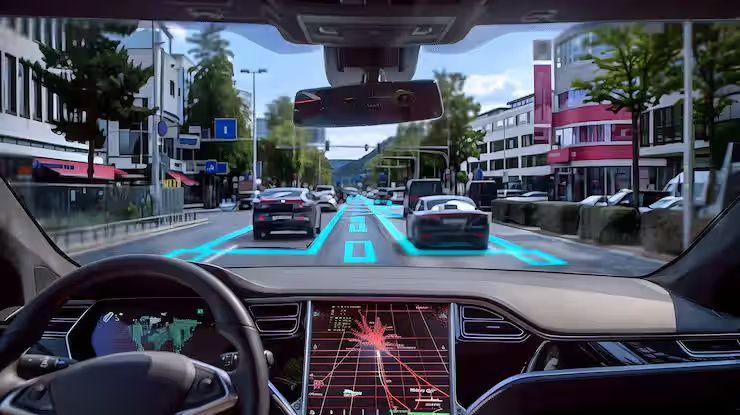
Self-driving car sensors are essential for enabling autonomous transportation. Their ability to capture real-time environmental data allows vehicles to operate safely in complex traffic conditions.
Key Reasons Why They Matter
-
Road Safety Improvement:
Sensors help detect obstacles and hazards quickly, reducing accidents caused by human error. -
Efficient Traffic Management:
Autonomous vehicles can interact with traffic systems to reduce congestion and improve flow. -
Accessibility and Mobility:
These systems provide transportation options for elderly individuals and people with limited mobility. -
Urban Transportation Innovation:
Smart cities are increasingly integrating autonomous vehicles into future infrastructure planning.
Industries Impacted
- Automotive manufacturing
- Transportation and logistics
- Software and AI development
- Urban planning
- Insurance
Reliable sensor systems are critical because autonomous vehicles depend entirely on accurate data to function safely.
Types of Sensors Used in Self-Driving Cars
Different sensors perform specific roles in autonomous vehicles. Together, they create a complete view of the driving environment.
Sensor Overview Table
| Sensor Type | Primary Function | Key Capability |
|---|---|---|
| LiDAR | Measures distance using lasers | Creates detailed 3D maps |
| Radar | Detects objects with radio waves | Performs well in poor weather |
| Cameras | Captures visual data | Recognizes lanes, signs, and objects |
| Ultrasonic Sensors | Detects nearby obstacles | Supports parking and short-range tasks |
| GPS & Navigation Sensors | Determines vehicle position | Enables route planning |
These sensors continuously collect and send data to onboard systems for analysis and decision-making.
Sensor Data Processing in Autonomous Vehicles
Autonomous vehicles use a process called sensor fusion to combine data from multiple sensors. This improves accuracy and ensures reliable perception of the environment.
Sensor Processing Workflow
| Step | Process | Description |
|---|---|---|
| 1 | Data Collection | Sensors gather environmental data |
| 2 | Data Processing | AI analyzes and interprets the data |
| 3 | Environment Mapping | Vehicle builds a digital model of surroundings |
| 4 | Decision Making | System determines safe driving actions |
| 5 | Vehicle Control | Adjusts steering, acceleration, and braking |
This layered approach enables vehicles to react quickly and safely to changing road conditions.
Recent Updates in Autonomous Sensor Technology
Autonomous vehicle technology has advanced rapidly between 2024 and early 2026. These developments focus on improving sensor performance and system intelligence.
Key Developments
-
Solid-State LiDAR:
New LiDAR systems are smaller, more durable, and energy-efficient compared to earlier versions. -
AI-Driven Perception Systems:
Advanced algorithms improve object detection and recognition accuracy using large datasets. -
Expanded Testing Programs:
Companies are conducting real-world trials to evaluate sensor performance in diverse conditions. -
Vehicle-to-Infrastructure (V2I) Communication:
Vehicles can now receive data from traffic signals and road infrastructure to enhance navigation.
These innovations are making autonomous systems more reliable and scalable.
Laws and Policies
Regulations play a crucial role in ensuring the safe development and deployment of autonomous vehicles. Governments aim to balance innovation with public safety.
Regulatory Landscape
-
India:
Autonomous vehicle deployment is still under evaluation by the Ministry of Road Transport and Highways (MoRTH). Testing and research are ongoing within controlled frameworks. -
United States:
Multiple states allow autonomous vehicle testing under defined safety guidelines. -
European Union:
Introduces strict safety standards for advanced driver assistance systems and autonomous trials. -
Asia:
Several countries are integrating autonomous vehicles into smart city initiatives.
These policies ensure that sensor systems meet safety requirements before large-scale adoption.
Tools and Resources
Engineers and researchers use various tools to develop and test autonomous vehicle sensors. These tools support simulation, data analysis, and system optimization.
Common Tools
- Simulation platforms for testing vehicle behavior in virtual environments
- Machine learning frameworks for training perception models
- Sensor visualization tools for analyzing LiDAR and radar data
- Digital mapping platforms for high-definition navigation
- Autonomous vehicle development kits for research and prototyping
Tools Overview Table
| Tool Category | Purpose |
|---|---|
| Driving Simulators | Test vehicle behavior in virtual environments |
| AI Frameworks | Train perception and decision models |
| Sensor Visualization Tools | Analyze LiDAR and radar outputs |
| Mapping Software | Create high-definition maps |
These tools help improve the accuracy, safety, and efficiency of autonomous systems.
Frequently Asked Questions (FAQs)
What are self-driving car sensors?
They are technologies that allow vehicles to detect and understand their environment. These sensors collect data about roads, objects, and traffic conditions.
How many sensors does an autonomous vehicle use?
Autonomous vehicles use multiple sensor types, including cameras, radar, LiDAR, ultrasonic sensors, and GPS, working together for complete perception.
Why is LiDAR important?
LiDAR creates detailed 3D maps of the environment, helping vehicles measure distances and detect objects accurately.
Can sensors work in bad weather?
Some sensors, such as radar, perform well in rain and fog. Others, like cameras and LiDAR, may require advanced processing to maintain accuracy.
Are fully autonomous vehicles available today?
Most vehicles today use advanced driver assistance systems (ADAS). Fully autonomous vehicles are still in testing and development phases.
Conclusion
Self-driving car sensors are the foundation of autonomous vehicle technology. They enable vehicles to perceive their environment, analyze data, and make driving decisions without human input.
Advancements in AI, machine learning, and sensor hardware continue to improve system capabilities. Ongoing research and testing are shaping how autonomous vehicles will integrate into transportation systems.
Regulations and safety standards remain essential to ensure responsible deployment. As innovation continues, sensor technologies will play a central role in the future of smart mobility and intelligent transportation systems.