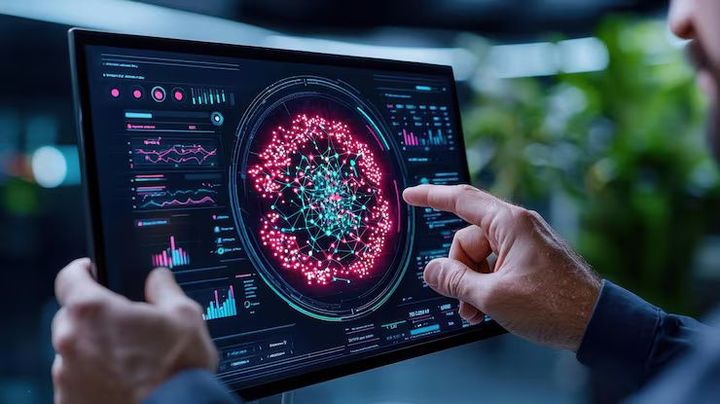
Simulated Sensor Data Guide: Basics, Uses, and Insights for Modern Data Testing
Simulated sensor data refers to artificially generated data that mimics the output of real-world sensors. Sensors are devices that measure physical conditions such as temperature, pressure, motion, sound, humidity, or location. These devices play a central role in many modern technologies including Internet of Things (IoT) systems, autonomous vehicles, industrial automation, healthcare monitoring, and smart infrastructure.
In many technology projects, developers need realistic data before physical sensors are available. Simulated sensor data provides a controlled way to test systems without deploying actual hardware. This allows faster development and safer experimentation.
For example, smart traffic systems can use simulated vehicle data to test congestion detection and signal optimization. This reduces the need for early infrastructure investment and enables efficient testing.
Types of Simulated Sensor Data
Simulated datasets can represent a wide range of sensor behaviors, depending on the system requirements. These datasets help mimic real-world environments accurately.
- Environmental data (temperature, humidity)
- Motion and location tracking data
- Industrial vibration readings
- Medical monitoring signals
- Autonomous vehicle perception data
Why Simulated Sensor Data Matters
Simulated sensor data plays a crucial role in modern technology ecosystems. It supports testing, validation, and optimization of systems that rely on continuous data streams.
Organizations use simulation to improve development speed and reduce risks. It also enables testing scenarios that may be expensive or dangerous in real-world conditions.
Key Benefits
- Enables early-stage system testing without hardware
- Supports training and validation of AI models
- Allows safe testing in high-risk environments
- Provides scalable data for performance evaluation
Industries Using Simulated Data
Many industries rely on simulated datasets to improve efficiency and innovation. These sectors benefit from controlled and scalable testing environments.
- Smart cities and traffic systems
- Autonomous vehicles and robotics
- Industrial maintenance systems
- Environmental monitoring
- Healthcare and wearable technology
- Agriculture monitoring
Trends and Developments in Sensor Data Simulation
Recent advancements have significantly improved how simulated sensor data is generated and used. New technologies are making simulations more accurate and scalable.
Artificial intelligence is now widely used to generate realistic synthetic datasets. These tools can learn from historical data and produce patterns that closely resemble real-world behavior.
Emerging Trends
- AI-driven synthetic data generation
- Digital twin integration for real-time simulation
- Cloud-based large-scale simulation environments
- Hybrid datasets combining real and synthetic data
- Edge computing simulation for IoT systems
Regulations and Policy Considerations
Even though simulated data is artificial, it is often used in regulated industries. Therefore, compliance with data protection and safety standards is essential.
Privacy regulations apply when simulations are based on real-world datasets. Organizations must ensure that no identifiable personal information is exposed.
Key Standards and Frameworks
| Standard / Policy | Purpose |
|---|---|
| ISO 9001 | Quality management in technology development |
| ISO 26262 | Functional safety for automotive electronics |
| GDPR | Data protection and privacy regulation |
| IEC 61508 | Functional safety for industrial systems |
Tools and Resources for Simulation
Various tools help developers generate and analyze simulated sensor data. These tools support IoT systems, machine learning, and data analytics workflows.
Simulation platforms are often integrated with cloud infrastructure. This allows handling of large-scale datasets and real-time processing.
Categories of Tools
- Synthetic data generators
- IoT simulation platforms
- Machine learning dataset tools
- Sensor behavior modeling tools
- Data visualization dashboards
- Predictive analytics software
Example Simulation Workflow
| Stage | Description |
|---|---|
| Data Modeling | Define sensor characteristics and environment |
| Dataset Generation | Create simulated sensor readings |
| System Integration | Connect data to platforms or tools |
| Testing and Validation | Evaluate system performance |
| Performance Monitoring | Analyze scalability and reliability |
Frequently Asked Questions
What is simulated sensor data?
Simulated sensor data is artificially generated data that mimics real sensor readings. It is used to test systems before actual hardware deployment.
Why do developers use it?
Developers use simulation to test systems, train AI models, and evaluate performance in a controlled environment.
Is simulated data accurate?
Simulated data can closely match real-world conditions when based on strong models. However, it may not capture every variable.
How is it generated?
It is created using mathematical models, synthetic generators, or digital twin platforms. These tools replicate real system behavior.
Key Insights Into Sensor Data Simulation
Simulated sensor data supports multiple stages of system development. It helps organizations build reliable and scalable technologies.
Role Across Development Stages
| Development Stage | Role of Simulated Data |
|---|---|
| System Design | Validate architecture and data flow |
| Algorithm Training | Provide datasets for AI models |
| Performance Testing | Evaluate scalability and speed |
| Risk Analysis | Test rare or hazardous scenarios |
Conclusion
Simulated sensor data has become essential in modern technology development. It allows engineers to design, test, and refine systems efficiently before real-world deployment.
With advancements in AI, digital twins, and cloud computing, simulation capabilities continue to grow. These innovations enable more accurate and scalable testing environments.
At the same time, compliance with global standards ensures responsible and safe use of data-driven technologies. This balance supports innovation while maintaining reliability and trust