Stainless Steel Sanitary Equipment Fabrication Overview: Essential Processes, Materials, and Industrial Applications
Stainless steel sanitary equipment fabrication is the process of designing, manufacturing, assembling, and finishing equipment made from stainless steel for industries where cleanliness, hygiene, and contamination control are essential.
This type of fabrication is widely used in food processing, beverage production, pharmaceutical manufacturing, biotechnology, cosmetics, dairy processing, and water treatment facilities. The goal is to produce equipment with smooth surfaces, sanitary welds, and corrosion-resistant materials that support hygienic operation.
The use of stainless steel in sanitary applications has expanded over many decades because of its durability, corrosion resistance, and ease of cleaning. Unlike many other metals, stainless steel can withstand repeated cleaning cycles while maintaining its structural properties. These characteristics make it suitable for environments where strict hygiene standards are required.
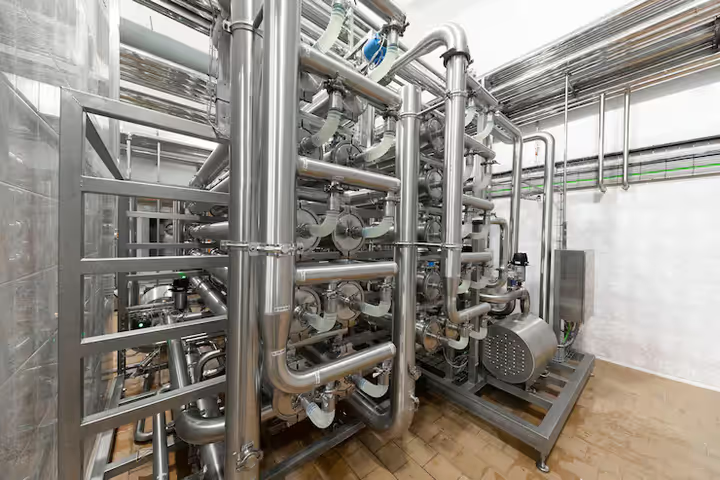
Modern stainless steel sanitary equipment fabrication combines precision engineering, advanced welding techniques, surface finishing methods, and quality inspection procedures. Fabricated equipment may include storage tanks, mixing vessels, piping systems, valves, heat exchangers, conveyors, processing units, and cleanroom components.
Why Stainless Steel Is Used
Several characteristics make stainless steel suitable for sanitary fabrication.
- Corrosion resistance
- Smooth and cleanable surfaces
- Mechanical strength
- Resistance to many cleaning chemicals
- Long operational life
- Compatibility with hygienic processing environments
Different stainless steel grades are selected according to operating conditions and industry requirements.
Common Equipment Produced
Fabricated sanitary equipment is used throughout many industrial sectors.
| Equipment Type | Typical Application |
|---|---|
| Storage tanks | Liquid storage |
| Mixing vessels | Product blending |
| Process piping | Fluid transport |
| Sanitary valves | Flow control |
| Heat exchangers | Temperature control |
| Conveyor systems | Product movement |
| Cleanroom furniture | Controlled environments |
Each type of equipment is designed according to specific production requirements.
Importance
Supporting Hygienic Manufacturing
One of the primary purposes of stainless steel sanitary equipment fabrication is to support hygienic production. Smooth internal surfaces reduce areas where residue may accumulate, helping facilities maintain appropriate cleanliness throughout manufacturing processes.
Hygienic equipment plays an important role in industries where product purity is essential.
Protecting Product Quality
Properly fabricated sanitary equipment helps reduce contamination risks during production. Careful welding, polishing, and finishing contribute to surfaces that are easier to inspect and clean.
This consistency supports quality management across manufacturing operations.
Improving Equipment Durability
Industrial processing environments often involve moisture, temperature changes, cleaning chemicals, and continuous operation. Stainless steel provides durability under many of these conditions, allowing equipment to remain structurally reliable over extended operating periods.
Material selection depends on the specific processing environment.
Supporting Efficient Cleaning
Sanitary fabrication emphasizes rounded corners, polished welds, smooth joints, and appropriate drainage. These design characteristics simplify cleaning procedures and reduce locations where residue may remain.
Efficient cleaning supports operational consistency in regulated industries.
Serving Multiple Industries
Stainless steel sanitary equipment fabrication supports many sectors, including:
- Food manufacturing
- Dairy processing
- Beverage production
- Pharmaceutical manufacturing
- Biotechnology
- Cosmetic production
- Chemical processing
- Water purification
Although equipment designs differ, hygienic construction principles remain similar across many industries.
Recent Updates
Increased Automation in Fabrication
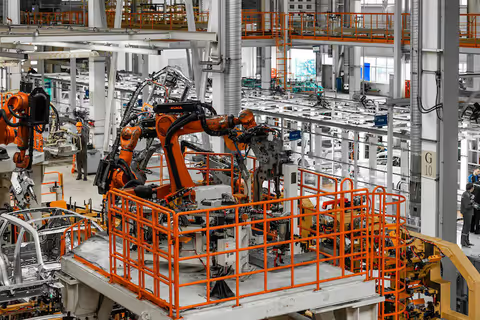
Between 2024 and 2026, fabrication facilities have continued adopting automated welding systems, robotic material handling, and computer-controlled machining. These technologies improve manufacturing precision while maintaining consistent fabrication quality.
Automation also supports repeatable production processes.
Advanced Surface Finishing
Recent developments include improved polishing techniques that produce smoother surface finishes suitable for hygienic processing environments. Automated polishing equipment can improve consistency across complex components.
Surface quality remains an important consideration for sanitary fabrication.
Digital Quality Inspection
Manufacturers increasingly use digital measurement systems, laser scanning, and computer-assisted inspection technologies to verify dimensions and weld quality throughout fabrication.
Digital inspection supports detailed documentation and traceability.
Sustainable Manufacturing Practices
Many fabrication facilities continue reducing material waste through improved cutting layouts, recycling stainless steel scrap, and optimizing manufacturing efficiency. Energy-efficient production equipment has also become more common.
Environmental considerations continue influencing manufacturing operations.
Smart Manufacturing Integration
Industrial monitoring systems now collect production information from fabrication equipment. Machine performance, maintenance schedules, and production data can be monitored using digital manufacturing platforms.
These systems contribute to process visibility and operational planning.
Laws or Policies
Food Safety Regulations
Food processing equipment must often comply with national food safety regulations. Hygienic equipment design supports cleaning, sanitation, and safe product handling throughout manufacturing operations.
Specific requirements vary among countries.
Pharmaceutical Manufacturing Standards
Equipment used in pharmaceutical production is commonly subject to strict manufacturing regulations that address cleanliness, material selection, documentation, and equipment qualification.
Regulatory authorities establish these requirements according to applicable legislation.
Occupational Safety Requirements
Fabrication facilities generally follow workplace safety regulations covering welding, machining, lifting operations, electrical equipment, ventilation, and personal protective equipment.
These rules help reduce workplace hazards during manufacturing activities.
Pressure Equipment Standards
Certain tanks, vessels, and piping systems operate under pressure and may need to comply with pressure equipment regulations established by national authorities or recognized engineering standards.
Inspection procedures vary according to equipment classification.
Environmental Regulations
Manufacturing facilities may be subject to regulations concerning waste handling, emissions, wastewater management, and recycling of industrial materials.
Environmental compliance forms part of modern industrial operations.
Tools and Resources
Several resources support stainless steel sanitary equipment fabrication throughout design, manufacturing, and inspection.
Computer-Aided Design Software
Computer-aided design (CAD) software assists engineers in creating detailed equipment drawings, assemblies, and fabrication documentation before manufacturing begins.
Digital models improve design accuracy.
Welding Procedure Documentation
Standardized welding procedures guide material preparation, welding techniques, inspection requirements, and quality verification.
Proper documentation supports consistent fabrication practices.
Surface Measurement Equipment
Surface roughness measuring instruments evaluate the finish quality of sanitary components. These measurements help verify that fabricated surfaces meet specified cleanliness requirements.
Surface inspection is particularly important for hygienic processing equipment.
Engineering Standards
International engineering organizations publish technical standards covering sanitary design, welding practices, stainless steel materials, piping systems, and quality management.
These standards provide guidance throughout fabrication.
Reference Resources
| Resource | Purpose |
| CAD software | Equipment design |
| Welding procedure documents | Fabrication guidance |
| Surface measuring instruments | Finish evaluation |
| Engineering standards | Technical requirements |
| Inspection checklists | Quality verification |
FAQs
What is stainless steel sanitary equipment fabrication?
Stainless steel sanitary equipment fabrication is the manufacturing process used to produce hygienic stainless steel equipment for industries that require clean processing environments, including food, pharmaceutical, biotechnology, and beverage production.
Why is stainless steel commonly used for sanitary equipment?
Stainless steel provides corrosion resistance, durability, smooth surfaces, and compatibility with repeated cleaning procedures, making it suitable for hygienic industrial environments.
Which industries use stainless steel sanitary equipment fabrication?
Food processing, dairy production, beverage manufacturing, pharmaceutical production, biotechnology, cosmetics, and water treatment facilities commonly use fabricated sanitary stainless steel equipment.
What types of equipment are produced through stainless steel sanitary equipment fabrication?
Common examples include storage tanks, process vessels, piping systems, sanitary valves, heat exchangers, conveyors, cleanroom furniture, and processing equipment.
How is quality verified during stainless steel sanitary equipment fabrication?
Quality verification may include dimensional inspection, weld examination, surface finish measurement, material certification, and documentation according to applicable engineering standards.
Conclusion
Stainless steel sanitary equipment fabrication combines material science, precision manufacturing, and hygienic engineering to produce equipment used across many industrial sectors. Careful fabrication techniques, smooth surface finishes, and appropriate material selection support cleanliness, durability, and reliable industrial operation. Advances in automation, digital inspection, and sustainable manufacturing continue shaping the field. Understanding fabrication principles helps explain how hygienic equipment supports modern manufacturing processes.