Thermo Fisher Bioreactor System Insights for Cell Culture and Process Control
A Thermo Fisher bioreactor system is associated with controlled biological production environments.
where living cells or microorganisms grow under carefully managed conditions. A bioreactor system creates a controlled space in which factors such as temperature, acidity, dissolved oxygen, mixing, and nutrient availability can be monitored and adjusted during cell growth.
Modern bioreactors developed from earlier fermentation vessels used for food, research, and biological production. As biotechnology expanded, researchers needed equipment capable of maintaining increasingly precise conditions. This development contributed to the emergence of the cell culture bioreactor, automated monitoring technologies, and specialized bioprocessing equipment.
A Thermo Scientific bioreactor may be used in research, process development, and larger biopharmaceutical environments. The exact configuration depends on the type of cells being cultivated, the required working volume, the production stage, and the level of process control needed.
How a bioreactor system works
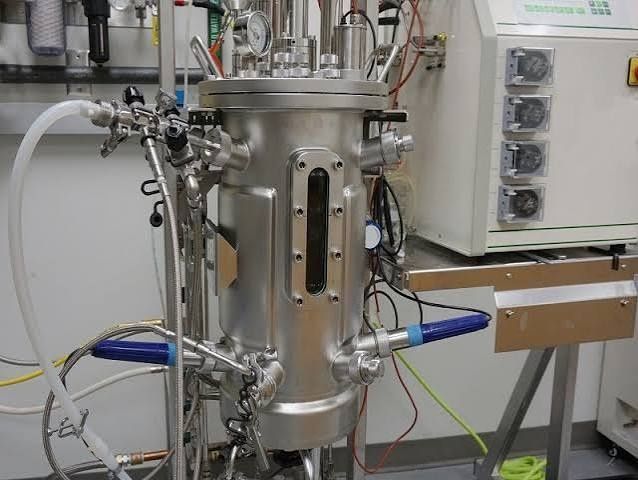
A typical laboratory bioreactor system contains a vessel where biological material grows in a nutrient-rich liquid. Sensors collect information about the internal environment, while control equipment makes adjustments according to defined process settings.
Common monitored conditions include:
- Temperature, which influences cell activity and growth
- pH, which indicates how acidic or alkaline the culture environment is
- Dissolved oxygen, which is important for many biological processes
- Agitation, which helps distribute nutrients and gases
- Gas flow, which can support oxygen delivery and carbon dioxide management
- Pressure, which may require monitoring in certain vessel designs
A bioreactor process control system connects many of these measurements. Automated controls can respond to changing conditions by adjusting gas flow, mixing speed, temperature, or other operating variables.
Traditional and single-use configurations
Bioreactors can use permanent vessels, often made from stainless steel or glass, or disposable process-contact components. A single use bioreactor system commonly uses a specially designed bag or container that is replaced after a production cycle.
A single use bioprocessing system can reduce the amount of equipment preparation required between batches because many product-contact components are replaced rather than repeatedly cleaned. Traditional reusable systems remain important in many larger and established production environments.
| Bioreactor type | Common setting | Typical characteristics |
|---|---|---|
| Glass vessel | Research and development | Small scale, visible culture environment, reusable |
| Single-use system | Research and production | Replaceable process-contact components |
| Stainless steel system | Large-scale production | Durable vessel and established cleaning procedures |
| Automated system | Multiple process stages | Integrated sensors, controls, and data collection |
Importance
Supporting controlled cell growth
Living cells are sensitive to their surroundings. Small changes in temperature, oxygen, nutrients, or pH can affect how cells grow and behave. A cell culture bioreactor helps maintain a more stable environment than an uncontrolled vessel.
This control is particularly important in biological research and biopharmaceutical production. A mammalian cell culture bioreactor may support cells used in the development or production of biological materials. These cells often require carefully managed conditions because they can respond strongly to environmental changes.
Improving consistency and process understanding
Bioprocessing involves many interacting variables. Researchers need to understand how these variables influence cell growth and biological output. An automated bioreactor system can continuously record process information, making it easier to examine patterns and compare different production runs.
Data collection also supports process development. Scientists can study how changes in mixing, oxygen transfer, temperature, or feeding strategies affect the culture. This knowledge may later help transfer a process from a laboratory bioreactor system to a larger industrial bioreactor system.
Connecting laboratory research with larger production
One major challenge in biotechnology is scale. Conditions that work in a small research vessel may behave differently in a much larger system. Mixing patterns, oxygen transfer, heat movement, and fluid behavior can all change as vessel size increases.
Biopharmaceutical manufacturing equipment therefore includes systems designed for different stages of development. Small bioreactors may support early experiments, while larger commercial bioprocessing equipment can handle broader production requirements.
The transition between scales requires careful study. Engineers and scientists often examine variables such as:
- Mixing time
- Oxygen transfer
- Gas flow
- Cell density
- Nutrient distribution
- Heat transfer
- Sensor performance
A well-designed bioreactor process control system helps teams observe these variables and understand how a biological process changes as scale increases.
Recent Updates
Expansion of single-use bioprocessing
From 2024 through 2026, the broader bioprocessing field has continued moving toward flexible production environments. A single use bioreactor system is increasingly associated with research, process development, and production settings where rapid equipment changeover and reduced dependence on permanent product-contact vessels are important.
The trend does not mean that reusable systems are disappearing. Stainless steel equipment remains relevant for established processes and large production environments. Instead, many facilities are evaluating combinations of permanent and single-use technologies according to process scale, production patterns, and operational requirements.
Greater automation and digital monitoring
Another major trend is increased use of connected sensors, automated controls, and digital process records. An automated bioreactor system can gather information continuously rather than relying only on occasional manual measurements.
Modern control platforms increasingly focus on:
- Real-time process monitoring
- Automated adjustment of operating conditions
- Centralized data collection
- Process trend visualization
- Electronic records
- Integration with wider laboratory and production systems
These developments can improve process visibility. However, automated systems still require appropriate setup, calibration, data review, and human oversight.
More attention to process data
Bioprocessing equipment now generates large amounts of information. Process teams increasingly use this information to understand relationships between operating conditions and biological outcomes.
Digital analysis can help identify trends that may not be obvious from individual measurements. For example, changes in dissolved oxygen, agitation, and gas flow may be examined together to understand how a culture develops over time.
Flexible production environments
The current direction of biopharmaceutical manufacturing equipment also reflects interest in adaptable facilities. Organizations may need to handle different processes, production scales, or biological materials within the same broader environment.
Single-use components, modular equipment, and automated control platforms can support this flexibility. The suitability of each approach depends on the biological process, facility design, regulatory requirements, and production scale.
Laws or Policies
Regulatory oversight in the United States
In the United States, biopharmaceutical production is shaped by requirements administered by the U.S. Food and Drug Administration. Equipment used in regulated production environments must fit within broader systems for quality control, documentation, process validation, and manufacturing consistency.
A biopharmaceutical bioreactor is therefore considered as part of the complete production process rather than as an isolated machine. Organizations may need to document how equipment is operated, maintained, calibrated, monitored, and connected to process controls.
Good manufacturing practice principles
Current Good Manufacturing Practice principles influence many aspects of biopharmaceutical production. These principles focus on controlled procedures, suitable equipment, accurate records, trained personnel, and consistent production practices.
For bioreactor operations, relevant considerations may include:
- Equipment qualification
- Sensor calibration
- Process monitoring
- Electronic or written records
- Material control
- Contamination prevention
- Cleaning procedures for reusable equipment
- Management of single-use components
The exact requirements depend on how the equipment is used and the type of regulated material being produced.
Electronic records and data integrity
Automated systems can create large quantities of electronic process information. In regulated environments, data integrity is an important consideration. Records should accurately represent what happened during a process and remain appropriately protected and traceable.
A bioreactor process control system may therefore include user access controls, audit records, data storage functions, and defined procedures for reviewing information. Regulatory expectations can vary according to the application and production environment.
Environmental and workplace requirements
Industrial bioreactor system operations may also be affected by environmental, workplace, waste-handling, and facility rules. Biological materials, cleaning chemicals, utilities, and disposable components may require specific handling procedures.
Requirements differ by location and application. Facilities generally need to consider applicable federal, state, and local rules alongside biological production requirements.
Tools and Resources
Process monitoring tools
A modern Thermo Fisher bioreactor system may work with sensors and software used to observe process conditions. Common measurement tools include pH sensors, dissolved oxygen probes, temperature sensors, pressure instruments, gas-flow devices, and weighing systems.
These tools help create a detailed picture of what is happening inside the vessel. Data visualization platforms can display trends over time, allowing operators and researchers to compare current conditions with defined process ranges.
Calculators and process templates
Bioprocessing teams may use calculation tools for:
- Vessel working volume
- Gas-flow requirements
- Mixing calculations
- Oxygen transfer analysis
- Cell growth tracking
- Feed-volume planning
- Scale-up comparisons
Process templates can also help organize experimental conditions and recorded observations. A structured template may include starting conditions, sensor readings, material additions, process changes, and final observations.
Regulatory and technical resources
Public information from regulatory agencies can help readers understand general expectations for biopharmaceutical production and electronic records. Scientific journals, biotechnology textbooks, equipment manuals, and technical documentation can provide additional information about cell culture and process control.
For a specific Thermo Scientific bioreactor or other bioprocessing equipment, technical documentation is important because operating procedures and control features can vary between models and configurations.
FAQs
What is a Thermo Fisher bioreactor system used for?
A Thermo Fisher bioreactor system can be used to maintain controlled conditions for biological cultures. Depending on the configuration, it may support research, process development, cell culture studies, or larger bioprocessing activities.
How does a single use bioreactor system differ from a reusable bioreactor?
A single use bioreactor system uses replaceable product-contact components, while reusable systems commonly use glass or stainless steel vessels that undergo defined preparation between production cycles. Each approach has different operational, scale, facility, and process considerations.
What does a bioreactor process control system monitor?
A bioreactor process control system may monitor temperature, pH, dissolved oxygen, agitation, gas flow, pressure, and other process variables. The exact measurements depend on the equipment and biological process.
What is a mammalian cell culture bioreactor?
A mammalian cell culture bioreactor is designed to maintain an environment suitable for growing animal-derived cells. These cells can be sensitive to mixing forces, temperature changes, oxygen levels, and other environmental conditions.
Can a laboratory bioreactor system be scaled to an industrial bioreactor system?
A laboratory process can sometimes be transferred to a larger system, but direct enlargement is not always simple. Mixing, oxygen transfer, heat movement, vessel geometry, and other factors must be evaluated during scale-up.
Conclusion
Thermo Fisher bioreactor system technologies form part of the wider field of controlled cell culture and bioprocessing. Modern systems combine vessels, sensors, automation, and data management to help maintain defined biological conditions. Developments from 2024 through 2026 continue to emphasize single-use configurations, digital monitoring, process data, and flexible production environments. Regulatory requirements and process-control principles remain important considerations in research and biopharmaceutical settings.