Understanding Axial Compressors: Features, Working and Applications
An axial compressor is an important machine used in many industries where large volumes of air or gas need to move efficiently. Although the name may sound technical, the basic idea is easy to understand. An axial compressor increases the pressure of air by moving it through a series of rotating and stationary blades arranged along a central shaft.
You can find axial compressors in aircraft engines, power plants, industrial manufacturing, and oil and gas operations. Their ability to handle high airflow while maintaining efficiency makes them a common choice for demanding environments.
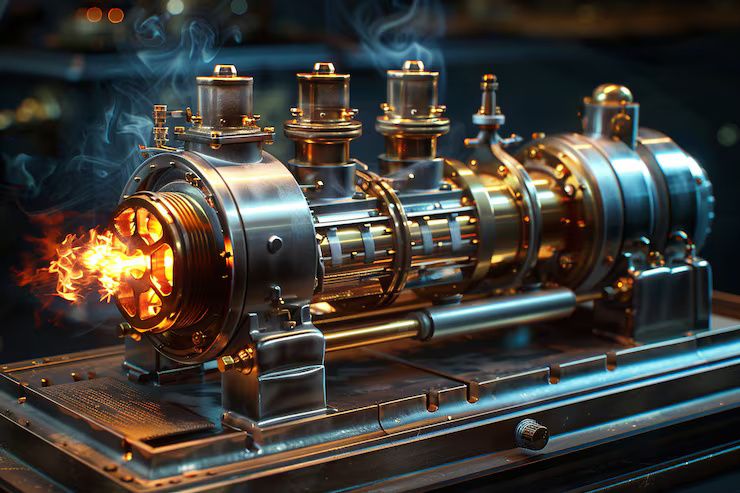
This guide explains what an axial compressor is, how it works, its main components, advantages, limitations, common applications, and maintenance considerations in simple language.
What Is an Axial Compressor?
An axial compressor is a type of dynamic compressor that compresses air or gas while it flows in a direction parallel to the rotating shaft. The word "axial" refers to this straight-line movement through the machine.
Unlike some other compressors that force air into a smaller chamber, an axial compressor uses multiple rows of specially designed blades. Each stage increases the pressure a little more until the desired pressure level is reached.
Because pressure rises gradually across many stages, axial compressors can process very large amounts of air while maintaining stable operation.
How Does an Axial Compressor Work?
The working principle of an axial compressor follows a repeating process.
- Air enters the compressor through the inlet.
- Rotating blades, known as rotor blades, accelerate the airflow.
- Stationary blades, called stator blades, slow the air and convert part of its velocity into pressure.
- The air moves to the next stage, where the process repeats.
- After passing through multiple stages, the air exits at a much higher pressure.
Each stage contributes a small pressure increase, but together they produce significant compression.
Think of it like climbing a staircase. Each step is small, but after many steps, you reach a much higher level.
Main Components of an Axial Compressor
Understanding the main parts helps explain how the machine operates.
Inlet Guide Vanes
These guide the incoming air at the proper angle before it reaches the first rotor stage. Proper airflow alignment improves efficiency and supports stable operation.
Rotor Blades
Rotor blades are attached to the rotating shaft. As they spin, they increase the velocity of the incoming air.
Stator Blades
Stator blades remain fixed. Their purpose is to slow the airflow and convert kinetic energy into pressure before the air enters the next rotor stage.
Compressor Shaft
The shaft connects all rotating stages and transfers mechanical power from the driving equipment.
Compressor Casing
The casing surrounds the internal components, keeps airflow contained, and protects the rotating assembly.
Diffuser
Some compressor designs include a diffuser near the outlet to convert additional airflow velocity into pressure before the compressed air leaves the machine.
Types of Axial Compressors
Different applications require different compressor designs.
Single-Spool Axial Compressor
A single-spool compressor uses one rotating shaft that drives every compression stage. This design is relatively straightforward and is commonly found in various industrial systems.
Multi-Spool Axial Compressor
A multi-spool design uses two or more shafts rotating at different speeds. This arrangement improves performance across a wider operating range and is commonly used in modern aircraft engines.
Variable Geometry Axial Compressor
Some compressors include adjustable guide vanes or stator blades. These components can change their angle to maintain efficient airflow under different operating conditions.
Advantages of an Axial Compressor
Axial compressors provide several practical benefits.
- High airflow capacity suitable for large industrial processes
- Compact shape compared with other high-flow compressor designs
- High efficiency during continuous operation
- Smooth airflow through multiple compression stages
- Suitable for applications requiring high pressure ratios
- Well suited for gas turbines and aircraft engines
These characteristics explain why axial compressors are commonly selected for large-scale systems.
Limitations of an Axial Compressor
Like any engineering equipment, axial compressors also have limitations.
- Complex internal design
- Precise manufacturing requirements
- Performance can decrease if blades become damaged
- Sensitive to changes in airflow conditions
- Maintenance requires skilled inspection and accurate alignment
Understanding these limitations helps operators maintain reliable performance.
Common Applications
Axial compressors are used in many industries where continuous airflow is essential.
Aircraft Engines
Jet engines rely on axial compressors to compress incoming air before combustion. Multiple compression stages help generate the pressure required for efficient engine operation.
Gas Turbines
Power generation facilities use axial compressors as part of gas turbine systems. Compressed air mixes with fuel inside the combustion chamber, producing high-energy gases that drive the turbine.
Oil and Gas Industry
Many processing facilities use axial compressors to move and compress process gases during production and transportation.
Chemical Processing
Various chemical plants use compressed air or gases during production processes that require steady airflow.
Industrial Manufacturing
Large manufacturing facilities may use axial compressors in systems involving combustion, air handling, or specialized production equipment.
Axial Compressor vs Centrifugal Compressor
Although both machines increase air pressure, they work differently.
| Feature | Axial Compressor | Centrifugal Compressor |
|---|---|---|
| Airflow Direction | Parallel to shaft | Outward from center |
| Airflow Capacity | Very high | Moderate to high |
| Pressure Increase Per Stage | Small | Larger |
| Number of Stages | Many | Usually fewer |
| Common Applications | Aircraft, gas turbines | Industrial processing, HVAC |
The right choice depends on the airflow requirements, pressure needs, and operating conditions.
Factors That Affect Performance
Several factors influence how well an axial compressor performs.
Blade Condition
Clean, undamaged blades maintain proper airflow. Dirt, wear, or erosion can reduce efficiency.
Air Temperature
Warmer air is less dense, which can influence compressor performance and pressure output.
Rotational Speed
The compressor must operate within its intended speed range to maintain stable airflow.
Airflow Quality
Particles entering the compressor can damage blades over time. Good filtration helps protect internal components.
Regular Inspection
Routine inspection helps identify wear before it develops into larger mechanical issues.
Maintenance Tips
Consistent maintenance supports reliable operation and extends equipment life.
- Inspect blades for wear, cracks, and erosion.
- Keep inlet filters clean to reduce contamination.
- Monitor vibration levels for early signs of imbalance.
- Check bearings and lubrication according to maintenance schedules.
- Inspect seals to prevent air leakage.
- Review operating data for unexpected changes in pressure or airflow.
- Perform alignment checks during planned maintenance periods.
Small maintenance actions performed regularly often prevent larger operational problems later.
Safety Considerations
Because axial compressors contain high-speed rotating parts, safety procedures are important.
Personnel should follow established operating procedures, isolate equipment before maintenance, and use appropriate protective equipment. Routine inspections also help identify unusual vibration, noise, or temperature changes that may indicate developing issues.
Proper training and regular monitoring contribute to safe and dependable operation.
Future Developments
Engineers continue improving axial compressor technology through advanced materials, improved blade shapes, and digital monitoring systems.
Modern sensors can track vibration, temperature, and operating conditions in real time. This information helps maintenance teams identify potential problems earlier and plan inspections more effectively.
Research also focuses on improving efficiency while reducing energy consumption and extending component life.
Conclusion
An axial compressor is a highly efficient machine designed to compress large volumes of air or gas through multiple stages of rotating and stationary blades. Its ability to handle continuous airflow makes it an important component in aircraft engines, gas turbines, industrial manufacturing, chemical processing, and energy production.
Although the internal design is more complex than some other compressor types, proper operation and routine maintenance help maintain dependable performance over many years. Understanding how an axial compressor works, where it is used, and what affects its performance provides a solid foundation for anyone interested in industrial equipment or engineering systems.