Understanding Industrial Robots: Learning Resources and Technical Knowledge
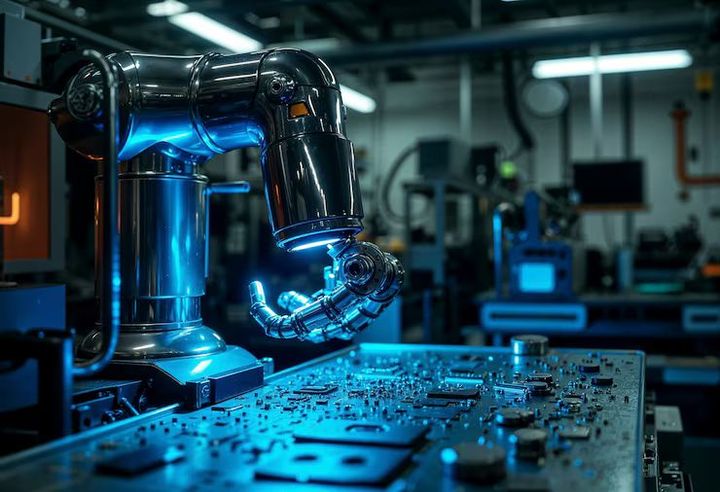
Industrial robots are programmable machines designed to perform repetitive, precise, or physically demanding tasks in industrial environments. They exist because modern manufacturing and production processes require high levels of accuracy, consistency, and efficiency that are difficult to achieve through manual labor alone. By automating specific tasks, industrial robots help standardize processes and reduce variability.
Industrial robots emerged in the mid-20th century with advances in control systems and computing. Early versions were simple mechanical arms, but modern robots can perform complex tasks with sensors and software integration.
They are commonly introduced as a core concept in automation, combining mechanical engineering, computer science, and control theory.
Why Industrial Robots Matter Today
Industrial robots play a key role in modern production systems across multiple industries. They help maintain consistency and support large-scale manufacturing.
Key Benefits
- High precision and repeatable accuracy
- Continuous operation with minimal interruption
- Improved workplace safety in hazardous tasks
- Flexible scalability for different production needs
Problems They Help Solve
- Inconsistent product quality
- Labor-intensive or risky operations
- Limited production capacity
- Inefficiencies in manual processes
These systems benefit engineers, manufacturers, and consumers through improved efficiency and reliability.
Recent Developments and Trends
Industrial robotics continues to evolve with improvements in sensing, software, and integration.
Key Trends Since 2024
- Growth of collaborative robots working with humans
- Increased data integration for performance monitoring
- Use of simulation tools for virtual testing
- Enhanced sensor technologies for precision and control
Summary of Trends
| Trend Area | Description | Timeframe |
|---|---|---|
| Collaborative robots | Human-robot shared workspaces | Early 2024 |
| Data integration | Monitoring and performance tracking | Mid 2024 |
| Simulation tools | Virtual workflow testing | Late 2024 |
| Sensor integration | Improved vision and force sensing | 2023–2024 |
Laws, Standards, and Policies
Industrial robots operate under regulations related to safety and system reliability. These rules vary by region but share common objectives.
Key Policy Areas
- Workplace safety standards and risk assessments
- Machine guarding and emergency controls
- Compliance with international robotics standards
- Government support for automation and research
These frameworks ensure safe and consistent use of robotic systems.
Tools and Informational Resources
Various tools support learning and implementation of industrial robotics. These resources are widely used in education and industry.
Common Resources
- Robot simulation software
- Programming guides and control languages
- Standards organization references
- Automation textbooks
- Industrial process diagrams
Types of Industrial Robots
| Robot Type | Primary Function | Typical Application |
|---|---|---|
| Articulated | Multi-axis movement | Assembly and welding |
| SCARA | Fast horizontal motion | Pick-and-place tasks |
| Cartesian | Linear movement | Material handling |
| Delta | High-speed positioning | Packaging and sorting |
FAQs About Industrial Robots
What is an industrial robot?
It is a programmable machine designed to perform industrial tasks such as assembly or material handling.
How are they programmed?
They use specialized software and control languages for task execution.
Do robots replace human workers?
They automate specific tasks, while humans focus on supervision and decision-making.
Which industries use them?
Industries like automotive, electronics, and food processing commonly use industrial robots.
Why is safety important?
Safety measures prevent accidents and ensure reliable system operation.
Conclusion
Industrial robots are essential to modern automation, supporting precision, efficiency, and safety in production systems.
Recent advancements highlight collaboration, data integration, and simulation-based design. Regulations and standards guide safe implementation, while tools and resources support understanding and development.
Understanding industrial robots provides insight into how automation shapes manufacturing and modern industry.