Understanding Vacuum Pumps: Types, Functions and Industrial Uses
Vacuum pumps play an important role in many industries and everyday applications. While most people may not notice them, these devices help create low-pressure environments that make many modern processes possible. From packaging food to manufacturing electronics and supporting medical equipment, vacuum pumps are used in a wide range of situations. Understanding how a vacuum pump works does not require an engineering background. The basic idea is simple: it removes air and other gases from a sealed space, creating a vacuum.
Depending on the application, different types of pumps are designed to achieve different levels of vacuum.
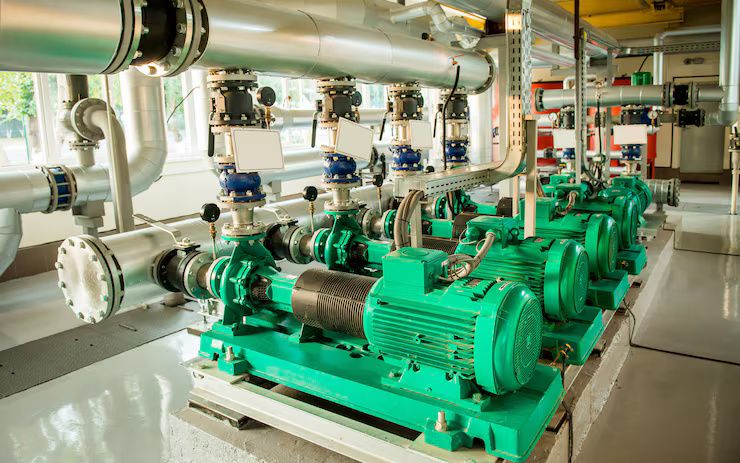
This guide explains what vacuum pumps are, how they work, the different types available, their common applications, and the factors to consider when choosing one. By the end, you will have a clear understanding of why these machines are such an important part of modern technology.
What Is a Vacuum Pump?
A vacuum pump is a mechanical device that removes air or gas from a closed chamber. As the amount of air decreases, the pressure inside the chamber becomes lower than the surrounding atmosphere. This condition is known as a vacuum.
Although the word "vacuum" often brings to mind the idea of empty space, most vacuum pumps do not remove every air molecule. Instead, they reduce the pressure to a level that meets the needs of a particular process.
Vacuum pumps come in many sizes. Some are compact enough to fit on a workbench, while others are large industrial machines used in manufacturing facilities.
How Does a Vacuum Pump Work?
The basic working principle is straightforward. A vacuum pump continuously removes air or gas from a sealed chamber.
The process generally follows these steps:
- Air enters the pump through an inlet.
- Internal components trap and move the air.
- The air is compressed.
- The compressed air exits through an outlet.
- As more air leaves the chamber, pressure continues to decrease.
Different pump designs use different methods to move air, but they all share the same goal of creating a lower-pressure environment.
Why Is Vacuum Important?
Lower air pressure creates conditions that are useful in many processes. Without unwanted air or moisture, operations can become cleaner, more precise, and more consistent.
Vacuum environments are commonly used to:
- Remove trapped air from products
- Dry materials more efficiently
- Handle delicate objects safely
- Prevent contamination
- Support laboratory experiments
- Improve manufacturing accuracy
These benefits explain why vacuum pumps are found across many industries.
Common Types of Vacuum Pumps
Different applications require different vacuum levels. As a result, several pump designs are available.
Rotary Vane Vacuum Pumps
Rotary vane pumps are among the most widely used types. They use rotating vanes inside a chamber to trap and move air.
These pumps are often found in:
- Packaging equipment
- Refrigeration maintenance
- Laboratory equipment
- Industrial machinery
They are known for producing steady vacuum levels suitable for many everyday industrial tasks.
Diaphragm Vacuum Pumps
Diaphragm pumps use a flexible membrane that moves back and forth to create suction.
Because no lubricating oil enters the pumping chamber, they are commonly chosen for applications requiring cleaner operation.
Typical uses include:
- Laboratories
- Medical devices
- Chemical processing
- Environmental testing
Liquid Ring Vacuum Pumps
These pumps use a rotating ring of liquid to compress gases.
They perform well in environments containing moisture or vapors, making them suitable for:
- Food processing
- Chemical manufacturing
- Paper production
- Water treatment
Scroll Vacuum Pumps
Scroll pumps contain two spiral-shaped components. One remains stationary while the other moves in a circular motion.
This design produces smooth, quiet operation and is commonly used for:
- Scientific research
- Electronics manufacturing
- Semiconductor production
- Analytical instruments
Screw Vacuum Pumps
Screw pumps use two rotating screws that move gases through the chamber.
They are often selected for continuous industrial processes because they can handle large volumes of gas while maintaining stable performance.
Applications of Vacuum Pumps
Vacuum pumps are used in many industries because they support a wide variety of processes.
Manufacturing
Manufacturing facilities rely on vacuum pumps for:
- Material handling
- Plastic molding
- Drying processes
- Metal processing
- Surface coating
Many production lines use vacuum systems to improve precision and consistency.
Medical Equipment
Healthcare facilities use vacuum pumps in equipment such as:
- Surgical suction systems
- Sterilization equipment
- Laboratory instruments
- Dental equipment
These applications depend on reliable vacuum levels during operation.
Food Processing
Vacuum technology helps preserve food quality by removing air from packaging.
Common applications include:
- Vacuum packaging
- Food drying
- Processing equipment
- Packaging lines
Reducing oxygen exposure can help maintain freshness for longer periods.
Electronics Industry
Modern electronics manufacturing often requires clean, controlled environments.
Vacuum pumps are used during:
- Semiconductor production
- Circuit board manufacturing
- Thin-film coating
- Display manufacturing
Even tiny particles can affect sensitive electronic components.
Research Laboratories
Scientists use vacuum pumps in experiments requiring controlled pressure conditions.
Examples include:
- Chemical analysis
- Physics experiments
- Material research
- Sample preparation
Accurate vacuum levels help researchers achieve reliable results.
Key Features to Consider
Choosing a vacuum pump depends on the intended application. Several factors influence performance.
Vacuum Level
Different applications require different pressure levels.
Some processes need only a moderate vacuum, while others require extremely low pressures.
Flow Capacity
Flow capacity describes how much air the pump can remove within a certain period.
Higher-capacity pumps are often used for larger systems or faster evacuation.
Operating Environment
Temperature, humidity, dust, and chemicals can all affect pump performance.
Selecting equipment designed for the surrounding conditions helps maintain reliable operation.
Noise Level
Some pump designs operate more quietly than others.
Lower noise can be important in laboratories, healthcare facilities, and indoor workspaces.
Maintenance Requirements
Like most mechanical equipment, vacuum pumps require periodic inspection and routine maintenance.
Regular attention helps maintain efficiency and supports a longer operating life.
Advantages of Vacuum Pumps
Vacuum pumps provide several practical benefits across different applications.
Some of the main advantages include:
- Improved process control
- Consistent performance
- Efficient air removal
- Support for automated systems
- Wide range of industrial applications
- Reliable operation under continuous use
These strengths have made vacuum technology an essential part of many production environments.
Common Maintenance Practices
Routine maintenance helps keep vacuum pumps operating efficiently.
Typical maintenance activities include:
- Checking seals for wear
- Replacing filters when needed
- Monitoring operating temperatures
- Inspecting hoses and fittings
- Changing lubricating oil in oil-lubricated models
- Cleaning internal components according to manufacturer recommendations
Following scheduled maintenance can help reduce unexpected downtime and maintain steady performance.
Signs a Vacuum Pump Needs Attention
A vacuum pump may show several warning signs when maintenance is needed.
These include:
- Reduced vacuum performance
- Unusual noises
- Higher operating temperatures
- Increased vibration
- Oil leaks
- Longer evacuation times
Addressing these signs early can help prevent larger mechanical issues.
Safety Considerations
Safe operation is an important part of using any mechanical equipment.
Users should:
- Follow the manufacturer's operating instructions.
- Inspect equipment regularly.
- Use appropriate protective equipment when required.
- Keep ventilation areas clear.
- Monitor pressure levels during operation.
- Disconnect power before performing maintenance.
Good operating practices help maintain both equipment performance and workplace safety.
The Future of Vacuum Pump Technology
Vacuum pump technology continues to evolve as industries seek improved efficiency and reliability.
Recent developments include smarter monitoring systems, energy-efficient motor designs, quieter operation, and improved materials that extend equipment life. Digital monitoring also allows operators to track performance and identify maintenance needs before problems become more serious.
As manufacturing, healthcare, electronics, and research continue to advance, vacuum pumps will remain an important part of many modern processes.
Conclusion
Vacuum pumps may seem like specialized equipment, but their purpose is easy to understand. By removing air and reducing pressure inside a sealed space, they create the conditions needed for countless industrial, scientific, medical, and manufacturing processes.
With several pump designs available, each suited to different applications, selecting the right type depends on factors such as vacuum level, flow capacity, operating conditions, and maintenance requirements. Understanding these basics makes it easier to appreciate how vacuum pumps contribute to reliable, efficient, and precise operations across many fields.