VR Headset Display Technology Guide: Basics, Features, and Performance Insights
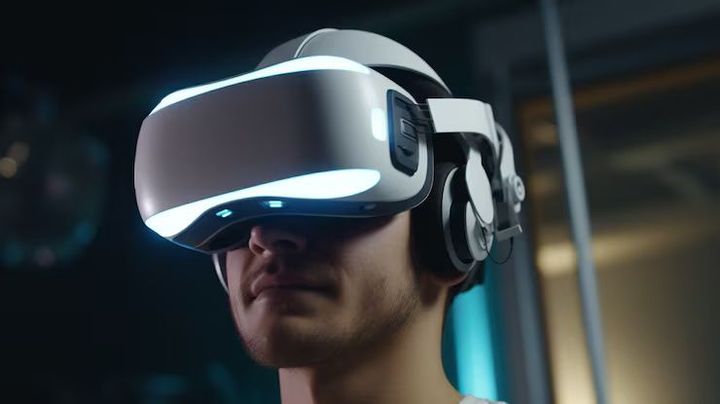
Virtual Reality (VR) headset display technology refers to the visual systems inside VR headsets that create immersive digital environments. These displays allow users to see and interact with three-dimensional virtual spaces, making VR useful for gaming, education, training, engineering visualization, and healthcare simulation.
A VR headset places small screens directly in front of a user’s eyes while specialized lenses adjust the image to create depth and a wide field of view. Motion sensors track head movement so the visual perspective changes naturally as the user looks around.
VR display technology bridges the gap between digital graphics and human perception. Unlike traditional flat screens, VR systems simulate realistic spatial environments to enhance immersion.
Core Components of VR Display Systems
The core components of VR display systems work together to create immersive experiences. Each component contributes to image clarity, responsiveness, and realism.
- High-resolution display panels
- Optical lenses for focus and magnification
- Motion tracking sensors
- Refresh rate control systems
- Real-time rendering software
Types of VR Display Technologies
Different display technologies are used in modern VR headsets. Each type offers unique advantages depending on use cases and performance needs.
Common VR Display Technologies
| Display Technology | Key Characteristic | Typical Application |
|---|---|---|
| LCD Panels | Bright colors and stable performance | Consumer VR platforms |
| OLED Displays | Deep contrast and fast response | High-immersion gaming |
| Micro-OLED | Extremely high pixel density | Compact, lightweight headsets |
| Mini-LED | Improved brightness and contrast | Mixed reality environments |
These technologies continue to evolve to improve realism, reduce motion sickness, and enhance long-term comfort.
Why VR Display Technology Matters
VR display technology is essential due to the rapid growth of immersive computing. Industries are increasingly using virtual environments for training, design, and collaboration.
The performance of a VR headset depends heavily on its display system. Factors such as resolution, refresh rate, and field of view directly affect user experience.
Key Display Characteristics
- Resolution: Determines visual sharpness
- Refresh Rate: Controls motion smoothness
- Field of View (FOV): Defines visible area
- Latency: Measures delay between movement and display
Higher performance reduces motion discomfort and visual fatigue.
Industries Using VR Displays
Several industries benefit from advancements in VR display technology:
- Game development
- Engineering and architecture
- Healthcare simulation
- Education and training
- Manufacturing and prototyping
Common VR Applications
- Medical procedure simulations
- Flight training environments
- Industrial design testing
- Virtual tourism
- Collaborative virtual workspaces
Recent Developments and Trends
The VR industry has seen major advancements between 2024 and early 2025. Improvements focus on higher clarity, reduced device size, and better efficiency.
Key Innovations
- Micro-OLED displays with ultra-high resolution (3000+ pixels per eye)
- Pancake lens technology for thinner headsets
- Foveated rendering for optimized performance
- Refresh rates of 120 Hz or higher
- Enhanced eye-tracking integration
- Growth of mixed reality systems
Performance Evolution in VR Displays
| Feature | Earlier VR Systems | Modern VR Systems |
|---|---|---|
| Resolution | 1080p per eye | 2K–4K per eye |
| Refresh Rate | 60–90 Hz | 90–144 Hz |
| Field of View | ~90° | 100°–120° |
| Pixel Density | Moderate | Ultra-high |
These improvements help create more natural and visually stable virtual environments.
Regulations and Policy Considerations
VR display technology is influenced by safety standards and regulatory frameworks. These ensure safe usage and protect user data.
Key Regulatory Areas
- Electromagnetic compatibility (EMC)
- Electronic device safety certifications
- Eye safety standards
- Data privacy for tracking systems
Common Certification Standards
| Region | Certification |
|---|---|
| European Union | CE compliance |
| United States | FCC regulations |
| India | BIS certification |
Data protection laws are especially important as VR systems may collect biometric data such as eye-tracking information. Governments are also supporting VR innovation through digital transformation initiatives.
Tools and Resources for VR Development
Developers use specialized tools to build and test VR display systems. These tools help ensure performance, accuracy, and visual quality.
VR Development Platforms
- Unity XR toolkit
- Unreal Engine VR framework
- WebXR environment
Performance Testing Tools
- Frame timing analyzers
- Motion latency measurement tools
- GPU monitoring systems
Design and Visualization Tools
- 3D modeling software
- Simulation environments
- Immersive design platforms
Display Evaluation Metrics
| Metric | Description | Goal |
|---|---|---|
| Pixel Density | Pixels per inch | High clarity |
| Frame Latency | Motion-to-display delay | Minimal delay |
| Refresh Rate | Frames per second | Smooth motion |
| Optical Distortion | Lens image warping | Corrected rendering |
Frequently Asked Questions
What is VR display resolution?
VR display resolution refers to the number of pixels shown inside the headset. Higher resolution improves clarity and reduces the screen-door effect.
Why is refresh rate important?
Refresh rate determines how smoothly motion appears. Higher rates reduce motion blur and improve realism.
What causes motion discomfort?
Motion discomfort occurs when visual updates do not match physical movement. High latency or poor tracking can contribute to this issue.
What is field of view in VR?
Field of view defines how much of the virtual environment is visible. A wider FOV increases immersion.
What is foveated rendering?
Foveated rendering focuses high detail where the user is looking while reducing detail in peripheral areas. This improves performance without sacrificing perceived quality.
Conclusion
VR headset display technology plays a central role in creating immersive digital environments. By combining high-resolution displays, advanced optics, and real-time rendering, VR enables realistic virtual experiences.
Recent innovations such as micro-OLED displays, pancake lenses, and eye-tracking systems are improving both performance and comfort. At the same time, regulations ensure safety and data protection.
As VR adoption continues to grow across industries, display technology will remain a key driver of innovation. Ongoing advancements aim to deliver more realistic visuals, compact hardware, and enhanced user experiences.