Water Filters Explained: Clean Water Technologies
Water filters play an important role in improving water quality by reducing impurities, unwanted particles, and certain contaminants from water sources.
As concerns about drinking water quality continue to grow, modern water filtration systems are increasingly used in homes, commercial facilities, healthcare environments, educational institutions, and industrial applications.
From activated carbon filtration to reverse osmosis systems and ultraviolet purification technologies, water treatment solutions have evolved significantly. Understanding how water filters work, their different types, applications, and selection factors can help users make informed decisions about water quality management.
Water Filters at a Glance
Water filters are devices or systems designed to improve water quality by reducing sediments, chemicals, microorganisms, odors, and other unwanted substances. Modern filtration technologies include activated carbon filters, reverse osmosis systems, UV purification units, sediment filters, and multi-stage water treatment systems. These technologies support cleaner water for drinking, cooking, industrial processing, and various commercial applications.
Key Industry Facts
- Water filtration technology is widely used in residential, commercial, and industrial settings.
- Multi-stage filtration systems combine several purification methods.
- Activated carbon filters are commonly used to improve taste and odor.
- Reverse osmosis systems can reduce a broad range of dissolved substances.
- UV purification systems help control certain microorganisms.
- Smart water monitoring technologies are increasingly integrated into filtration systems.
- Water treatment equipment supports both point-of-use and whole-building applications.
How Water Filters Work
Water filtration systems remove or reduce impurities through physical, chemical, or biological processes.
Basic Filtration Process
- Water enters the filtration system.
- Sediment filters capture larger particles.
- Activated carbon media may reduce odors and certain chemicals.
- Advanced filtration stages remove finer contaminants.
- Optional UV systems treat microorganisms.
- Filtered water moves to storage or distribution points.
- Monitoring systems track operational performance in advanced setups.
The exact process varies depending on the filtration technology and intended application.
Main Types of Water Filters
Activated Carbon Filters
Activated carbon filtration is widely used to improve water taste and reduce odors.
Common applications include:
- Residential drinking water
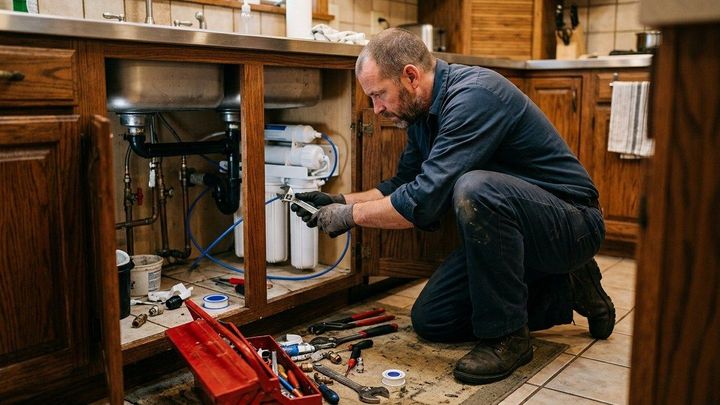
- Kitchen filtration systems
- Commercial beverage preparation
- Point-of-use filtration
Reverse Osmosis Systems
Reverse osmosis uses a semi-permeable membrane to reduce a wide range of dissolved substances.
These systems are commonly found in:
- Residential filtration systems
- Commercial water treatment
- Healthcare facilities
- Laboratory environments
Sediment Filters
Sediment filters capture suspended particles such as sand, rust, and debris.
They are often used as a pre-filtration stage in larger treatment systems.
Ultraviolet Water Purification
UV purification uses ultraviolet light to target microorganisms without adding chemicals to the water.
Multi-Stage Water Filtration Systems
Multi-stage systems combine several treatment technologies to address different water quality concerns.
Comparison of Water Filtration Technologies
| Filtration Type | Primary Function | Common Applications |
|---|---|---|
| Sediment Filter | Particle Removal | Pre-Filtration |
| Activated Carbon | Taste & Odor Improvement | Drinking Water |
| Reverse Osmosis | Dissolved Substance Reduction | Residential & Commercial |
| UV Purification | Microorganism Control | Water Treatment Systems |
| Multi-Stage Systems | Combined Filtration | Comprehensive Water Treatment |
Core Components of Water Filter Systems
Filter Housing
The housing protects filtration components and directs water flow through the treatment stages.
Filter Media
Filter media performs the primary purification function.
Examples include:
- Activated carbon
- Membranes
- Ceramic materials
- Specialized filtration compounds
Flow Control Components
Valves and regulators help maintain proper operating conditions.
Monitoring Systems
Advanced water treatment equipment may include sensors and monitoring technologies.
Storage Tanks
Some systems incorporate storage tanks for treated water management.
Applications of Water Filters
Residential Water Treatment
Homeowners use water filters to improve drinking water quality and support household water treatment needs.
Commercial Facilities
Hotels, offices, restaurants, and retail environments often use filtration systems for water quality management.
Healthcare Environments
Medical facilities may use specialized filtration technologies to support water quality requirements.
Educational Institutions
Schools and universities often implement filtration systems for drinking water access.
Food and Beverage Processing
Water quality plays an important role in food preparation and beverage production.
Industrial Applications
Industrial water treatment systems support manufacturing processes, equipment protection, and operational efficiency.
Selection Factors
Water Quality Conditions
The existing water source influences filtration requirements.
Filtration Technology
Different contaminants may require different treatment approaches.
System Capacity
Water demand should align with filtration system capacity.
Maintenance Requirements
Filter replacement schedules and servicing needs should be considered.
Installation Location
Available space may influence equipment selection.
Monitoring Features
Smart monitoring systems can provide operational visibility and maintenance alerts.
Benefits of Water Filters
- Improves overall water quality
- Reduces unwanted particles
- Supports better taste and odor characteristics
- Enhances water treatment efficiency
- Supports residential and commercial applications
- Provides multiple filtration options
- Integrates with modern monitoring technologies
- Supports water quality management programs
- Available in various configurations
- Can be adapted to different water sources
Challenges and Limitations
Filter Replacement Requirements
Filtration components require periodic replacement to maintain performance.
Water Quality Variability
Different water sources may require customized treatment approaches.
Maintenance Responsibilities
Routine maintenance is important for system effectiveness.
Installation Considerations
Some advanced systems may require additional installation planning.
Operating Costs
Long-term operation may involve maintenance, monitoring, and component replacement.
Industry Standards and Compliance
Water treatment equipment is often designed according to recognized industry standards and performance requirements.
Important considerations may include:
- Drinking water regulations
- Material safety standards
- Equipment certification requirements
- Water quality testing procedures
- Environmental compliance guidelines
Requirements vary depending on region, application, and system type.
Safety Considerations
Safe operation of water filtration systems includes:
- Following manufacturer guidelines
- Replacing filters according to recommendations
- Monitoring system performance
- Maintaining sanitary conditions
- Conducting periodic inspections
- Protecting equipment from damage
- Verifying water quality when appropriate
Latest Technology Trends
Smart Water Monitoring
Connected sensors provide real-time visibility into filtration performance.
Advanced Membrane Technology
New membrane designs continue improving filtration efficiency.
Sustainable Filtration Materials
Manufacturers are exploring environmentally conscious filtration solutions.
Integrated Water Management Systems
Modern systems increasingly combine filtration, monitoring, and automation.
AI-Assisted Monitoring
Advanced analytics help identify maintenance needs and operational trends.
Expert Insights
Modern water filtration systems are evolving beyond basic filtration by integrating smart monitoring, predictive maintenance capabilities, and advanced purification technologies. As water quality management becomes increasingly important across residential, commercial, and industrial sectors, filtration equipment continues to play a critical role in supporting reliable water treatment strategies.
Key Takeaways
- Water filters improve water quality through various treatment methods.
- Activated carbon and reverse osmosis remain widely used technologies.
- Multi-stage systems combine multiple filtration approaches.
- Smart monitoring technologies are becoming more common.
- Maintenance is essential for long-term performance.
- Water quality conditions influence system selection.
- Modern filtration systems support residential, commercial, and industrial applications.
Frequently Asked Questions
What is a water filter?
A water filter is a device or system designed to improve water quality by reducing particles, contaminants, odors, and other unwanted substances.
How do water filters work?
Water filters use physical, chemical, or biological processes to treat water before it reaches the user.
What is activated carbon filtration?
Activated carbon filtration uses porous carbon material to improve taste and reduce certain chemicals and odors.
What is reverse osmosis?
Reverse osmosis is a filtration process that uses a specialized membrane to reduce dissolved substances from water.
Are water filters used in commercial facilities?
Yes. Commercial buildings, restaurants, healthcare facilities, and educational institutions frequently use water treatment systems.
How often should filters be replaced?
Replacement schedules vary according to filter type, water quality, and system usage.
What is a multi-stage water filter?
A multi-stage system combines several treatment technologies to improve overall water purification performance.
Can water filters support industrial applications?
Yes. Industrial facilities often use specialized water treatment systems for operational and process-related requirements.
What are smart water filtration systems?
Smart systems use sensors and monitoring technologies to track performance and maintenance needs.
Why is water quality monitoring important?
Monitoring helps ensure filtration systems operate effectively and continue meeting intended water treatment objectives.
Conclusion
Water filters are an important component of modern water treatment strategies, supporting improved water quality across residential, commercial, healthcare, educational, and industrial environments. Technologies such as activated carbon filtration, reverse osmosis, ultraviolet purification, and multi-stage treatment systems provide a range of solutions for different water quality needs.
As smart monitoring, advanced membranes, and integrated water management technologies continue to develop, water filtration systems are becoming more efficient, connected, and adaptable. Understanding filtration methods, system components, applications, maintenance requirements, and selection factors can help users better evaluate modern water treatment solutions.