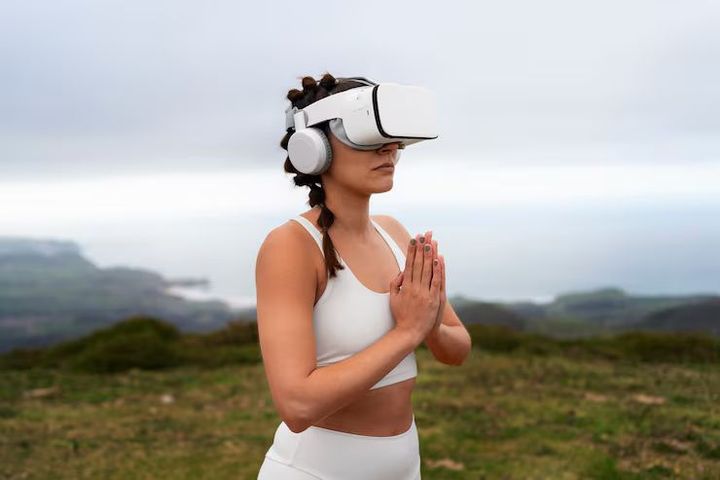
Augmented reality (AR) technology overlays digital information such as images, data, or instructions onto the user’s physical environment. Wearable AR sensors make this possible by continuously collecting real-time data about motion, orientation, depth, and surroundings.
These sensors work together with advanced software, artificial intelligence, and cloud computing platforms to create immersive digital experiences. Over time, improvements in sensor miniaturization and processing power have enabled compact and efficient AR wearable systems.
Common Types of Wearable AR Sensors
Wearable AR devices typically include a variety of sensors that function together to deliver accurate spatial awareness.
-
Motion sensors (accelerometers and gyroscopes)
-
Depth sensors
-
Optical tracking sensors
-
Environmental sensors
-
Eye-tracking sensors
-
Gesture recognition sensors
These components allow devices to interpret both user movements and environmental conditions in real time.
Why Wearable AR Sensors Matter in Modern Technology
Wearable AR sensors play a key role in enabling real-time interaction between humans and digital systems. They support industries adopting digital transformation by improving visualization, training, and decision-making processes.
The importance of these sensors has increased due to the growth of artificial intelligence, spatial computing, and connected technologies. Industries are using AR to enhance productivity, safety, and operational efficiency.
Key Benefits
Wearable AR sensor technology provides several advantages across industries.
-
Enhanced situational awareness through real-time overlays
-
Improved training and remote collaboration
-
Hands-free access to information
-
Advanced spatial mapping for navigation
-
Increased efficiency in complex environments
Industry Applications
Wearable AR sensors are widely used across different sectors to improve processes and outcomes.
| Industry | Example Applications |
|---|
| Healthcare | Surgical visualization, medical training |
| Manufacturing | Equipment diagnostics and maintenance |
| Logistics | Warehouse navigation, inventory management |
| Education | Interactive learning environments |
| Automotive | Assembly line visualization |
These applications demonstrate how AR sensors bridge digital data with real-world operations.
Recent Developments in Wearable AR Sensor Technology
Recent advancements in AR sensor systems have been driven by improvements in artificial intelligence and semiconductor technologies. These innovations have enhanced tracking accuracy, reduced power consumption, and improved device performance.
The integration of AI-powered environmental recognition systems has enabled devices to better identify objects and surfaces. Improved depth sensing technology has also enhanced spatial understanding for navigation and industrial applications.
Notable Advancements
Several key developments have shaped the evolution of wearable AR sensors.
-
Improved micro-optical sensors for smart glasses
-
AI-based gesture recognition systems
-
Higher-resolution depth cameras
-
Edge computing for faster processing
-
Energy-efficient sensor chipsets
The expansion of 5G and edge computing has further improved AR responsiveness by reducing latency.
Regulations and Policies Influencing Wearable AR Technology
Wearable AR sensors operate within regulatory frameworks that address privacy, safety, and data protection. These regulations ensure responsible use of technologies that collect environmental and personal data.
Data privacy laws are particularly important because AR devices may capture visual and biometric information. Different regions have introduced policies to manage how this data is collected, stored, and processed.
Key Regulatory Considerations
-
Compliance with data protection laws (e.g., GDPR)
-
Workplace safety standards
-
Device certification requirements
-
Radio frequency communication regulations
Governments and organizations are also supporting AR innovation through research and development initiatives.
Helpful Tools and Resources for AR Sensor Technology
Developers and researchers rely on various tools to build and analyze wearable AR systems. These tools support application development, sensor calibration, and spatial mapping.
Common Tools
-
AR development platforms (SDKs)
-
3D mapping and modeling software
-
Sensor calibration tools
-
Computer vision libraries
-
Simulation and testing platforms
Tool Categories and Purposes
| Tool Category | Purpose |
|---|
| AR SDK platforms | Develop AR applications |
| Computer vision frameworks | Process sensor data and detect objects |
| Spatial mapping software | Create 3D environment models |
| Sensor diagnostics tools | Monitor device performance |
These resources help professionals design efficient and accurate AR systems.
Frequently Asked Questions About Wearable AR Sensors
What are wearable AR sensors used for?
Wearable AR sensors collect motion and environmental data to enable digital overlays in real-world environments.
How do AR sensors track movement?
They use accelerometers, gyroscopes, and optical tracking systems to monitor movement and spatial positioning.
Are AR sensors used beyond entertainment?
Yes, they are widely used in healthcare, manufacturing, logistics, and education for training and operational support.
What is spatial mapping?
Spatial mapping involves creating digital models of physical environments for accurate AR interaction.
How does AI improve AR sensors?
AI analyzes sensor data to recognize objects, interpret gestures, and enhance overlay accuracy.
Data Insights on Wearable AR Sensor Capabilities
Wearable AR sensors are evaluated based on their technical capabilities, which determine performance and usability.
| Sensor Capability | Function |
|---|
| Motion Tracking | Detects head and body movement |
| Depth Detection | Measures distance between objects |
| Eye Tracking | Monitors gaze direction |
| Gesture Recognition | Interprets hand movements |
| Environmental Mapping | Creates digital models of physical spaces |
These capabilities enable more immersive and interactive AR experiences.
Conclusion
Wearable AR sensors are a significant advancement in modern digital interaction technologies. By capturing motion, spatial, and environmental data, they enable seamless integration of digital information into the physical world.
The growing demand for immersive computing and smart industrial solutions continues to drive innovation in this field. At the same time, regulatory frameworks ensure that these technologies are used responsibly.
As AR technology evolves, wearable sensors will remain essential in building intelligent and context-aware computing environments.