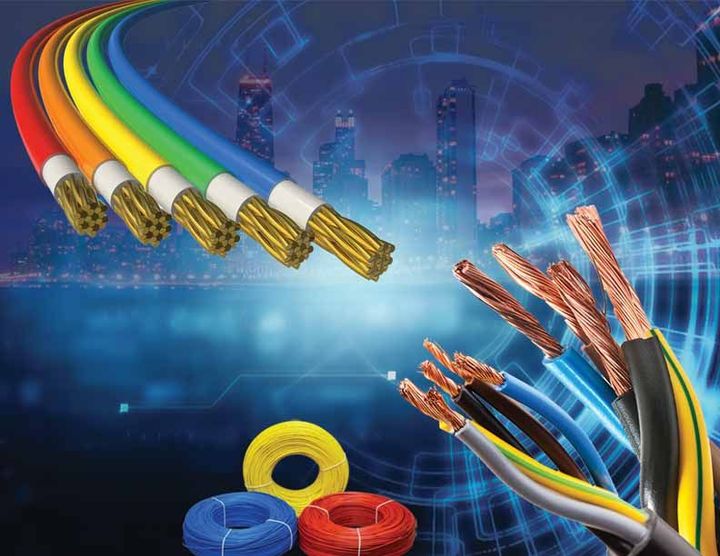
Wire and Cable Information: Materials, Ratings and Industrial Applications
Explore wire and cable information, including conductor materials, insulation types, voltage ratings, safety considerations, industrial applications, recent developments, and relevant standards in India.
Wire and cable systems are essential parts of modern electrical infrastructure. They carry electrical power or transmit signals between equipment, buildings, control systems, communication networks, and industrial machinery. Although the terms “wire” and “cable” are often used together, they are not always identical. A wire generally refers to a single electrical conductor, while a cable can contain one or more insulated conductors grouped inside a protective covering.
The basic purpose of an electrical conductor is to provide a controlled path for current. The conductor is normally made from a material with good electrical conductivity, while insulation helps prevent unwanted contact, leakage, and short circuits.
Industrial cable technology has developed around different operating conditions. A cable used inside a control panel may have very different construction from one installed underground or used in a high-voltage power network.
Important characteristics include conductor material, conductor size, insulation, voltage rating, temperature rating, flexibility, mechanical protection, and resistance to environmental conditions.
Common wire and cable categories include:
- Power cables for electrical energy transmission
- Control cables for industrial equipment and automation
- Instrumentation cables for measurement systems
- Communication cables for data and signal transmission
- Flexible cables for moving equipment
- Fire-resistant and flame-retardant cables for selected applications
- Underground and outdoor cables designed for demanding environments
Understanding these characteristics helps engineers, technicians, facility managers, and general users select an appropriate cable for a particular electrical application.
Why Wire and Cable Ratings Matter
Cable ratings describe the conditions under which a cable is designed to operate safely. Selecting a cable only by its physical appearance can create electrical and safety problems.
The most important rating is often the voltage rating. It indicates the electrical voltage range for which the insulation system and cable construction are designed. Low-voltage wiring, industrial power cables, and high-voltage transmission cables therefore have substantially different designs.
The current-carrying capacity, commonly called ampacity, is another important factor. A conductor carrying electrical current generates heat. If the current exceeds the appropriate limit for the installation conditions, excessive temperature can damage insulation and reduce cable life.
Cable selection can also depend on:
- Conductor cross-sectional area
- Installation method
- Ambient temperature
- Number of loaded conductors
- Cable grouping
- Insulation material
- Maximum conductor temperature
- Voltage drop
- Short-circuit conditions
- Mechanical protection requirements
For industrial electrical systems, these factors affect both equipment performance and electrical safety.
Common Wire and Cable Materials
Copper and aluminium are the two major conductor materials used in electrical cables.
Copper conductors have high electrical conductivity and are widely used in building wiring, industrial equipment, control systems, and many power applications. Copper is also relatively ductile, which makes it suitable for stranded and flexible conductor designs.
Aluminium conductors are lighter than copper and are widely used in power transmission and distribution applications. Their lower density can be advantageous where conductor weight is an important consideration.
The insulation and sheath are equally important. Materials may include PVC, cross-linked polyethylene, elastomeric compounds, and other specialized polymers.
PVC is widely used because it can provide electrical insulation and mechanical protection for many general-purpose applications. XLPE is commonly associated with power cable systems because of its thermal and electrical characteristics.
Specialized cable designs can also use materials intended to improve resistance to heat, moisture, chemicals, fire, abrasion, or mechanical stress.
Understanding Cable Construction
A typical power cable can contain several layers, each performing a specific function.
The conductor carries electrical current. It may be solid or stranded, depending on the application and required flexibility.
The insulation surrounds the conductor and electrically separates it from other conductors or external surfaces.
Some cables include an inner sheath, screen, armour, or other protective layer. Armour can provide mechanical protection, while screens may help control electromagnetic interference or provide specific electrical characteristics.
The outer sheath protects the cable from environmental conditions such as moisture, abrasion, chemicals, and mechanical contact.
Cable construction therefore involves more than simply choosing a metal conductor. The complete structure must match the electrical and environmental requirements of the installation.
Industrial Applications of Wire and Cable
Wire and cable technology supports a wide range of industrial sectors.
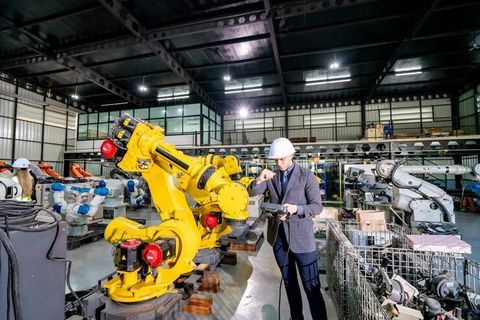
Manufacturing facilities use power cables to connect electrical distribution systems, motors, drives, pumps, compressors, and production machinery. Control cables can connect sensors, switches, actuators, and automation equipment.
In renewable energy installations, specialized cables may be used for solar power systems and other electrical infrastructure. Data centers depend on power and communication cabling for reliable operation of computing and networking equipment.
Construction projects use electrical wiring for lighting, power distribution, control systems, and building equipment. Railways, transportation systems, telecommunications infrastructure, and utilities also depend on specialized cable technologies.
Industrial applications commonly require consideration of:
- Electrical load
- Voltage level
- Environmental exposure
- Installation location
- Mechanical stress
- Fire performance
- Flexibility
- Electromagnetic compatibility
- Maintenance requirements
The correct cable specification depends on the complete operating environment rather than a single characteristic.
Recent Developments and Trends
Wire and cable technology has continued to evolve as electrical infrastructure becomes more complex. During 2025 and 2026, standards activity in India has included updates and new work involving cable specifications.
For example, BIS documentation identifies IS 7098 (Part 1):2025 for cross-linked polyethylene insulated thermoplastic sheathed cables for working voltages up to and including 1,100 V. BIS documentation also lists IS 7098 (Part 3):1993 in relation to higher-voltage cable applications and records newer standards activity around cable technology.
BIS also published a draft fifth revision of IS 694 in July 2024. The draft covers PVC-insulated cables and cords with rigid or flexible copper and aluminium conductors for rated voltages up to and including 1,100 V, including categories such as flame-retardant and flame-retardant low-smoke-and-halogen cables.
Another important trend is increased attention to fire performance. Cable specifications increasingly distinguish between general-purpose products and designs intended to provide improved flame-retardant or low-smoke characteristics.
Industrial electrification, renewable energy development, automation, data infrastructure, and increasing electrical loads are also influencing cable engineering. These developments make accurate conductor sizing, insulation selection, thermal analysis, and standards compliance increasingly important.
Indian Laws, Standards, and Policies
In India, the Bureau of Indian Standards (BIS) plays an important role in developing and maintaining standards for electrical wires and cables. BIS identifies standards covering different conductor and cable categories.
For example, IS 694 addresses PVC-insulated unsheathed and sheathed cables and cords with rigid and flexible conductors. BIS documentation identifies this standard within the cables, conductors, wires, and accessories category and records mandatory certification information for the relevant product standard.
BIS testing and certification requirements can vary according to the particular cable standard and product category. The BIS “Know Your Standard” system provides access to information such as standards, amendments, testing schemes, laboratories, and certification-related details.
Environmental regulations can also affect electrical products and their end-of-life management. India's E-Waste (Management) Rules, 2022, together with subsequent amendments, form part of the country's framework for electronic waste management. The Ministry of Environment, Forest and Climate Change lists the 2022 rules and subsequent amendments in its rules and regulations database.
The applicable requirement depends on the cable type, intended application, voltage level, installation environment, and relevant Indian Standard. Therefore, current BIS documentation should be checked before determining compliance for a specific project.
Tools and Resources for Cable Selection
Several general tools can help users understand and evaluate electrical cable requirements.
Cable sizing calculators can estimate conductor size using current, voltage, installation conditions, and allowable voltage drop.
Voltage-drop calculators help determine whether a selected conductor is appropriate for a particular circuit length and load.
Electrical load calculators can help estimate the expected current of motors, equipment, lighting systems, and other electrical loads.
Cable datasheets and technical specifications provide information about conductor construction, insulation, voltage rating, temperature limits, dimensions, and installation conditions.
Standards databases help users identify the applicable technical requirements for a particular wire or cable category. In India, the BIS standards database is particularly relevant.
Cable identification templates can also help maintenance teams record cable numbers, circuits, conductor sizes, voltage levels, destinations, and installation locations.
These resources are most useful when combined with engineering calculations and the applicable electrical standards rather than used as a substitute for them.
Frequently Asked Questions
What is the difference between a wire and a cable?
A wire generally refers to a single conductor, while a cable normally contains one or more conductors with insulation and, where necessary, additional protective layers. The terminology can vary by application and industry.
Why is copper commonly used in electrical cables?
Copper has high electrical conductivity and good mechanical flexibility. These properties make it suitable for many electrical wiring, control, and power applications.
What does a cable voltage rating mean?
A voltage rating indicates the electrical voltage conditions for which the cable insulation and construction are designed. It should be appropriate for the electrical system in which the cable is installed.
Why is cable size important?
Cable size affects current-carrying capacity, voltage drop, heating, and overall electrical performance. The appropriate size depends on the load and installation conditions.
What standards apply to electrical cables in India?
Different cable categories are covered by different Indian Standards. Examples include standards for PVC-insulated cables, XLPE-insulated cables, conductors, and other specialized cable types. The applicable standard should be identified according to the specific cable and application.
Conclusion
Wire and cable systems form a fundamental part of electrical infrastructure across industrial, commercial, construction, energy, transportation, and communication applications. Their performance depends on much more than conductor material. Voltage rating, current capacity, insulation, temperature, installation conditions, mechanical protection, and environmental exposure all influence cable selection.