A Beginner’s Guide to Industrial Briquetting Machines and Densification
Industrial briquetting machines are mechanical systems used to compress loose materials into compact blocks known as briquettes. These machines are used for biomass residues, wood waste, agricultural materials, metal chips, and certain industrial by-products.
Industrial briquetting equipment can use hydraulic pressure, mechanical compression, or other forming methods to create consistent shapes that are easier to handle, transport, store, or process.
The basic idea behind briquetting is to increase the density of loose material through controlled pressure. Depending on the feedstock, industrial briquette making machines can be incorporated into systems that include drying, grinding, screening, feeding, compression, cooling, and storage. The appropriate configuration depends on material characteristics and the intended use of the finished briquette.
Context
What Is an Industrial Briquetting Machine?
An industrial briquetting machine compresses prepared material into a defined shape. The material is fed into a compression chamber, where pressure forces particles together. In some processes, natural binding characteristics of the material are sufficient, while other applications may require an additional binder.
Briquetting has been used for many years to convert loose residues into denser forms. Traditional methods were relatively simple, while modern industrial briquetting machines incorporate controlled feeding, automated pressure regulation, sensors, and process monitoring.
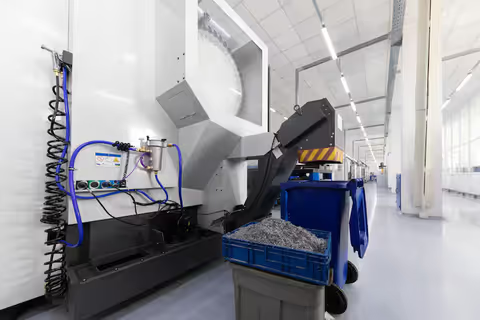
The machine's operating principle varies according to the feedstock. Biomass briquetting machines, for example, are designed around fibrous materials such as sawdust, agricultural residues, and wood particles. Metal briquetting machines handle materials such as metal chips and turnings and are designed for substantially different mechanical conditions.
Main Components
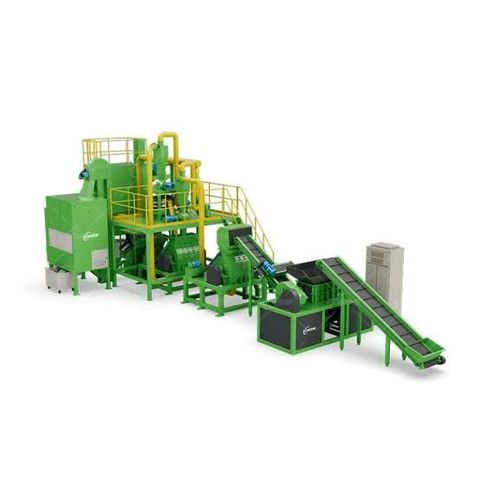
A briquetting system generally contains several connected components rather than a compression unit alone. The exact arrangement depends on the raw material and production process.
Common components include:
- Feed hopper
- Conveyor or screw feeder
- Material preparation equipment
- Compression chamber
- Hydraulic or mechanical drive
- Briquette forming die
- Cooling or stabilization equipment
- Discharge mechanism
- Control panel
- Sensors and monitoring devices
Material preparation is particularly important. Excess moisture, inconsistent particle size, or contaminants can affect compression and the physical properties of the finished briquette.
How Briquetting Works
The general process begins with collection and preparation of the feedstock. Material may be dried, shredded, crushed, or screened before entering the compression stage.
The prepared material is then continuously or intermittently fed into the machine. Pressure is applied until the material reaches the required density and shape. After forming, the briquette may need cooling, drying, or stabilization before handling.
| Process stage | Main purpose |
|---|---|
| Collection | Brings raw material into the production system |
| Preparation | Adjusts size, moisture, and material consistency |
| Feeding | Delivers material at a controlled rate |
| Compression | Forms the material into briquettes |
| Cooling | Allows formed material to stabilize |
| Screening | Removes unsuitable pieces or particles |
| Storage | Keeps finished briquettes in an organized condition |
Importance
Why Briquetting Matters
Loose biomass, wood residues, agricultural waste, and metal chips can occupy considerable storage space and may be difficult to handle in their original form. Briquetting changes the physical form of these materials and can make them more uniform for subsequent handling or processing.
For biomass, the process can create a denser solid fuel from suitable organic residues. For metalworking operations, compression can reduce the volume of metal chips and make subsequent material handling more organized.
Briquetting does not automatically make every material suitable for a particular application. Moisture, contamination, composition, particle size, and intended use all influence whether a feedstock is appropriate.
Types of Briquetting Machines
Different machines are designed around different material characteristics. Hydraulic briquetting machines use hydraulic pressure to compress material, while mechanical systems use mechanical force generated through components such as flywheels, pistons, or screw mechanisms.
Automatic briquetting machines can include sensors and control systems that regulate feeding, compression, and other operating parameters. The degree of automation varies between equipment configurations.
Some common categories include:
- Biomass briquetting machines for wood and agricultural residues
- Hydraulic briquetting machines for selected biomass and industrial materials
- Mechanical briquetting machines for continuous compression processes
- Metal briquetting machines for metal chips and turnings
- Industrial briquette making machines designed for larger production environments
Applications Across Industries
Briquetting systems can be found in several industrial sectors. Wood-processing facilities may process sawdust and wood residues, while agricultural operations may process selected crop residues.
Metalworking plants use specialized equipment to compact metal chips. Other industrial operations may use briquetting for selected mineral materials or production residues when the material characteristics and process requirements permit it.
Recent Updates
Greater Process Automation
Recent developments in industrial briquetting equipment have focused on automation and process monitoring. Sensors can measure variables such as hydraulic pressure, motor condition, temperature, feed levels, and equipment status.
Automatic controls can coordinate several parts of the production line. This can include automatic feeding, pressure regulation, fault detection, and shutdown functions when defined operating conditions are reached.
Automated systems may also record operating information for production monitoring and equipment maintenance planning.
Integration With Material Preparation
Modern biomass briquette production equipment is often designed as part of a larger processing line. Drying, shredding, grinding, screening, conveying, compression, and cooling can be connected through a coordinated control system.
This approach allows material preparation conditions to be managed alongside compression. Moisture control remains particularly important for biomass because excessive or insufficient moisture can affect feeding behavior, compression, and briquette stability.
Energy and Resource Considerations
Industrial users are also paying greater attention to energy consumption and material utilization. Briquetting itself requires mechanical energy, while biomass systems may require additional energy for drying.
For this reason, current system design can include heat recovery, variable-speed drives, automated controls, and improved material-flow management where appropriate. These technologies are intended to coordinate energy use with actual process requirements.
Data-Based Monitoring
Digital monitoring is increasingly being incorporated into industrial briquetting systems. Production data can include machine operating time, pressure readings, motor loads, temperature values, and alarm records.
Such information can help operators identify changes in equipment behavior and document production conditions. Data monitoring does not eliminate the need for physical inspection and routine maintenance.
Laws or Policies
Environmental Requirements
Briquetting facilities can be subject to environmental rules depending on the material being processed and the location of the plant. In the United States, federal and state environmental authorities regulate areas such as air emissions, waste handling, and industrial operations.
Biomass preparation may generate dust, particularly during shredding, grinding, and conveying. Facilities may therefore need to address particulate emissions, workplace exposure, ventilation, and dust-control requirements.
Metal briquetting facilities can also have specific requirements related to metalworking residues, oils, coolants, and waste handling. The applicable requirements depend on the material and facility operations.
Workplace Safety
Briquetting equipment contains moving mechanical components and, in some configurations, high-pressure hydraulic systems. Operators may therefore need safeguards around compression areas, conveyors, rotating components, and other moving machinery.
In the United States, the Occupational Safety and Health Administration provides workplace safety requirements relevant to machine guarding, hazardous energy control, electrical equipment, and other industrial hazards.
Lockout procedures are particularly important when workers inspect or maintain equipment. Hydraulic pressure and stored mechanical energy must be appropriately controlled before maintenance activities.
Dust and Fire Considerations
Biomass particles can create combustible dust hazards under certain conditions. Facilities processing dry organic materials may therefore need to assess dust accumulation, ignition sources, ventilation, housekeeping, and electrical equipment.
The National Fire Protection Association publishes standards and guidance addressing combustible dust and related fire and explosion hazards. Specific requirements depend on the material and facility configuration.
Tools and Resources
Material and Process Calculations
Briquetting projects commonly involve calculations related to moisture content, material density, feed rate, compression pressure, and production throughput.
Useful technical resources can include:
- Moisture-content calculation worksheets
- Bulk-density measurement tools
- Particle-size analysis equipment
- Production-rate calculators
- Hydraulic pressure monitoring instruments
- Motor-load monitoring systems
- Material-balance spreadsheets
- Equipment maintenance records
These tools help organize process information and compare operating conditions.
Standards and Technical Information
Government agencies, engineering organizations, equipment documentation, and industry associations provide information relevant to briquetting operations. Environmental agencies can provide information about emissions and waste requirements, while occupational safety authorities publish workplace guidance.
Technical documentation from briquetting machine manufacturers can describe machine specifications, feedstock requirements, operating parameters, maintenance intervals, and electrical characteristics. Such information needs to be considered alongside the requirements of the particular facility.
FAQs
What are industrial briquetting machines used for?
Industrial briquetting machines compress loose materials into denser briquettes. Applications include biomass residues, wood particles, agricultural materials, metal chips, and selected industrial by-products.
How do biomass briquetting machines work?
Biomass briquetting machines prepare and compress materials such as sawdust or agricultural residues into compact shapes. Depending on the material, drying, grinding, screening, and cooling may be required before or after compression.
What are hydraulic briquetting machines?
Hydraulic briquetting machines use hydraulic pressure to compress material inside a forming chamber. They can be configured for different feedstocks and production requirements, with pressure and cycle characteristics determined by the machine design.
What are metal briquetting machines used for?
Metal briquetting machines compress metal chips, turnings, and similar residues into compact forms. They are commonly associated with metalworking operations where loose machining residues need more organized handling.
What do briquetting machine manufacturers consider when designing equipment?
Briquetting machine manufacturers consider feedstock type, moisture level, particle size, required briquette dimensions, production rate, compression method, electrical requirements, and downstream handling. Equipment configuration varies according to the material and intended process.
Conclusion
Industrial briquetting machines convert selected loose materials into compact briquettes through controlled compression. Biomass briquetting machines and metal briquetting machines use different configurations because their feedstocks have different physical characteristics. Modern systems increasingly incorporate automation, sensors, process monitoring, and integrated material-preparation equipment. Environmental, workplace safety, dust-control, and material-handling requirements are important considerations when operating briquetting equipment.