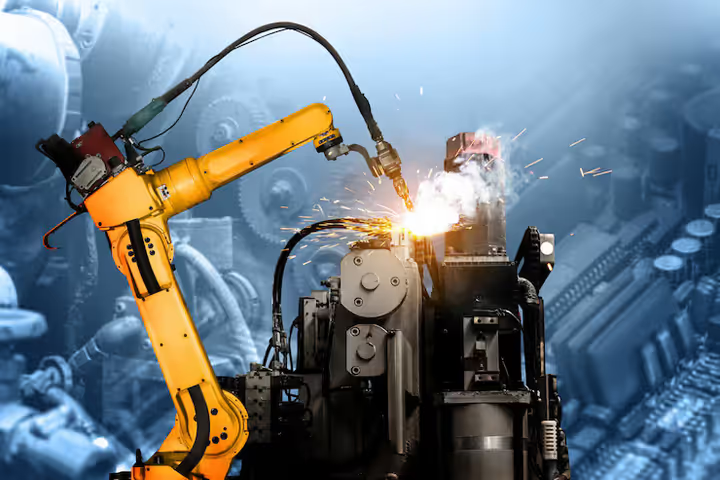
A Simple Guide to Cobot Welding Systems in Modern Manufacturing
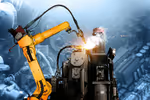
Cobot welding systems, also known as collaborative robot welding systems, are automated solutions designed to assist humans in welding tasks. Unlike traditional industrial robots that operate in isolated environments, cobots are built to work safely alongside human operators.
These systems combine robotic precision with human oversight, making them suitable for small to medium-scale manufacturing environments. They typically include robotic arms, welding torches, sensors, and intuitive software interfaces.
The idea behind cobot welding emerged from the need to simplify automation. Traditional robotic welding setups often require complex programming and large investments. In contrast, cobots are designed to be flexible, easy to program, and adaptable to different production requirements.
Manufacturers introduced cobots to address key challenges such as labor shortages, inconsistent weld quality, and workplace safety concerns. By combining automation with human collaboration, cobots offer a balanced approach to modern welding operations.
Why Cobot Welding Systems Matter in Today’s Manufacturing
Cobot welding systems are becoming increasingly relevant in modern manufacturing due to evolving industry demands. Businesses today require efficient, precise, and adaptable production systems.
These systems impact multiple stakeholders, including:
- Small and medium manufacturers seeking automation solutions
- Skilled welders looking to reduce repetitive strain
- Industries such as automotive, aerospace, and metal fabrication
Cobot welding helps solve several practical challenges:
- Consistency Issues: Manual welding can lead to variations in quality. Cobots provide repeatable and precise welds.
- Workforce Gaps: Skilled welding professionals are in short supply in many regions. Cobots assist by handling repetitive tasks.
- Safety Concerns: Welding environments can be hazardous. Cobots reduce exposure to fumes, heat, and sparks.
- Production Efficiency: Automation improves throughput and reduces downtime.
Below is a simple comparison table to understand the difference between traditional welding and cobot welding:
| Feature | Manual Welding | Traditional Robots | Cobot Welding Systems |
|---|---|---|---|
| Flexibility | High | Low | High |
| Ease of Use | Moderate | Complex | Simple |
| Safety | Moderate | Requires barriers | Built-in safety |
| Precision | Varies | High | High |
| Setup Time | Low | High | Moderate |
This balance between automation and usability is one of the main reasons cobot welding systems are gaining attention in manufacturing discussions.
Recent Updates and Trends in Cobot Welding Systems
Over the past year, cobot welding technology has seen notable developments. As of 2025, several trends are shaping the industry.
One major trend is the integration of artificial intelligence (AI) and machine learning. These technologies allow cobots to adapt welding parameters in real-time based on material type and joint conditions. This improves accuracy and reduces errors.
Another update is the increased use of vision systems. Advanced cameras and sensors help cobots detect weld seams automatically, reducing the need for manual programming.
Key developments from 2024–2025 include:
- AI-driven welding optimization (2024): Systems that adjust speed, heat, and positioning dynamically
- Improved user interfaces (2025): Touchscreen and drag-and-drop programming tools
- Cloud-based monitoring (2025): Remote tracking of welding performance and maintenance data
- Compact cobot designs (2024): Smaller units suitable for limited workspace environments
Below is a simplified trend overview:
| Trend | Description | Year |
|---|---|---|
| AI Integration | Real-time welding adjustments | 2024 |
| Vision Systems | Automated seam detection | 2024 |
| Cloud Connectivity | Remote monitoring and analytics | 2025 |
| User-Friendly Software | Easier programming interfaces | 2025 |
These advancements are making cobot welding systems more accessible and efficient for a broader range of industries.
Laws, Policies, and Regulatory Considerations
Cobot welding systems are influenced by workplace safety regulations and industrial standards. These rules ensure that both human operators and machines function safely in shared environments.
In many countries, cobots must comply with international safety standards such as:
- ISO 10218: Safety requirements for industrial robots
- ISO/TS 15066: Guidelines for collaborative robot operations
- Occupational Safety Regulations: Workplace safety practices related to welding and automation
In India, cobot welding systems are guided by general industrial safety laws and manufacturing standards. Government initiatives promoting automation and smart manufacturing also support the adoption of such technologies.
Examples of relevant policies include:
- National programs encouraging Industry 4.0 adoption
- Workplace safety regulations under labor laws
- Environmental standards related to emissions and energy use
These regulations ensure that cobot systems are implemented responsibly, with proper risk assessment and operator training.
Tools and Resources Related to Cobot Welding Systems
Understanding cobot welding systems becomes easier with the help of various tools and digital resources. These tools support planning, programming, and performance monitoring.
Useful tools and resources include:
- Simulation Software: Helps visualize welding processes before implementation
- Programming Interfaces: User-friendly platforms for setting up welding paths
- Welding Parameter Calculators: Tools to determine optimal speed, voltage, and heat
- Online Learning Platforms: Educational content about robotic welding basics
- Industry Reports and Whitepapers: Insights into trends and technology developments
Here is a simple table of resource categories:
| Resource Type | Purpose |
|---|---|
| Simulation Tools | Process planning and testing |
| Programming Software | Easy setup and customization |
| Monitoring Platforms | Performance tracking |
| Educational Content | Learning and skill development |
| Technical Documentation | Detailed system understanding |
These resources help users gain a deeper understanding of how cobot welding systems function in real-world applications.
Frequently Asked Questions About Cobot Welding Systems
What is the main difference between cobots and traditional robots?
Cobots are designed to work alongside humans safely, while traditional robots typically operate in isolated environments.
Do cobot welding systems require advanced programming skills?
Most cobots are designed with user-friendly interfaces, allowing operators to program them with minimal technical expertise.
Can cobot welding systems handle different materials?
Yes, many systems can be adjusted to work with various metals by changing parameters such as heat and speed.
Are cobot welding systems suitable for small-scale manufacturing?
They are particularly useful for small and medium manufacturers due to their flexibility and ease of use.
How do cobots improve welding quality?
Cobots provide consistent and precise movements, reducing variability and improving overall weld quality.
Conclusion
Cobot welding systems represent a practical step forward in modern manufacturing. They bridge the gap between manual welding and fully automated robotic systems by combining precision, flexibility, and safety.
As industries continue to evolve, the demand for adaptable and efficient solutions is growing. Cobot welding systems address this need by offering a balanced approach that supports both human workers and automated processes.
Recent technological advancements, including AI integration and improved usability, have further enhanced their capabilities. At the same time, regulatory frameworks ensure safe and responsible implementation.
By understanding how these systems work and the role they play in manufacturing, individuals and businesses can better navigate the ongoing transformation of industrial processes.