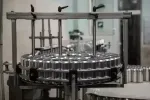
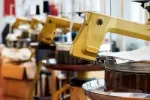
The process exists because industries require efficient ways to produce large volumes of identical parts. From small household items to complex industrial components, plastic injection molding enables precise and repeatable production.
The basic workflow involves:
-
Heating plastic material until it melts
-
Injecting it into a pre-designed mold
-
Cooling and solidifying the material
-
Ejecting the finished product
This approach allows manufacturers to maintain uniformity and reduce material waste while producing high-quality components.
Why Plastic Injection Molding Matters Today
Plastic injection molding plays a key role in modern manufacturing due to its efficiency and versatility. It is used across industries such as automotive, healthcare, electronics, packaging, and consumer goods.
Its importance can be understood through several factors:
-
High Precision Production: Enables the creation of detailed and complex parts
-
Scalability: Suitable for both small and large production volumes
-
Material Flexibility: Supports a wide range of plastics with different properties
-
Reduced Waste: Excess material can often be reused
This process helps solve common manufacturing challenges, such as maintaining consistency, reducing production errors, and meeting high demand efficiently.
Key Applications Across Industries
-
Automotive components like dashboards and panels
-
Medical devices such as syringes and containers
-
Electronic housings and connectors
-
Packaging materials including caps and containers
Comparison of Manufacturing Methods
| Feature | Injection Molding | 3D Printing | CNC Machining |
|---|
| Production Volume | High | Low to Medium | Medium |
| Precision | High | Moderate | High |
| Material Variety | Wide | Limited | Wide |
| Production Speed | Fast | Slow | Moderate |
| Waste Generation | Low | Moderate | High |
Recent Trends and Developments in 2025
Plastic injection molding continues to evolve with technological advancements and sustainability efforts. In 2024–2025, several key developments have influenced the industry:
-
Increased Use of Recycled Plastics (2024): Manufacturers are incorporating recycled materials to reduce environmental impact
-
Automation and Smart Manufacturing (2025): Integration of AI and IoT for monitoring production processes
-
Energy-Efficient Machinery (2024–2025): New machines consume less energy while maintaining performance
-
Biodegradable Materials (2025): Growing interest in eco-friendly alternatives to traditional plastics
Emerging Technology Trends
| Trend | Description | Impact |
|---|
| Smart Sensors | Monitor temperature and pressure in real-time | Improves quality control |
| AI-Based Optimization | Predicts defects and adjusts settings | Reduces production errors |
| Digital Twin Technology | Simulates production processes | Enhances efficiency |
| Sustainable Materials | Uses eco-friendly polymers | Supports environmental goals |
These updates reflect a shift toward more efficient and environmentally conscious manufacturing practices.
Regulations and Policies Affecting the Industry
Plastic injection molding is influenced by various regulations related to safety, environmental protection, and product standards. These rules vary by country but share common goals.
Key Areas of Regulation
-
Material Safety Standards: Ensuring plastics are safe for use, especially in food and medical applications
-
Environmental Regulations: Controlling emissions, waste management, and recycling practices
-
Quality Standards: Maintaining consistency and reliability in manufactured parts
Examples of Regulatory Frameworks
-
Policies promoting reduced plastic waste and recycling
-
Guidelines for using non-toxic and compliant materials
-
Energy efficiency standards for manufacturing equipment
Governments and international organizations continue to update policies to address environmental concerns and improve manufacturing sustainability.
Tools and Resources for Understanding Injection Molding
Various tools and resources can help individuals and businesses better understand and work with plastic injection molding.
Common Tools and Platforms
-
Design Software: Used for creating mold designs and product models
-
Simulation Tools: Help predict material flow and detect design issues
-
Material Databases: Provide information about plastic properties
-
Online Learning Platforms: Offer tutorials and courses on manufacturing processes
Useful Resource Categories
-
CAD software for product design
-
Mold flow analysis tools
-
Industry research websites
-
Technical documentation and guides
Example Tool Comparison
| Tool Type | Purpose | Benefit |
|---|
| CAD Software | Design product models | Improves accuracy |
| Simulation Software | Analyze material behavior | Reduces defects |
| Material Libraries | Compare plastic properties | Helps in material selection |
| Online Courses | Learn process fundamentals | Builds knowledge |
These resources support better planning, design, and execution in manufacturing processes.
Frequently Asked Questions
What materials are used in plastic injection molding?
Common materials include thermoplastics such as polyethylene, polypropylene, and ABS. Each material has specific properties suited for different applications.
Is plastic injection molding suitable for small production runs?
While it is commonly used for large-scale production, it can also be adapted for smaller runs depending on design and tooling requirements.
How long does the injection molding process take?
Cycle times can vary from a few seconds to a couple of minutes, depending on the complexity and size of the part.
What are the main advantages of injection molding?
Key advantages include high precision, repeatability, and the ability to produce complex shapes efficiently.
Can recycled materials be used in injection molding?
Yes, many manufacturers now incorporate recycled plastics to reduce environmental impact while maintaining product quality.
Conclusion
Plastic injection molding remains a fundamental process in modern manufacturing due to its efficiency, precision, and adaptability. It supports the production of a wide range of products used in everyday life and industrial applications.
Recent advancements in automation, sustainability, and digital technologies are shaping the future of this process. At the same time, regulations and environmental considerations continue to influence how materials and methods are used.
Understanding the basics of plastic injection molding, along with its tools, trends, and policies, provides valuable insight into how modern manufacturing systems operate.