Absolute Encoders Explanation: Understanding Accuracy, Integration, and Reliability
Absolute encoders are position-sensing devices used to determine the exact location of a rotating shaft or moving component.
Unlike systems that only track movement from a starting point, absolute encoders provide a unique position value immediately after power is restored. This ability makes them widely used in automation, manufacturing, transportation, energy, and many other industrial environments where reliable position feedback is important.
An absolute rotary encoder converts mechanical rotation into digital information that control systems can interpret. Depending on the application, an industrial absolute encoder may monitor machine movement, robotic arms, conveyor systems, or precision manufacturing equipment. These devices have become an important part of modern automation because they help maintain consistent positioning without requiring repeated calibration after every restart.
Different encoder designs exist to match different operating conditions. A single turn absolute encoder measures one complete revolution, while a multi turn absolute encoder also records the number of completed revolutions. Manufacturers also produce optical absolute encoder and magnetic absolute encoder designs, along with shaft absolute encoder and hollow shaft absolute encoder configurations for different installation requirements.
Importance
Absolute encoders play an important role in many industries because accurate position information helps machines operate in a controlled and predictable manner. When equipment knows its exact position, production processes become more consistent and interruptions caused by position loss are reduced.
Why Position Accuracy Matters
Position feedback influences the movement of automated systems in manufacturing, packaging, logistics, renewable energy, and transportation. A high precision encoder provides detailed position information that supports accurate motion control in equipment requiring careful alignment.
Examples include:
- Robotic assembly systems
- Automated conveyor lines
- Packaging equipment
- Printing machinery
- Elevators and lifting equipment
- Wind turbine positioning
- CNC machining systems
Supporting Reliable Industrial Operations
Industrial environments often expose equipment to dust, vibration, moisture, and temperature changes. A heavy duty absolute encoder is designed for demanding operating conditions, helping maintain stable position feedback where standard components may experience greater wear.
Industrial rotary encoder technology also supports predictive maintenance by allowing operators to monitor equipment movement more accurately and identify irregular operation before larger mechanical issues develop.
Helping Automation Systems Communicate
Modern control systems combine sensors, controllers, motors, and software into one coordinated process. An encoder position sensor acts as a communication link between moving equipment and the controller, continuously reporting the actual position for comparison with the intended movement.
Types of Absolute Encoders
Single Turn Absolute Encoder
A single turn absolute encoder identifies the shaft position within one complete revolution. Each angle corresponds to a unique digital value, making it suitable for equipment that does not require tracking multiple rotations.
Common applications include:
- Valve positioning
- Rotary tables
- Printing equipment
- Packaging machinery
Multi Turn Absolute Encoder
A multi turn absolute encoder records both the angular position and the total number of revolutions. This allows continuous position tracking even after several complete rotations.
Typical uses include:
- Industrial lifting systems
- Automated storage equipment
- Large positioning mechanisms
- Crane systems
Optical Absolute Encoder
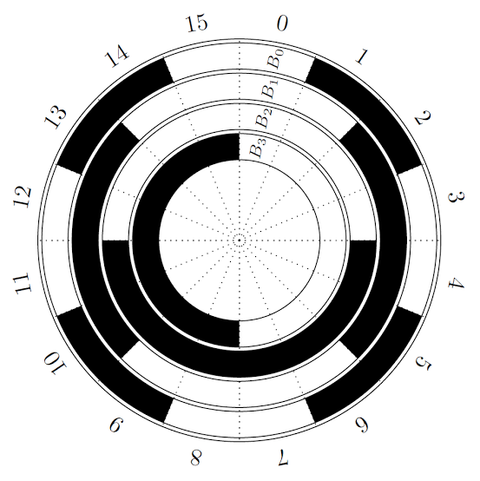
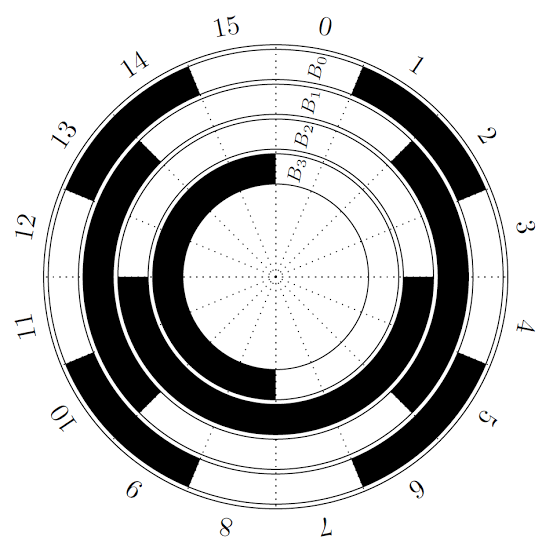
An optical absolute encoder uses patterned discs and light sensors to generate precise position information. These encoders often provide very fine measurement resolution suitable for precision machinery.
Magnetic Absolute Encoder
A magnetic absolute encoder uses magnetic fields instead of optical components. Because it is generally less affected by dust, oil, or vibration, it is commonly selected for challenging industrial environments.
Common Encoder Configurations
The physical installation method depends on machine design and available mounting space.
| Encoder Configuration | General Characteristics | Typical Applications |
|---|---|---|
| Shaft absolute encoder | Solid rotating shaft connection | Motors, gearboxes |
| Hollow shaft absolute encoder | Fits directly over an existing shaft | Conveyors, automation equipment |
| Heavy duty absolute encoder | Reinforced housing for demanding conditions | Mining, heavy machinery |
| Programmable absolute encoder | Adjustable operating parameters | Flexible automation systems |
A programmable absolute encoder allows configuration of settings such as resolution, counting direction, or communication parameters without replacing the device. This flexibility supports equipment modifications while maintaining compatibility with existing control systems.
How Absolute Encoders Work
Position Measurement
Every shaft position corresponds to a unique digital code stored inside the encoder. As the shaft rotates, internal sensing components identify the position and transmit the information to the machine controller.
Unlike incremental encoders, absolute encoders retain their position reference without requiring a return to a starting point after power interruption.
Communication with Control Systems
Industrial automation equipment commonly exchanges encoder information using digital communication protocols. Depending on equipment requirements, these may include:
- SSI
- CANopen
- EtherCAT
- PROFINET
- EtherNet/IP
- Modbus
- PROFIBUS
The communication method depends on the controller and overall automation architecture rather than the encoder type alone.
Maintaining Reliable Measurements
Several design features contribute to reliable position sensing:
- Digital position encoding
- Stable signal transmission
- Mechanical alignment
- Protective housing
- Environmental sealing
- Electronic diagnostics
These characteristics help maintain accurate operation throughout normal equipment use.
Importance of Accuracy and Reliability
Accuracy
Accuracy describes how closely the reported position matches the actual shaft position. High accuracy is particularly valuable where precise movement affects product quality or equipment synchronization.
Resolution
Resolution represents the number of distinct position values that the encoder can identify during rotation. Higher resolution enables finer movement detection.
Repeatability
Repeatability indicates whether the encoder reports the same position consistently when the shaft returns to a previously measured location.
Environmental Resistance
Industrial equipment may operate in environments involving:
- Dust
- Moisture
- Oil
- Shock
- Vibration
- Temperature variation
Choosing a suitable encoder design helps maintain dependable operation under these conditions.
Integration into Industrial Systems
Motion Control
An industrial rotary encoder provides continuous feedback for motors and motion controllers. The controller compares commanded movement with actual movement and adjusts motor output when necessary.
Robotics
Robotic systems depend on accurate joint positioning to perform repetitive tasks with consistent movement. Absolute encoders support robotic arms, automated assembly systems, and material handling equipment.
Manufacturing Equipment
Many production machines use encoder position sensor technology for synchronization between moving components. This coordination helps maintain consistent machine timing across multiple operating cycles.
Renewable Energy
Wind turbines use encoder technology to monitor blade orientation and nacelle positioning. Accurate position information supports efficient system control during changing wind conditions.
Recent Updates
Recent developments have focused on improving connectivity, durability, and diagnostic capabilities rather than changing the basic operating principle of absolute encoders.
Increased Digital Communication
Modern industrial absolute encoders increasingly support Ethernet-based industrial communication systems. This allows easier integration into connected manufacturing environments where multiple devices exchange operational data.
Enhanced Diagnostic Features
Many newer encoder designs include built-in diagnostic information that allows controllers to monitor operating status, communication quality, and internal conditions. These features support maintenance planning without interrupting normal production.
Improved Environmental Protection
Manufacturers continue developing encoder housings with stronger resistance to vibration, moisture, and contaminants. These improvements support operation in demanding industrial locations.
Compact Designs
Equipment manufacturers increasingly prefer compact encoder designs that simplify installation while maintaining measurement performance. Smaller devices can fit into machines with limited installation space.
Laws or Policies
Absolute encoders themselves are generally not regulated as standalone products by a single government program. Instead, their design and application are influenced by industrial safety regulations and internationally recognized technical standards.
Many industrial facilities follow standards developed by organizations such as the International Organization for Standardization (ISO) and the International Electrotechnical Commission (IEC). These standards promote compatibility, electrical safety, testing methods, and reliable communication between industrial equipment.
Within manufacturing facilities, workplace safety regulations may require machinery to include reliable motion control, emergency stopping functions, and position monitoring where appropriate. Engineers typically select encoder technology as one component of an overall machine safety strategy rather than as an isolated safety device.
Different countries may also require compliance with electrical safety, electromagnetic compatibility, and environmental requirements before industrial equipment enters commercial use.
Tools and Resources
Engineers, maintenance personnel, and students commonly use several resources when learning about or integrating encoder technology.
Configuration Software
Some programmable absolute encoder models include software for adjusting communication settings, resolution, and operating parameters.
PLC Programming Platforms
Programmable Logic Controller software assists with integrating encoder signals into industrial automation systems for machine control and monitoring.
CAD Software
Mechanical design software allows engineers to verify mounting dimensions and installation clearances before equipment assembly.
Technical Documentation
Datasheets, wiring diagrams, installation manuals, and communication protocol guides help users understand compatibility between encoders and controllers.
Motion Calculation Utilities
Position conversion calculators and motion planning tools assist with determining rotation angles, travel distance, gear ratios, and encoder resolution requirements during system design.
FAQs
What is an absolute encoder?
An absolute encoder is a position-sensing device that reports the exact shaft position immediately after power is available. Unlike incremental systems, it does not require returning to a reference position before normal operation.
What is the difference between a single turn absolute encoder and a multi turn absolute encoder?
A single turn absolute encoder measures position within one complete rotation. A multi turn absolute encoder also records the total number of completed revolutions, making it suitable for equipment with continuous rotational movement.
How does a magnetic absolute encoder differ from an optical absolute encoder?
A magnetic absolute encoder measures position using magnetic sensing, while an optical absolute encoder relies on light passing through coded patterns. Each design has characteristics suited to different operating environments and measurement requirements.
Where are industrial absolute encoders commonly used?
Industrial absolute encoders are commonly found in manufacturing equipment, robotics, conveyor systems, packaging machinery, elevators, renewable energy systems, and automated production lines where accurate position feedback is important.
Why is a high precision encoder important in automation?
A high precision encoder provides detailed position information that helps machines maintain accurate movement, synchronization, and repeatable operation during automated manufacturing processes.
Conclusion
Absolute encoders provide reliable position information for a wide variety of industrial applications where accurate motion control is important. Different designs, including optical, magnetic, single turn, multi turn, shaft, and hollow shaft configurations, address different installation and operating requirements. Advances in communication technology, diagnostics, and environmental protection continue to improve integration within modern automation systems. Understanding encoder types and operating principles helps explain their important role in accurate industrial positioning.