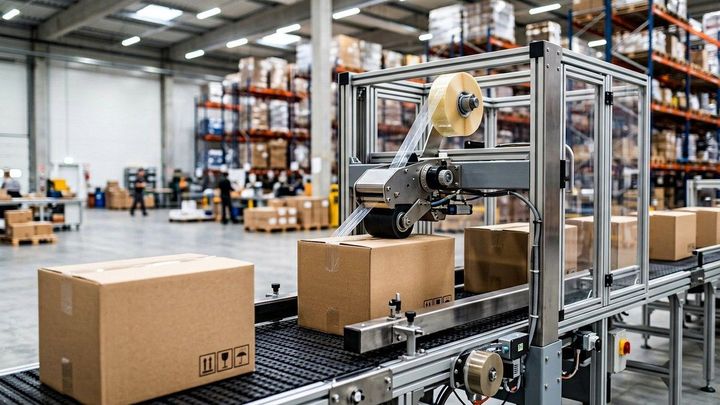
Automated Packaging Lines Explained: Modern Production Flow
Automated packaging lines are integrated manufacturing systems designed to package products with minimal manual intervention.
These systems combine conveyors, filling equipment, labeling machines, inspection systems, robotic handling technology, and industrial automation controls to create efficient packaging workflows.
Modern industries increasingly rely on automated packaging solutions to support production consistency, product handling, packaging accuracy, and operational efficiency. From food processing and pharmaceuticals to consumer goods and industrial manufacturing, automated packaging lines play an important role in modern production environments.
Automated Packaging Lines at a Glance
An automated packaging line is a coordinated system of machinery that performs packaging operations such as product feeding, filling, sealing, labeling, inspection, case packing, and palletizing. Industrial automation technology controls the movement of products throughout the line, helping maintain consistent packaging processes while reducing repetitive manual handling.
Key Industry Facts
- Automated packaging systems are widely used across manufacturing industries.
- Packaging lines often integrate conveyors, sensors, and robotic systems.
- Machine vision technology supports quality inspection processes.
- Modern systems can perform filling, sealing, labeling, and palletizing operations.
- Industrial automation improves production monitoring and workflow coordination.
- Packaging equipment can be configured for various product types and package formats.
- Smart manufacturing technologies continue to expand packaging automation capabilities.
How Automated Packaging Lines Work
Automated packaging systems move products through multiple packaging stages using coordinated machinery and control systems.
Typical Packaging Workflow
- Products enter the packaging line.
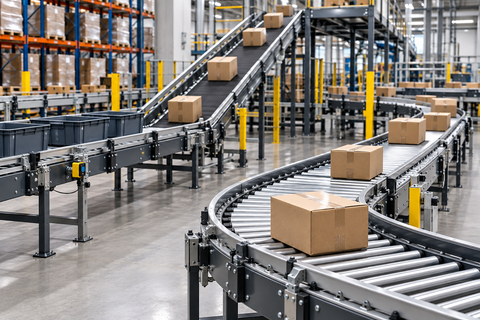
- Conveyors transport items between workstations.
- Filling or dosing systems process products when required.
- Sealing equipment closes packages.
- Labeling systems apply identification information.
- Inspection systems verify packaging quality.
- Robotic case packers organize packaged products.
- Palletizing systems prepare products for storage or distribution.
Each stage is synchronized through industrial control systems to maintain efficient production flow.
Main Types of Automated Packaging Lines
Primary Packaging Lines
Primary packaging systems place products directly into their initial packaging.
Common applications include:
- Bottles
- Pouches
- Containers
- Trays
- Cartons
Secondary Packaging Lines
Secondary packaging groups individual packages into larger units.
Examples include:
- Case packing
- Shrink wrapping
- Multipack creation
- Carton assembly
End-of-Line Packaging Systems
End-of-line automation prepares products for transportation and warehousing.
Typical operations include:
- Case sealing
- Palletizing
- Stretch wrapping
- Load preparation
Robotic Packaging Lines
Robotic systems perform product handling, sorting, case packing, and palletizing functions.
These systems are increasingly used in flexible manufacturing environments.
Comparison of Packaging Line Types
| Packaging Type | Primary Function | Typical Application |
|---|---|---|
| Primary Packaging | Product containment | Bottles, pouches, containers |
| Secondary Packaging | Product grouping | Cases, cartons, multipacks |
| End-of-Line Systems | Distribution preparation | Palletizing and wrapping |
| Robotic Packaging | Automated handling | Flexible production lines |
Core Components of Automated Packaging Lines
Conveyor Systems
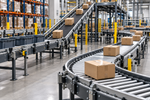
Industrial conveyors transport products throughout the packaging process.
Filling Equipment
Filling machines dispense liquids, powders, granules, or other materials into packaging containers.
Sealing Machines
Sealing systems close packages using heat, pressure, adhesives, or mechanical methods.
Labeling Equipment
Labeling machines apply product information, tracking data, and identification labels.
Machine Vision Systems
Vision inspection systems verify:
- Label placement
- Package integrity
- Product orientation
- Barcode readability
- Packaging quality
Robotic Systems
Industrial robots assist with:
- Pick-and-place operations
- Case packing
- Product sorting
- Palletizing
Industrial Control Systems
Programmable controllers coordinate machine operation, sensor inputs, and packaging workflows.
Industry Applications
Food Processing
Food manufacturers use automated packaging equipment for containers, pouches, cartons, and packaged products.
Pharmaceutical Manufacturing
Packaging systems support product identification, serialization, inspection, and controlled packaging operations.
Consumer Goods Production
Consumer products often require automated filling, labeling, and packaging workflows.
Beverage Manufacturing
Bottling and beverage facilities use automated packaging systems for filling, capping, labeling, and case packing.
Industrial Products
Packaging lines support organized preparation of components, materials, and manufactured goods.
Selection Factors
Choosing an automated packaging line requires evaluating production requirements carefully.
Product Characteristics
Product size, shape, weight, and handling requirements influence equipment selection.
Packaging Format
Different packaging styles require different machine configurations.
Production Capacity
Equipment should align with expected throughput requirements.
Automation Level
Manufacturers should determine the desired balance between automation and manual operations.
Quality Inspection Requirements
Inspection systems may be necessary depending on product specifications.
Future Expansion
Scalable systems can support changing production demands.
Benefits of Automated Packaging Lines
- Supports consistent packaging operations
- Reduces repetitive manual handling
- Improves production workflow coordination
- Integrates with industrial automation systems
- Supports quality inspection processes
- Enhances production visibility
- Improves packaging accuracy
- Enables continuous manufacturing operations
- Supports robotic handling applications
- Facilitates production monitoring
Challenges and Limitations
Initial System Complexity
Packaging lines often involve multiple interconnected machines.
Maintenance Requirements
Regular maintenance is necessary to support reliable operation.
Production Changeovers
Different products may require adjustments and reconfiguration.
Integration Considerations
Equipment must communicate effectively across the production line.
Training Requirements
Operators and maintenance personnel require system-specific knowledge.
Industry Standards and Compliance
Packaging operations may follow industry-specific standards depending on the product and manufacturing environment.
Areas often considered include:
- Product traceability
- Packaging quality verification
- Equipment safety requirements
- Process documentation
- Manufacturing controls
- Product identification procedures
Specific requirements vary by industry and region.
Safety Considerations
Packaging equipment contains moving machinery and automated systems that require appropriate safety measures.
Important considerations include:
- Machine guarding
- Emergency stop systems
- Safety interlocks
- Operator training
- Routine inspections
- Lockout procedures
- Risk assessments
- Sensor-based safety systems
Safety planning should address the entire packaging workflow.
Latest Technology Trends
Smart Manufacturing Integration
Packaging systems increasingly connect with factory-wide monitoring platforms.
Machine Vision Advancements
Modern vision systems provide improved inspection and quality verification capabilities.
Robotic Packaging Automation
Industrial robots continue expanding their role in packaging applications.
Predictive Maintenance
Sensor data helps identify potential equipment issues before failures occur.
Digital Production Monitoring
Real-time production analytics improve operational visibility and performance tracking.
Expert Insights
Automated packaging lines are evolving beyond basic product handling systems. Modern facilities increasingly integrate robotics, machine vision, predictive maintenance technologies, and industrial automation platforms into packaging operations. This trend supports greater operational visibility, flexible production workflows, and more advanced quality assurance processes.
Key Takeaways
- Automated packaging lines combine multiple machines into a coordinated system.
- Packaging automation supports filling, sealing, labeling, inspection, and palletizing.
- Industrial robots are increasingly used in packaging operations.
- Machine vision enhances packaging quality verification.
- Industrial automation improves workflow coordination.
- Preventive maintenance supports reliable equipment performance.
- Smart manufacturing technologies continue shaping packaging systems.
- Packaging line design should align with product and production requirements.
Frequently Asked Questions
What are automated packaging lines?
Automated packaging lines are integrated systems that perform packaging operations using conveyors, machinery, sensors, and industrial automation controls.
What industries use automated packaging systems?
Food processing, pharmaceuticals, beverages, consumer goods, industrial manufacturing, and logistics operations commonly use packaging automation.
What is the role of conveyors in packaging lines?
Conveyors transport products between packaging stations and help maintain production flow.
How do machine vision systems support packaging?
Machine vision systems inspect labels, packaging quality, product positioning, and identification markings.
What is robotic packaging?
Robotic packaging uses industrial robots for handling, sorting, case packing, and palletizing operations.
Why are automated packaging lines important?
They support consistent packaging processes, production coordination, and operational efficiency.
What factors should be considered when selecting packaging equipment?
Product characteristics, packaging formats, production volume, automation requirements, and future expansion plans are important considerations.
How does predictive maintenance help packaging systems?
Predictive maintenance uses equipment data to identify developing issues before significant operational disruptions occur.
What is end-of-line packaging automation?
End-of-line automation includes case packing, palletizing, stretch wrapping, and shipment preparation activities.
How is industrial automation used in packaging lines?
Industrial automation coordinates machinery, sensors, inspection systems, and production workflows throughout the packaging process.
Conclusion
Automated packaging lines are an important component of modern manufacturing operations, supporting product handling, filling, sealing, labeling, inspection, and distribution preparation activities. By integrating conveyors, robotic systems, machine vision technology, and industrial automation controls, these systems help create coordinated packaging workflows across diverse industries.
As smart manufacturing, predictive maintenance, and robotic automation technologies continue advancing, automated packaging systems are becoming increasingly connected, flexible, and capable of supporting complex production requirements. Understanding their components, applications, benefits, and operational considerations provides valuable insight into modern packaging technology.