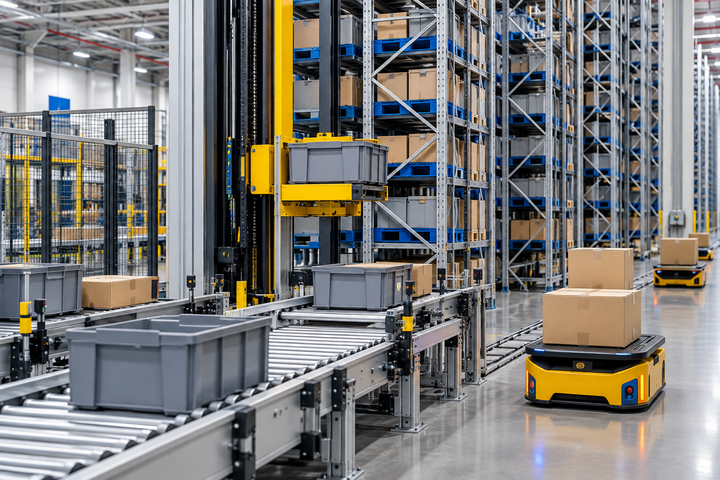
Automated Storage Systems: Warehouse Optimization Guide
Modern warehouses manage thousands of products, materials, and inventory movements every day.
As supply chains become more complex and customer expectations continue to evolve, organizations are increasingly adopting automated storage systems to improve efficiency, accuracy, and space utilization.
Automated storage systems use advanced technologies to store, retrieve, organize, and manage inventory with minimal manual intervention. These systems help warehouses optimize storage capacity, streamline operations, and improve inventory visibility.
Understanding how automated storage systems work can help businesses, facility managers, and logistics professionals make informed decisions about warehouse optimization and operational efficiency.
Quick Facts Table
| Topic | Purpose | Key Components | Main Benefits | Common Applications |
|---|---|---|---|---|
| Automated Storage Systems | Improve inventory storage and retrieval efficiency | Storage racks, retrieval machines, conveyors, sensors, automation platforms | Better space utilization, improved accuracy, faster operations | Warehouses, distribution centers, manufacturing facilities, fulfillment centers |
What Are Automated Storage Systems?
Automated storage systems are technology-driven solutions designed to automatically store, organize, retrieve, and track inventory within a warehouse or storage facility.
These systems combine mechanical equipment, sensors, control technologies, inventory management platforms, and automation technologies to improve warehouse operations. They reduce manual handling while increasing accuracy and storage efficiency.
Why Are Automated Storage Systems Important?
Traditional storage methods often require significant floor space, manual labor, and extensive inventory handling. Automated systems help overcome these challenges by improving inventory accessibility and optimizing warehouse layouts.
Key reasons for their growing importance include:
- Increasing inventory volumes
- Growing e-commerce activity
- Demand for operational efficiency
- Improved inventory visibility
- Better warehouse space utilization
- Enhanced accuracy and tracking
- Support for supply chain optimization
- Reduced operational bottlenecks
Automated Storage Facts
- Warehouse automation adoption continues to grow globally.
- Inventory accuracy improves through automated tracking technologies.
- High-density storage systems maximize available warehouse space.
- Smart sensors improve operational visibility.
- Robotics and automation technologies are expanding across logistics operations.
- Data analytics supports better inventory management decisions.
- Automated retrieval systems improve workflow efficiency.
Understanding the Concept
Automated storage systems are designed to move inventory efficiently while minimizing manual intervention. These systems use intelligent equipment and automation technologies to store products in designated locations and retrieve them when needed.
By integrating storage infrastructure with inventory tracking technologies, warehouses gain better visibility into stock levels, locations, and movement patterns. This supports faster decision-making and more efficient operations.
Major Types of Automated Storage Systems
- Automated Storage and Retrieval Systems (AS/RS)
- Vertical Lift Modules
- Vertical Carousel Systems
- Horizontal Carousel Systems
- Shuttle Storage Systems
- Cube Storage Systems
- Robotic Storage Systems
- Mini-Load Storage Systems
- Unit-Load Storage Systems
- Automated Pallet Storage Systems
Storage Technology Comparison Table
| Technology | Storage Density | Retrieval Speed | Scalability |
|---|---|---|---|
| Vertical Lift Module | High | Fast | Medium |
| Carousel System | Medium | Fast | Medium |
| AS/RS | High | High | High |
| Shuttle System | High | High | High |
| Cube Storage System | Very High | High | High |
| Robotic Storage System | High | High | High |
Key Features and Core Components
Modern automated storage systems typically include:
- Storage racks and shelving systems
- Automated retrieval equipment
- Conveyors and transport systems
- Sensors and scanners
- Inventory tracking technologies
- Warehouse management platforms
- Robotics technologies
- Control systems
- Communication networks
- Safety mechanisms
- Monitoring platforms
- Data analytics capabilities
Equipment Categories Table
| Equipment Category | Examples |
|---|---|
| Storage Equipment | Racks, Shelves, Bins |
| Retrieval Equipment | Cranes, Shuttles, Lifts |
| Material Movement Systems | Conveyors, Transfer Systems |
| Monitoring Systems | Sensors, Scanners |
| Control Systems | Warehouse Platforms, Automation Controllers |
| Safety Systems | Emergency Stops, Detection Sensors |
What Is an Automated Storage and Retrieval System?
An Automated Storage and Retrieval System (AS/RS) is a computer-controlled storage solution that automatically places and retrieves inventory from designated storage locations.
These systems improve storage density, inventory accuracy, and operational efficiency while reducing manual handling requirements.
What Is a Vertical Lift Module?
A Vertical Lift Module is an enclosed storage system that stores inventory vertically and automatically delivers requested items to an access point.
This approach maximizes vertical warehouse space while improving accessibility.
What Is a Shuttle Storage System?
A shuttle storage system uses automated shuttles to move inventory within storage racks. These systems support high-speed storage and retrieval operations in high-volume environments.
Warehouse Architecture Overview
A modern automated warehouse typically follows this operational flow:
Receiving → Identification → Storage Assignment → Automated Storage → Inventory Tracking → Order Retrieval → Packing → Distribution
Architecture Explanation
Products enter the warehouse through receiving areas and are identified using scanning technologies. Inventory is then assigned storage locations and moved automatically into storage systems.
When inventory is required, retrieval equipment locates and delivers items to designated workstations for processing and distribution.
Main Types of Automated Storage Systems
Automated Storage and Retrieval Systems
AS/RS technologies use automated cranes and retrieval devices to manage inventory movement within storage racks.
Vertical Storage Systems
These systems maximize vertical space and improve accessibility in facilities with limited floor area.
Robotic Storage Systems
Robotic technologies automate inventory movement and retrieval operations throughout the facility.
Shuttle-Based Storage Systems
Shuttle technologies provide high-speed movement of inventory across storage locations.
Cube-Based Storage Systems
Cube storage technologies use dense storage grids and robotic systems to maximize storage capacity.
Industry Applications
E-Commerce Fulfillment Centers
Automated storage technologies support rapid inventory retrieval and order processing.
Manufacturing Facilities
Manufacturers use automated systems to manage raw materials, components, and finished goods.
Distribution Centers
Distribution facilities use high-density storage systems to improve throughput and inventory management.
Pharmaceutical Facilities
Automated storage supports inventory accuracy and controlled product handling.
Retail Supply Chains
Retail operations use automated warehouse technologies to improve inventory visibility and distribution efficiency.
Food and Beverage Facilities
Automated systems support inventory rotation and efficient product handling.
Cold Storage Warehouses
Automation technologies improve operations within temperature-controlled environments.
Logistics Operations
Large logistics facilities use automated storage systems to improve operational efficiency and workflow management.
How Automated Storage Systems Work
- Inventory enters the warehouse through receiving stations.
- Products are identified using scanning or tracking technologies.
- The system assigns storage locations automatically.
- Automated equipment transports inventory to storage positions.
- Inventory data is updated in real time.
- Retrieval requests are generated when products are needed.
- Automated equipment locates and retrieves inventory.
- Items are delivered to workstations for processing and shipment.
Benefits and Advantages
Automated storage systems provide numerous benefits:
- Improved warehouse space utilization
- Better inventory accuracy
- Faster retrieval operations
- Enhanced inventory visibility
- Reduced manual handling
- Improved workflow efficiency
- Better inventory tracking
- Increased storage density
- Improved operational consistency
- Enhanced scalability
- Better resource utilization
- Support for warehouse optimization
Real-World Examples and Applications
Example: E-Commerce Fulfillment Center
A fulfillment center uses shuttle storage systems and robotics technologies to process thousands of orders daily while maintaining accurate inventory tracking.
Example: Manufacturing Warehouse
A manufacturing facility utilizes Automated Storage and Retrieval Systems to manage components and production materials efficiently.
Example: Pharmaceutical Distribution Center
A pharmaceutical warehouse uses automated storage technologies to improve inventory accuracy and support controlled product handling.
Example: Cold Storage Facility
A temperature-controlled warehouse uses automated retrieval equipment to reduce human exposure to extreme conditions while improving operational efficiency.
Important Factors to Consider
Organizations evaluating automated storage systems should consider:
- Storage requirements
- Facility dimensions
- Inventory characteristics
- Throughput expectations
- Scalability requirements
- Integration complexity
- Maintenance requirements
- Safety considerations
- Operational objectives
- Long-term growth plans
Common Challenges and Solutions
| Challenge | Impact | Solution |
|---|---|---|
| Limited Space | Storage Constraints | High-Density Storage Systems |
| Inventory Errors | Reduced Accuracy | Automated Tracking |
| Slow Retrieval | Operational Delays | Automated Retrieval Systems |
| Workflow Bottlenecks | Reduced Efficiency | Warehouse Automation |
| Inventory Visibility Issues | Planning Challenges | Real-Time Monitoring |
Warehouse Optimization Best Practices
- Analyze inventory movement patterns.
- Utilize vertical storage space effectively.
- Implement real-time inventory tracking.
- Monitor storage utilization regularly.
- Optimize product placement strategies.
- Maintain equipment routinely.
- Utilize data analytics for planning.
- Improve workflow design continuously.
- Strengthen inventory management processes.
- Evaluate scalability requirements periodically.
Future Trends and Industry Insights
Several emerging technologies are shaping the future of warehouse automation.
Artificial Intelligence Analytics
AI technologies support inventory forecasting, demand planning, and operational optimization.
Robotics Expansion
Warehouse robotics continue to improve inventory handling and retrieval efficiency.
Digital Twin Technology
Digital twins help simulate warehouse operations and identify optimization opportunities.
Smart Sensors
Advanced sensors provide real-time operational visibility and equipment monitoring.
Autonomous Mobile Robots
Mobile robotic technologies support inventory movement throughout warehouse facilities.
Predictive Maintenance
Data-driven maintenance strategies help improve equipment reliability and performance.
Advanced Analytics
Warehouse analytics provide deeper insight into inventory trends and operational efficiency.
Intelligent Warehouse Infrastructure
Future facilities are expected to become increasingly connected, automated, and data-driven.
Expert Insights
Automated storage systems are becoming an important component of modern warehouse optimization strategies. As inventory volumes increase and supply chains become more complex, organizations are increasingly adopting intelligent storage technologies to improve efficiency, visibility, and scalability.
The combination of robotics, automation, analytics, smart sensors, and advanced storage infrastructure is helping warehouses operate more effectively while supporting future growth requirements.
Key Takeaways
- Automated storage systems improve warehouse efficiency.
- High-density storage maximizes available space.
- Automation improves inventory accuracy and visibility.
- Robotics technologies enhance inventory movement.
- AS/RS technologies support efficient storage and retrieval.
- Real-time tracking improves inventory management.
- Analytics supports better operational decisions.
- Future warehouses will become increasingly intelligent and automated.
Frequently Asked Questions (FAQ)
What are automated storage systems?
Automated storage systems are technologies that automatically store, organize, retrieve, and track inventory.
What is an AS/RS system?
An Automated Storage and Retrieval System automatically places and retrieves inventory within storage locations.
How do automated storage systems improve efficiency?
They reduce manual handling, improve inventory accuracy, and optimize storage space.
What is a vertical lift module?
A vertical lift module stores inventory vertically and automatically delivers requested items.
What industries use automated storage systems?
Warehousing, manufacturing, retail, pharmaceuticals, logistics, and food distribution.
What is a shuttle storage system?
A shuttle system uses automated vehicles to move inventory within storage racks.
How does warehouse automation improve inventory management?
Automation improves visibility, tracking accuracy, and inventory accessibility.
What is high-density storage?
High-density storage maximizes inventory capacity within a limited footprint.
What role do sensors play in automated storage?
Sensors monitor equipment, inventory locations, and operational conditions.
What are robotic storage systems?
Robotic storage systems use automated robots to manage inventory movement and retrieval.
How does real-time tracking work?
Tracking technologies continuously update inventory data as products move through the facility.
What is predictive maintenance?
Predictive maintenance uses operational data to identify equipment issues before failures occur.
What is a digital twin in warehouse operations?
A digital twin is a virtual representation of a warehouse used for monitoring and optimization.
Are automated storage systems scalable?
Many systems are designed to expand as inventory volumes and operational requirements grow.
What is the future of warehouse automation?
Future warehouses will increasingly utilize AI, robotics, digital twins, advanced analytics, and intelligent automation technologies.
Conclusion
Automated storage systems are transforming warehouse operations through intelligent storage, retrieval, tracking, and inventory management technologies. By combining automation, robotics, analytics, and high-density storage infrastructure, these systems help improve operational efficiency, inventory visibility, and warehouse optimization.
As supply chains continue to evolve and inventory demands increase, automated storage technologies will play an increasingly important role in supporting scalable, efficient, and data-driven warehouse operations.