Automotive Industry Basics for Understanding Vehicle Manufacturing and Supply Chains
The automotive industry is one of the world's most complex manufacturing sectors, connecting engineering, materials science, software development, logistics, energy, and consumer transportation.
From the initial design of a vehicle to the production of individual components and final assembly, thousands of processes must work together to create a safe, reliable, and efficient automobile.
Modern automotive manufacturing has also changed significantly. Traditional production methods now operate alongside robotics, automation, artificial intelligence, connected factory systems, and advanced quality-control technologies. At the same time, the Automotive Supply Chain has become increasingly interconnected, requiring manufacturers and suppliers to coordinate materials, components, information, and logistics across multiple regions.
Understanding how the automotive industry operates provides valuable insight into how vehicles are designed, manufactured, distributed, and supported throughout their lifecycle.
What Is the Automotive Industry?
The automotive industry includes the organizations, technologies, and activities involved in designing, developing, manufacturing, distributing, maintaining, and supporting motor vehicles and their components.
The industry covers a broad ecosystem that includes:
- Passenger vehicles
- Commercial vehicles
- Electric vehicles
- Hybrid vehicles
- Trucks and buses
- Automotive components
- Vehicle software and electronics
- Manufacturing technologies
- Logistics and distribution
Automotive companies typically work with extensive networks of suppliers that provide materials and components ranging from steel and glass to electronics, batteries, sensors, and interior systems.
How Automotive Manufacturing Works
Automotive Manufacturing involves transforming raw materials and individual components into completed vehicles through a carefully organized production process.
Although manufacturing methods differ between companies and vehicle types, the general process often includes:
- Product design and engineering
- Prototype development
- Component sourcing
- Body manufacturing
- Painting and surface treatment
- Powertrain or propulsion assembly
- Interior installation
- Electrical and software integration
- Final vehicle assembly
- Quality inspection and testing
Each stage is connected to the next, meaning that delays or quality problems in one area can influence the entire production system.
The Role of Automotive Production Systems
Automotive Production Systems are structured methods used to organize manufacturing activities efficiently and consistently.
Modern production systems typically emphasize:
- Process standardization
- Quality control
- Waste reduction
- Continuous improvement
- Workplace safety
- Production flexibility
- Data-driven decision-making
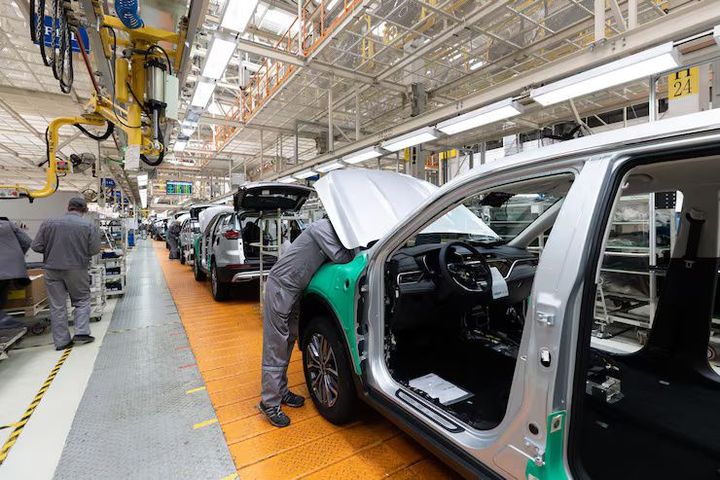
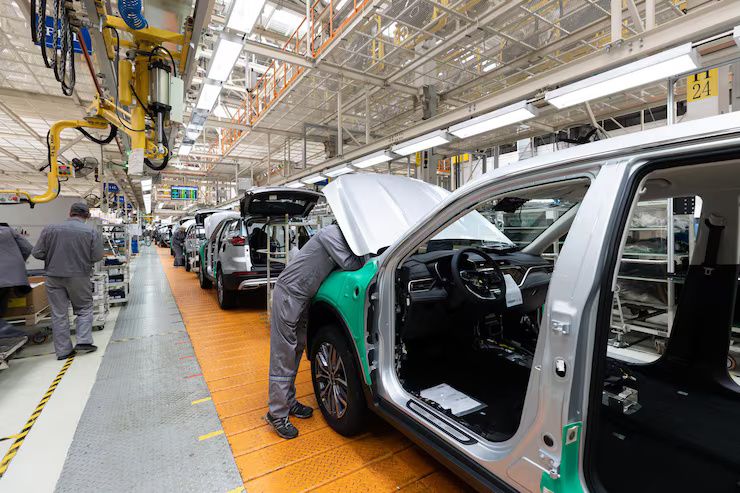
One important characteristic of automotive manufacturing is the use of highly coordinated assembly lines. Vehicles move through different workstations, with each station responsible for specific tasks.
This approach allows manufacturers to maintain consistency while producing large volumes of vehicles.
Key Stages of Vehicle Manufacturing
Body Manufacturing
The vehicle body begins with materials such as steel, aluminum, or other engineered materials.
Automated equipment forms and joins individual panels to create the vehicle structure. Welding, bonding, and fastening technologies are used depending on the design.
Modern factories increasingly use robotic systems for repetitive joining tasks because automation can improve consistency and support workplace safety.
Painting and Surface Treatment
After the body structure is completed, it undergoes cleaning, corrosion protection, painting, and finishing processes.
Paint systems are carefully controlled to maintain consistent appearance and provide protection against environmental conditions.
Powertrain and Propulsion
Traditional vehicles use internal combustion engines and associated transmission systems, while modern electric vehicles rely on electric motors, batteries, power electronics, and sophisticated control software.
Hybrid vehicles combine elements of both systems.
The growing diversity of propulsion technologies has significantly changed automotive manufacturing requirements and supplier relationships.
Final Assembly
During final assembly, components such as seats, dashboards, lighting systems, wheels, glass, wiring, and electronic systems are installed.
Modern vehicles may contain thousands of individual components, making coordination between suppliers and manufacturers essential.
Automotive Manufacturing Equipment
Automotive Manufacturing Equipment includes the machines, tools, robotics, and digital systems used throughout production facilities.
Common examples include:
- Robotic welding systems
- Stamping machines
- CNC machining equipment
- Painting systems
- Assembly tools
- Conveyor systems
- Automated inspection equipment
- Material-handling systems
- Battery manufacturing equipment
Advanced equipment is increasingly connected through industrial software, allowing manufacturers to monitor production conditions and analyze operational data.
Automation and Robotics in Automotive Manufacturing
Automation has become a central part of modern vehicle production.
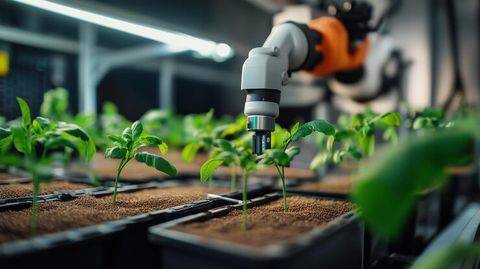
Robots are commonly used for repetitive or highly precise tasks, including welding, painting, material handling, and component assembly.
The benefits of automation extend beyond production speed. Automated systems can also help improve repeatability, reduce exposure to hazardous tasks, and collect data for quality analysis.
However, human expertise remains essential. Engineers, technicians, quality specialists, and production workers are responsible for system design, maintenance, problem-solving, and continuous improvement.
Understanding the Automotive Supply Chain
The Automotive Supply Chain is a complex network connecting raw-material producers, component manufacturers, vehicle producers, logistics providers, dealerships, and customers.
A simplified supply chain may include:
| Supply Chain Stage | Main Function |
|---|---|
| Raw Materials | Provide metals, plastics, chemicals, and other inputs |
| Component Suppliers | Manufacture parts and assemblies |
| Tier Suppliers | Provide specialized systems and subcomponents |
| Vehicle Manufacturers | Assemble completed vehicles |
| Logistics Networks | Transport materials and finished vehicles |
| Distribution Channels | Move vehicles toward end users |
This interconnected structure means automotive production depends on coordination across multiple organizations and geographic regions.
Tiered Supplier Networks
Automotive suppliers are often organized into different levels based on their relationship with vehicle manufacturers.
Tier 1 suppliers typically provide complete systems or major assemblies directly to vehicle manufacturers.
Tier 2 suppliers produce components used by Tier 1 companies, while additional supplier levels may provide raw materials or specialized parts.
This layered structure allows manufacturers to access specialized expertise while creating a highly interconnected production network.
The Importance of Quality Control
Quality control is essential throughout Automotive Manufacturing.
Vehicle manufacturers and suppliers use inspection and testing processes to evaluate:
- Structural integrity
- Component dimensions
- Electrical performance
- Software functionality
- Safety systems
- Material quality
- Assembly accuracy
Modern factories increasingly use machine vision, sensors, automated inspection equipment, and data analytics to identify potential issues early.
Quality management begins with incoming materials and continues through final vehicle testing.
Technology Transformation in the Automotive Industry
The automotive industry is undergoing significant technological change.
Several developments are reshaping both vehicles and factories.
Electric Vehicle Manufacturing
Electric vehicles require different production methods compared with traditional vehicles.
Battery packs, electric motors, charging systems, and power electronics introduce new manufacturing requirements and supply-chain relationships.
Connected Factories
Modern production facilities increasingly use sensors and connected equipment to monitor operations in real time.
This approach allows manufacturers to identify production trends, analyze equipment performance, and improve process visibility.
Artificial Intelligence
Artificial intelligence can support areas such as predictive maintenance, quality inspection, production planning, and demand forecasting.
AI systems can analyze large amounts of operational data to identify patterns that may be difficult to detect through manual analysis.
Digital Twins
Digital twin technologies create virtual representations of physical manufacturing systems.
These models can help engineers simulate processes, evaluate potential changes, and understand how modifications may affect production.
Challenges Facing Automotive Supply Chains
The global nature of the automotive supply chain creates several challenges.
These include:
- Material availability
- Transportation disruptions
- Semiconductor shortages
- Changing regulations
- Geopolitical uncertainty
- Demand fluctuations
- Supplier dependency
- Environmental requirements
Manufacturers increasingly focus on supply-chain visibility and flexibility to respond to changing conditions.
Digital tracking systems and advanced planning tools can provide greater insight into material movement and production requirements.
Sustainability in Automotive Manufacturing
Sustainability has become an increasingly important consideration across the automotive sector.
Manufacturers are exploring:
- Energy-efficient factories
- Renewable energy integration
- Recycled materials
- Reduced manufacturing waste
- Water conservation
- Lower-emission logistics
- Battery recycling
- More efficient production processes
The shift toward electric vehicles is also influencing how manufacturers approach materials, energy use, and end-of-life vehicle management.
Future Trends in the Automotive Industry
The future of the automotive industry is likely to be shaped by several interconnected trends.
These include:
- Electrification
- Advanced driver-assistance systems
- Software-defined vehicles
- Connected transportation
- Autonomous driving research
- Smart factories
- Artificial intelligence
- Advanced robotics
- Sustainable materials
- More resilient supply chains
As vehicles become increasingly software-driven, automotive manufacturing will require stronger collaboration between traditional engineering disciplines and digital technology specialists.
Frequently Asked Questions
What is the automotive industry?
The automotive industry includes the companies, technologies, suppliers, and processes involved in designing, manufacturing, distributing, and supporting motor vehicles and their components.
What is Automotive Manufacturing?
Automotive Manufacturing is the process of producing vehicles through activities such as body construction, painting, component installation, propulsion integration, final assembly, and quality testing.
What is Automotive Manufacturing Equipment?
Automotive Manufacturing Equipment includes machinery, robotics, tools, inspection systems, conveyors, and digital technologies used to manufacture and assemble vehicles.
Why is the Automotive Supply Chain important?
The Automotive Supply Chain connects raw-material providers, component suppliers, manufacturers, logistics networks, and distribution channels, allowing vehicle production to operate as an interconnected system.
How is technology changing automotive production?
Automation, robotics, artificial intelligence, connected factory systems, digital twins, and advanced analytics are improving production visibility, quality management, maintenance planning, and manufacturing flexibility.
Conclusion
The automotive industry is a highly interconnected ecosystem that combines engineering, manufacturing, software, logistics, and supply-chain management. Automotive Manufacturing depends on carefully coordinated production systems, advanced equipment, skilled professionals, and reliable supplier networks.
As the sector moves toward electrification, connected vehicles, smart factories, and software-driven transportation, the relationship between physical manufacturing and digital technology will become increasingly important. At the same time, resilient Automotive Supply Chain strategies will remain essential for maintaining reliable production in an environment shaped by changing technologies, materials, regulations, and consumer expectations.
Understanding these fundamentals provides a clearer view of how modern vehicles move from design concepts and raw materials to finished products and how the broader automotive ecosystem continues to evolve.