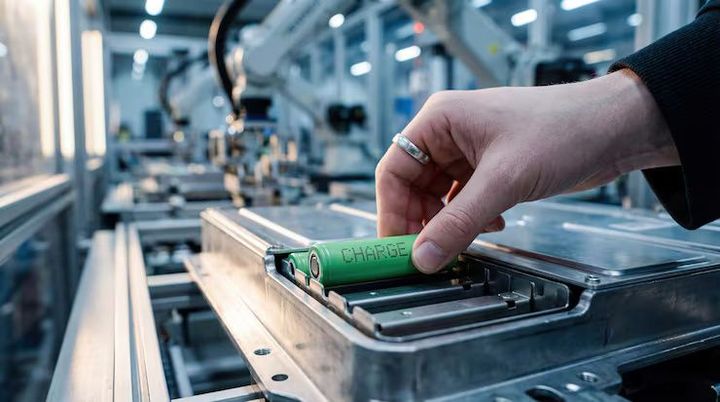
Battery Cell Coating Machine Guide: Explore Types, Components, Processes, Applications, and Quality Factors
A battery cell coating machine is industrial equipment used to apply a controlled layer of active or functional material onto a battery electrode substrate. Coating is an important stage in lithium-ion battery manufacturing because the electrode layer influences how the finished cell stores and releases electrical energy. A battery cell coating machine guide helps explain the equipment, coating methods, components, applications, and quality factors involved in this process.
Battery electrodes commonly contain a mixture of active material, conductive additives, and binders. This mixture is prepared as a slurry and applied to a metal current-collector foil, such as aluminum for many cathodes or copper for many anodes. The coated material then undergoes drying and additional processing before electrode assembly.
What Battery Cell Coating Means
Battery cell coating involves depositing electrode slurry onto a moving substrate with controlled thickness and coverage. The coating process must distribute the material evenly across the required area while maintaining the intended loading and surface characteristics.
Depending on the battery design, coating can be continuous across the substrate or applied in defined patterns. The process may also involve coating one or both sides of the foil.
Where Coating Fits in Battery Manufacturing
Electrode coating is one stage within a larger manufacturing sequence. A simplified process includes:
- Raw-material preparation
- Slurry mixing
- Electrode coating
- Drying
- Calendering
- Slitting
- Cell assembly
- Electrolyte filling
- Formation and testing
Each stage affects subsequent processing. For example, variations in coating thickness or drying can influence calendering behavior and the final electrode structure.
Importance
Battery cell coating has become increasingly important as demand for rechargeable batteries expands across electric mobility, portable electronics, stationary energy storage, and industrial equipment. Manufacturing consistency is particularly important because battery cells contain many layers and components that must work together within a defined design.
The coating stage affects the distribution of electrode material over the current collector. Uneven coating can create differences in electrode loading, thickness, density, or surface condition. These variations can affect later manufacturing steps and may contribute to differences between individual cells.
Why Coating Uniformity Matters
Uniformity is one of the central quality considerations in electrode coating. A coating machine must maintain controlled material flow while the substrate moves through the equipment.
Important characteristics include:
- Coating thickness
- Areal loading
- Width and edge position
- Surface uniformity
- Drying condition
- Adhesion to the current collector
- Residual moisture
- Coating defects
The required specifications depend on the battery chemistry, cell format, electrode design, and manufacturing process.
Production Challenges
Battery electrode coating involves several interacting variables. Slurry viscosity can change with temperature, solids concentration, mixing conditions, and storage time. Machine speed and coating-gap settings can also affect the amount of material deposited.
Drying presents another challenge because solvent removal must be controlled. Excessive or uneven drying can affect electrode structure, while insufficient drying can leave unwanted residual solvent or moisture.
Recent Updates
From 2024 through 2026, battery manufacturing equipment has continued moving toward higher levels of automation, process monitoring, energy efficiency, and precision. The growth of electric vehicles and stationary energy-storage systems has encouraged manufacturers to develop production systems that can handle larger volumes while maintaining tighter process control.
Advanced Coating Control
Modern coating lines can incorporate sensors and automated controls to monitor coating thickness, substrate position, material flow, temperature, and other process variables. In-line inspection systems can identify certain coating irregularities while the electrode is being processed.
Machine-vision technologies are also increasingly relevant to electrode manufacturing. Cameras and optical systems can inspect surfaces for visible defects, edge irregularities, contamination, or discontinuities.
Higher-Speed Manufacturing
Battery production lines are increasingly designed around continuous processing. Higher line speeds can increase throughput, but they also place greater demands on slurry stability, coating-head control, web handling, and drying systems.
The challenge is not simply increasing machine speed. The coating process must maintain consistent material distribution as operating conditions change.
Solvent and Energy Considerations
Electrode manufacturing may use either solvent-based or water-based processing depending on electrode chemistry and formulation. Solvent recovery and drying requirements can have significant effects on plant design and energy consumption.
Manufacturers are therefore examining drying technologies, heat recovery, process control, and alternative formulations to improve manufacturing efficiency while maintaining electrode quality.
Digital Process Monitoring
Industrial battery production is also becoming more data-driven. Sensors can generate information about coating behavior, machine conditions, and environmental parameters. Production data can then be used for process analysis, quality tracking, and equipment monitoring.
Laws or Policies
Battery manufacturing is influenced by workplace safety, environmental requirements, chemical handling rules, waste-management regulations, and battery-related policies. The exact requirements depend on the country, facility, chemicals used, battery chemistry, and scale of manufacturing.
In India, the Batteries (Management and Handling) Rules have been replaced by the Battery Waste Management Rules, 2022. The framework establishes requirements concerning battery-waste management and applies to different types of batteries, including industrial and electric-vehicle batteries.
India's battery-waste framework uses an Extended Producer Responsibility approach for covered batteries. Producers and other regulated entities have responsibilities concerning collection, recycling, refurbishment, and related reporting requirements.
The Ministry of Environment, Forest and Climate Change and the Central Pollution Control Board provide information and regulatory resources concerning battery-waste management. Requirements can change as rules and implementation guidance are updated, so manufacturers should consult the applicable current regulations for their facility.
Workplace operations also need to address hazards associated with moving machinery, electrical equipment, solvents, combustible materials, dust, heat, and chemical exposure. Appropriate workplace controls, ventilation, protective equipment, machine guarding, and emergency procedures depend on the manufacturing process.
These regulatory considerations are general information and do not replace site-specific legal, environmental, or occupational-safety assessment.
Tools and Resources
Several technical resources can help readers understand battery cell coating machines and electrode manufacturing.
Coating Thickness Measurement
Thickness gauges and non-contact measurement systems can be used to evaluate electrode coating thickness. Depending on the production line, optical, laser, beta, X-ray, or other measurement technologies may be used.
Slurry Measurement Tools
Laboratories and production facilities may evaluate slurry characteristics such as viscosity, solids content, density, particle distribution, and temperature. These measurements help establish whether the slurry is within the required process range.
Machine-Vision Inspection
Machine-vision systems use cameras, lighting, image-processing software, and inspection algorithms to identify certain surface or edge defects. Their configuration depends on the electrode material, line speed, coating pattern, and defect types being monitored.
Process-Control Software
Manufacturing execution systems and industrial control platforms can collect information from coating equipment. Data may include line speed, temperatures, coating parameters, equipment status, inspection results, and production records.
Battery Manufacturing References
Technical standards, research publications, government resources, equipment manuals, and battery-manufacturing textbooks can provide additional information about electrode processing. Equipment documentation is particularly important because machine configurations and operating limits differ between systems.
Types of Battery Cell Coating Machines
Battery coating equipment can be classified according to the coating method, substrate arrangement, automation level, and production scale.
Slot-Die Coating Machines
Slot-die coating uses a coating head with a narrow opening through which slurry is delivered onto a moving substrate. The process can provide controlled coating widths and thicknesses when slurry properties and machine parameters are properly managed.
Slot-die systems are widely associated with continuous electrode production and can be configured for single-sided or double-sided coating.
Comma-Coating Machines
Comma coating uses a rotating cylindrical roll to meter slurry onto the substrate. The gap between the coating components influences the amount of material transferred.
This approach can be suitable for certain electrode formulations and manufacturing arrangements.
Gravure Coating Systems
Gravure systems use a patterned roll to transfer coating material onto a substrate. Although the method is used in several industrial coating applications, its suitability for battery electrodes depends on the material formulation and required coating characteristics.
Intermittent Coating Systems
Intermittent coating creates coated and uncoated sections along the moving foil. This pattern can be useful where electrode designs require specific uncoated regions for tabs or other assembly requirements.
Continuous Coating Systems
Continuous coating applies material along a continuous section of the substrate. The resulting electrode can later be processed into the required dimensions during slitting and cell assembly.
Main Components of a Battery Cell Coating Machine
A coating line normally contains multiple interconnected systems rather than a single machine component.
| Component | Main function |
|---|---|
| Slurry supply system | Delivers prepared electrode slurry |
| Coating head | Applies slurry to the substrate |
| Unwinding system | Feeds current-collector foil into the line |
| Web-guiding system | Maintains substrate alignment |
| Drying oven | Removes solvent or water from the coating |
| Temperature-control system | Regulates drying conditions |
| Inspection system | Monitors coating and surface characteristics |
| Rewinding system | Collects the processed electrode material |
| Control system | Coordinates machine operation and process settings |
Additional equipment may include filtration systems, pumps, mixing tanks, edge-control systems, exhaust equipment, solvent-recovery equipment, and safety devices.
Coating Process
Slurry Preparation
The process begins with preparation of the electrode slurry. Active material, conductive additives, binders, and the selected liquid medium are mixed according to the electrode formulation.
Mixing conditions influence dispersion and slurry properties. The prepared slurry may then pass through filtration or degassing stages before reaching the coating system.
Substrate Preparation
The current-collector foil is loaded onto an unwinding system. Web-guiding equipment helps maintain the foil's position as it moves through the production line.
Cleanliness and proper handling are important because contamination or mechanical damage can affect subsequent coating and electrode processing.
Slurry Application
The coating head deposits slurry onto the moving foil. Parameters such as coating gap, pump flow, line speed, slurry viscosity, and substrate tension influence the resulting coating.
The machine may apply material to one side and then process the opposite side in a later stage, or it may use a configuration designed for double-sided coating.
Drying
After application, the coated foil passes through a controlled drying zone. Heat and airflow remove the liquid component from the coating while the electrode material forms the required solid layer.
Drying conditions must be controlled because rapid or uneven solvent removal can affect surface structure, adhesion, and coating uniformity.
Inspection and Rewinding
Inspection equipment can examine the coated surface and measure selected process characteristics. The finished coated foil is then rewound for subsequent electrode-processing stages.
Quality Factors
Quality control in battery electrode coating involves multiple measurable characteristics rather than one single parameter.
Thickness and Areal Loading
Coating thickness and areal loading indicate how much electrode material has been deposited over a defined area. Both can be monitored using appropriate measurement systems.
Surface Uniformity
The electrode surface should conform to the required process specification. Defects such as streaks, pinholes, agglomerates, cracks, bubbles, and coating gaps may require investigation.
Adhesion
The electrode coating needs appropriate adhesion to the current-collector foil. Poor adhesion can create problems during later operations such as calendering, slitting, or cell assembly.
Moisture and Drying
Residual moisture can be particularly important for certain battery chemistries. Drying systems therefore need suitable temperature, airflow, residence time, and environmental controls.
Edge Quality
The edges of the coated region must remain within the intended dimensional range. Edge irregularities can affect later cutting, stacking, winding, and assembly processes.
FAQs
What is a battery cell coating machine?
A battery cell coating machine applies a controlled layer of electrode slurry onto a current-collector foil. The coated material is subsequently dried and processed into electrodes for battery-cell assembly.
How does a battery electrode coating machine work?
A battery electrode coating machine feeds metal foil through a coating system while delivering electrode slurry at a controlled rate. The coated foil then passes through a drying section before inspection and rewinding.
What are the main components of a battery cell coating machine?
Common components include an unwinding unit, slurry delivery system, coating head, web-guiding equipment, drying oven, inspection system, control system, and rewinding unit. Additional components depend on the production configuration.
What factors affect battery electrode coating quality?
Important factors include slurry viscosity, solids content, coating thickness, areal loading, line speed, substrate tension, drying temperature, airflow, surface cleanliness, and coating-head settings.
Why is coating important in battery manufacturing?
Coating determines how electrode material is distributed across the current collector. Consistent coating helps maintain the intended electrode structure and supports subsequent manufacturing stages such as drying, calendering, slitting, and cell assembly.
Conclusion
A battery cell coating machine applies electrode slurry to current-collector foil as part of the battery manufacturing process. Different coating technologies, including slot-die, comma, gravure, continuous, and intermittent systems, can be used according to electrode design and production requirements. Quality depends on factors such as slurry properties, coating thickness, drying conditions, surface uniformity, adhesion, and dimensional control. Recent battery-manufacturing developments increasingly involve automation, in-line inspection, digital monitoring, and improved process control.