Car Washing Machines Insights: Explore Systems, Cleaning Technologies, Water Use, and Applications
Car washing machines are mechanical systems designed to clean vehicle exteriors using combinations of water, cleaning agents, brushes, high-pressure spray, air, and controlled movement. They range from compact automatic units to large tunnel systems that move vehicles through several cleaning stages. Understanding car washing machines provides useful background on how modern vehicle-cleaning systems handle dirt while managing water, energy, and wastewater.
Traditional vehicle washing depended largely on manual work using buckets, hoses, cloths, and brushes. As vehicle numbers increased and cleaning operations became more organized, mechanical systems were developed to provide repeatable washing sequences. Automatic systems can now coordinate several stages, including pre-rinsing, detergent application, brushing or high-pressure cleaning, final rinsing, and drying.
A typical car washing machine combines several mechanical and fluid-handling components. Pumps move water through pipes and nozzles, motors operate brushes or conveyors, sensors detect vehicle position, and controllers coordinate different stages. Some installations also include water-recovery equipment that collects and treats used wash water for later applications.
Main Types of Car Washing Machines
Car washing systems differ according to their movement, cleaning method, and level of automation. Common configurations include:
- Rollover or gantry systems: The vehicle remains stationary while a machine moves around it.
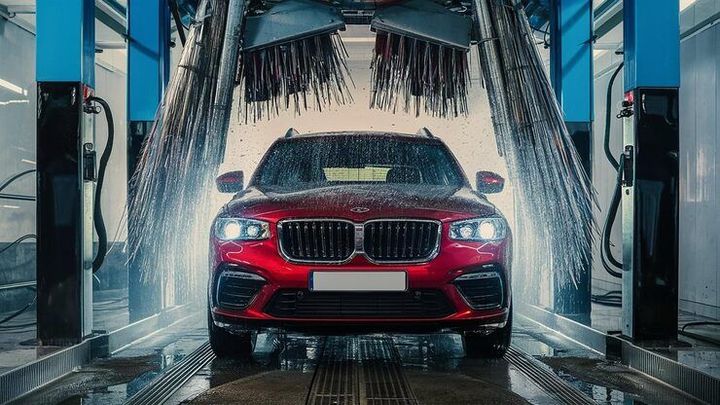
- Tunnel systems: A conveyor moves vehicles through several cleaning stages.
- Self-service systems: Users operate spray guns, brushes, and controls within an individual wash bay.
- High-pressure systems: Water jets provide much of the cleaning action without relying primarily on rotating brushes.
- Touchless systems: High-pressure water and cleaning chemicals perform cleaning without direct brush contact.
- Brush-based systems: Rotating or moving brushes physically contact vehicle surfaces.
Each configuration has different requirements for space, water management, controls, drainage, and maintenance.
Basic Working Principle
The cleaning process generally begins by loosening dirt with water or a pre-treatment chemical. The machine then applies additional water and cleaning agents while brushes, spray nozzles, or other equipment remove contaminants from the vehicle surface.
After the main cleaning stage, a rinse removes remaining detergent and loosened dirt. Some systems then apply a final treatment followed by forced air from blowers or dryers to remove water from the vehicle exterior.
Importance
Car washing machines matter because vehicle cleaning involves more than simply spraying water onto a surface. A controlled system must manage water pressure, chemical concentration, mechanical movement, drainage, and wastewater while avoiding unnecessary contact with vehicle surfaces.
The topic affects vehicle owners, car dealerships, fleet operators, workshops, transport facilities, and commercial washing locations. It is also relevant to communities where water availability and wastewater management are important considerations.
Water Use and Conservation
Water consumption varies significantly according to the machine configuration, wash program, equipment condition, and recycling arrangements. One technical reference for vehicle wash systems reports typical consumption of about 150–350 litres per vehicle for some systems, while self-service washing can average around 80 litres per wash. These figures are system-specific rather than universal values.
Water-recovery systems can reduce the amount of fresh water entering the washing process. Treatment methods may include settling, biological treatment, sand filtration, or cyclone separation. The appropriate method depends on the wastewater characteristics and the intended reuse application.
Wastewater Management
Vehicle wash water can contain suspended dirt, oils, grease, detergents, and other contaminants. If this water is discharged without suitable treatment or drainage controls, it can create environmental problems.
A vehicle-washing facility therefore needs an appropriate drainage arrangement and wastewater-management process. In India, requirements can depend on the location, activity, water source, discharge arrangement, and instructions of the relevant pollution-control authority.
Recent Updates
From 2024 through 2026, developments in car washing machines have increasingly focused on water recycling, automation, monitoring, and more controlled cleaning processes. These changes reflect broader attention to water conservation and resource management.
Modern systems can combine programmable controllers, sensors, variable-pressure pumps, automatic chemical dosing, vehicle-position detection, and automated drying. These features allow individual washing stages to be coordinated rather than relying entirely on manual control.
Water Recycling Technology
Water reclamation has become an important feature in many vehicle-washing installations. Treatment systems can collect used water, remove suspended material, and return a portion of the treated water to suitable washing stages. Biological treatment, sand filtration, and cyclone separation represent different approaches to water recovery.
The actual recovery level depends on the treatment design and operating conditions. A high recovery percentage should not be assumed for every machine because water quality, contamination levels, cleaning chemicals, and system configuration affect reuse.
Automation and Sensors
Automation is also becoming more common. Sensors can detect vehicle position, monitor operating conditions, and coordinate equipment movement. Programmable controls can determine when pumps, brushes, chemical dosing systems, conveyors, and dryers operate.
Digital monitoring can also help record water consumption and identify changes in process performance. The National Productivity Council describes water auditing as a process involving measurement of water entering a facility, water distribution, wastewater generation, and opportunities for reuse.
Touchless Cleaning
Touchless systems use high-pressure water and cleaning chemicals rather than relying primarily on physical brushes. This approach can be useful where operators want to reduce direct mechanical contact with painted surfaces.
However, cleaning results depend on pressure, nozzle design, spray distance, chemical formulation, water temperature, and the type of contamination. No single cleaning technology is suitable for every vehicle or operating environment.
Laws or Policies
In India, vehicle washing can be affected by environmental, water-use, wastewater-discharge, workplace-safety, and local authority requirements. Water is primarily a state subject, so specific requirements can differ between states and local jurisdictions.
The Government of India has promoted the use of treated wastewater for non-potable applications, including vehicle washing. The National Water Policy also emphasizes recycling and reuse of water where appropriate and supports treatment before wastewater is reused.
Wastewater handling is particularly relevant to vehicle-washing facilities. Depending on the location and nature of the operation, an establishment may need appropriate wastewater treatment and permissions from the applicable pollution-control authority.
A Central Pollution Control Board-related technical framework for vehicle-washing facilities has described measures such as paved washing areas, controlled drainage, wastewater treatment, and recycling where feasible, particularly where water scarcity exists.
Recent Indian regulatory decisions also illustrate the importance of measuring fresh-water use and treated wastewater. In one 2026 case involving an automotive facility, records included water meters, an effluent treatment plant, treated-water reuse, and logbooks for fresh-water consumption and wastewater treatment. The specific requirements of that case should not be treated as universal rules for every vehicle-washing facility.
Tools and Resources
Several resources can help readers understand and evaluate car washing machines and their water-management systems.
Water Consumption Records
A simple water-use record can track the amount of fresh water entering a washing system and the amount of wastewater generated. Flow meters can provide measurements that are more useful than estimates based only on the number of vehicles washed.
Water Audits
A water audit examines water entering a facility, how it is distributed, where it is consumed, and where wastewater is generated. The National Productivity Council provides information on water audits, including flow measurement, water balances, treatment systems, and reuse opportunities.
Machine Manuals and Technical Documents
Machine manuals normally contain information about operating sequences, pressure limits, electrical requirements, component specifications, maintenance intervals, and safety precautions. Technical documents for pumps, nozzles, brushes, blowers, filtration units, and treatment equipment can provide additional information about individual components.
Water-Recycling Components
Common components used in vehicle-washing water-management systems include:
| Component | Main function |
|---|---|
| Settling tank | Allows heavier solids to separate from wastewater |
| Sludge trap | Collects dirt and sediment before further treatment |
| Sand filter | Removes suspended particles from suitable wastewater |
| Cyclone separator | Uses centrifugal action to separate particles |
| Biological treatment unit | Uses microorganisms to reduce certain organic contaminants |
| Reclaimed-water tank | Stores treated water for suitable reuse |
| Flow meter | Measures water movement through the system |
| Pump | Moves water between process stages |
| Control panel | Coordinates machine functions |
The appropriate combination depends on the washing system, wastewater characteristics, local requirements, and intended reuse.
FAQs
What is a car washing machine?
A car washing machine is an automated or semi-automated system that cleans vehicle exteriors using equipment such as water pumps, spray nozzles, brushes, conveyors, chemical dosing units, and drying equipment.
How does a car washing machine work?
A typical car washing machine uses several stages, beginning with pre-rinsing or pre-treatment and followed by washing, rinsing, and drying. Sensors and controllers can coordinate the movement of brushes, spray systems, pumps, conveyors, and blowers.
How much water does a car washing machine use?
Water use varies by machine type and wash program. Some vehicle-wash systems use roughly 150–350 litres per vehicle, while other configurations can use considerably less or more. Recycling equipment can reduce fresh-water demand, but actual consumption depends on the complete system design.
What cleaning technologies are used in car washing machines?
Common technologies include high-pressure spraying, rotating brushes, detergent application, touchless cleaning, automated rinsing, and air drying. Some systems combine several technologies in one washing sequence.
Can car washing machines recycle water?
Yes. Some systems collect and treat wastewater for reuse. Depending on the design, treatment can involve settling, biological processes, sand filtration, or cyclone separation. The treated water is generally directed toward applications where its quality is suitable.
Conclusion
Car washing machines combine mechanical movement, water pressure, cleaning agents, sensors, pumps, and drying equipment to automate vehicle cleaning. Their designs range from rollover and tunnel systems to touchless and self-service configurations. Water management has become an important part of modern vehicle washing, with recycling and measurement technologies helping control fresh-water use. In India, wastewater management and water-reuse practices are influenced by national policies as well as state and local requirements.