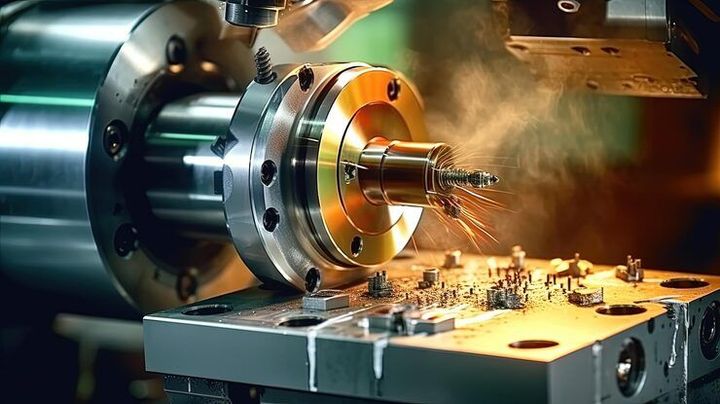
Unlike manual machining equipment, CNC turning centers operate using programmed instructions. This enables consistent, repeatable, and highly precise production across industries such as aerospace, automotive, medical device manufacturing, and industrial equipment production .
The demand for CNC turning centers has grown due to increasing requirements for precision, speed, and automation in manufacturing. These machines are designed to handle complex geometries while minimizing human intervention.
Key Drivers of Adoption
-
High-precision machining requirements
-
Complex geometries with tight tolerances
-
Faster production cycles
-
Integration with CAD/CAM software
-
Reduction of human error in machining
Modern CNC turning centers support multi-axis machining, live tooling, and automation systems. These features allow manufacturers to complete complex parts in a single setup, improving efficiency and reducing downtime.
They are also a core component of Industry 4.0 environments, where machines are interconnected through digital systems and real-time analytics.
Importance: Why CNC Turning Centers Matter Today
Advanced manufacturing relies heavily on automation and data-driven production. CNC turning centers play a critical role in ensuring precision, scalability, and operational efficiency.
They are widely used in:
-
Precision engineering industries requiring micron-level accuracy
-
Aerospace and defense sectors
-
Automotive manufacturing for engine and drivetrain components
-
Medical device production requiring consistent quality
Traditional machining methods depend on operator skill, which can lead to inconsistencies. CNC turning centers eliminate this issue by using programmed parameters, ensuring repeatability and uniform output.
CNC vs Manual Lathe Comparison
| Feature | Manual Lathe | CNC Turning Center |
|---|
| Precision Level | Operator-dependent | Program-controlled |
| Production Speed | Moderate | High |
| Multi-Axis Capability | Limited | Advanced (up to 5-axis or more) |
| CAD/CAM Integration | Minimal | Fully integrated |
| Automation Compatibility | Low | High |
These advantages lead to:
-
Reduced material waste
-
Improved surface finish quality
-
Better compliance with quality standards
-
Increased operational safety
CNC turning centers also support predictive maintenance through real-time monitoring, reducing unexpected downtime.
Recent Updates: Trends and Developments in 2025
CNC machining has seen rapid innovation in 2025, particularly with the integration of advanced digital technologies.
Key Technological Trends
-
AI-assisted toolpath optimization for improved efficiency and tool life
-
Digital twin technology for virtual simulation of machining processes
-
Cloud-based analytics integration for real-time monitoring
Major industry players have also introduced new advancements:
-
Siemens enhanced smart factory connectivity
-
FANUC improved robotic automation compatibility
-
Haas Automation upgraded control interfaces and remote monitoring
Sustainability and Security Enhancements
Modern CNC turning centers now focus on sustainability and secure operations:
-
Energy-efficient spindle systems
-
Coolant recycling mechanisms
-
Reduced emissions through optimized machining
-
Enhanced cybersecurity for industrial networks
These developments improve productivity while supporting environmentally responsible manufacturing.
Laws or Policies: Regulatory Impact on CNC Turning Centers
CNC turning operations must comply with global industrial regulations and safety standards. These frameworks ensure safe, efficient, and environmentally responsible manufacturing.
Key Regulatory Standards
-
ISO certification frameworks (including ISO 9001 for quality management)
-
OSHA workplace safety regulations
-
Environmental compliance for waste and emissions
Workplace Safety Requirements
-
Machine guarding and protective enclosures
-
Emergency stop systems
-
Operator safety training
-
Regular maintenance procedures
Governments supporting Industry 4.0 often provide incentives for adopting advanced manufacturing technologies. Environmental regulations also influence coolant disposal, recycling, and energy monitoring practices.
Compliance ensures:
-
Operational reliability
-
Reduced legal risks
-
Stronger global competitiveness
-
Alignment with international standards
Tools and Resources: Supporting CNC Turning Operations
CNC turning centers rely on a combination of software, hardware, and analytical tools to maximize efficiency and precision.
CAD/CAM Platforms
-
Autodesk Fusion 360
-
Mastercam
-
SolidWorks CAM
These tools enable 3D modeling, toolpath programming, and machining simulation.
Industrial Monitoring Systems
-
Real-time spindle monitoring dashboards
-
Predictive maintenance analytics
-
Cloud-based production tracking tools
Automation Hardware
-
Robotic loading systems
-
Automated tool changers
-
Bar feeders for continuous machining
Performance Calculation Tools
-
Surface speed calculators
-
Feed rate optimization tools
-
Tool life prediction charts
Cutting Speed Reference Table
| Material Type | Recommended Surface Speed (m/min) | Tool Type |
|---|
| Aluminum | 150–300 | Carbide |
| Stainless Steel | 60–120 | Coated Carbide |
| Titanium | 30–70 | High-performance Carbide |
Additional Resources
-
CNC program validation checklists
-
Preventive maintenance logs
-
Quality inspection documentation templates
-
Industry webinars and technical whitepapers
These resources help manufacturers align with best practices in automation and digital manufacturing.
Frequently Asked Questions
What is the difference between a CNC lathe and a CNC turning center?
A CNC lathe focuses on basic turning operations. A CNC turning center includes advanced features such as live tooling, multi-axis capabilities, and automated tool changers.
How does CNC turning improve precision engineering?
CNC turning uses programmed instructions to control machining parameters. This reduces human variability and enables consistent, high-precision results.
Can CNC turning centers integrate with Industry 4.0 systems?
Yes, modern CNC turning centers can connect with digital platforms. This allows real-time monitoring, predictive maintenance, and cloud-based analytics.
What materials can be processed using CNC turning centers?
Common materials include:
-
Aluminum
-
Stainless steel
-
Titanium
-
Brass
-
Engineered plastics
How do safety regulations affect CNC machining operations?
Safety regulations require protective enclosures, emergency systems, operator training, and regular maintenance. These measures ensure safe and compliant production.
Conclusion
CNC turning centers are a cornerstone of modern manufacturing. Their ability to integrate automation, digital systems, and precision engineering makes them essential in today’s industrial landscape.
Advancements such as AI optimization, digital twins, and enhanced cybersecurity have further strengthened their capabilities. At the same time, regulatory frameworks ensure safe and reliable operations.
As industries continue to demand higher precision, efficiency, and sustainability, CNC turning centers will remain a critical driver of innovation and long-term manufacturing success.