Industrial Boilers Overview: Key Types, Functions, and Performance Considerations
Industrial boilers are an important part of many manufacturing, processing, and heating operations.
These systems generate heat or steam that supports a wide range of industrial activities. From food production and chemical processing to power generation and building operations, industrial boilers help maintain consistent temperatures and energy supply.
The concept of boiler technology dates back to the early development of steam-powered machinery. Over time, designs evolved to improve efficiency, safety, and operational control. Today, industrial boilers are integrated into modern industrial heating systems and are often supported by advanced monitoring technologies.
Industrial boiler manufacturers develop equipment in different sizes and configurations to meet various operational requirements. Depending on the application, facilities may use steam boiler systems, hot water boilers, or industrial steam generators. These systems are designed to convert fuel energy into usable thermal energy for industrial processes.
As industries continue to focus on productivity and energy management, boilers remain a central component of many facilities. Understanding how they work and the factors that influence their performance can help readers better appreciate their role in modern infrastructure.
Importance
Supporting Industrial Operations
Industrial boilers provide the heat and steam required for numerous industrial activities. Many production processes depend on controlled temperatures to maintain product quality and operational consistency.
Examples include:
- Food and beverage processing
- Pharmaceutical manufacturing
- Textile production
- Chemical processing
- Paper manufacturing
- District heating applications
Without reliable steam boiler systems, many industrial processes would face operational challenges and reduced efficiency.
Contributing to Energy Management
Modern industrial heating systems are designed to use energy more effectively than older equipment. Improved burner technologies, heat recovery components, and boiler automation systems help facilities manage fuel consumption while maintaining output requirements.
Energy efficiency has become increasingly important because industries seek to reduce resource use and environmental impact. Boilers often represent a significant portion of a facility’s energy demand, making performance optimization an important consideration.
Supporting Building Infrastructure
Beyond manufacturing, boilers are commonly used in commercial and institutional buildings. Commercial boiler installation projects can be found in hospitals, universities, office complexes, and large residential developments.
These systems provide:
- Space heating
- Hot water production
- Humidity control
- Process heating support
Addressing Reliability Challenges
Many industrial operations run continuously for extended periods. Boiler reliability is therefore essential. Proper industrial boiler maintenance and monitoring help reduce unexpected downtime and improve equipment lifespan.
Context of Boiler Types and Functions
Fire-Tube Boilers
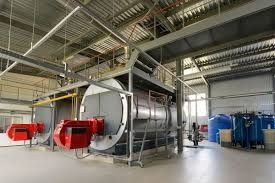
Fire-tube boilers are among the most widely used industrial boilers. In this design, hot combustion gases pass through tubes surrounded by water.
Key characteristics include:
- Simple design
- Suitable for moderate steam demand
- Relatively straightforward operation
- Common use in commercial facilities
Water-Tube Boilers
Water-tube boilers operate by circulating water through tubes while combustion gases surround the tubes externally.
These systems are commonly selected for:
- Large industrial operations
- High steam output requirements
- High pressure industrial boilers applications
- Continuous process environments
Water-tube designs can often accommodate higher pressures and capacities than fire-tube systems.
Electric Boilers
Electric boilers generate heat using electrical resistance rather than combustion.
Common applications include:
- Facilities with access to reliable electrical infrastructure
- Areas with strict emissions requirements
- Specialized industrial environments
Industrial Steam Generators
Industrial steam generators produce steam rapidly and are often used where quick startup times are important. They may be integrated into manufacturing processes requiring flexible steam production.
Condensing Boilers
Condensing boilers recover additional heat from exhaust gases, improving thermal efficiency. These systems are increasingly incorporated into modern industrial heating systems and commercial applications.
Boiler Plant Equipment and System Components
Industrial boiler performance depends on more than the boiler itself. A complete boiler plant includes several supporting components.
| Component | Primary Function |
|---|---|
| Boiler Vessel | Generates steam or hot water |
| Burner System | Mixes fuel and air for combustion |
| Feedwater Pump | Delivers water into the boiler |
| Economizer | Recovers heat from exhaust gases |
| Control System | Monitors and regulates operation |
| Water Treatment Equipment | Maintains water quality |
| Safety Valves | Protect against excessive pressure |
| Steam Distribution Network | Delivers steam to processes |
These elements work together to support safe and efficient operation.
Boiler Water Treatment Systems
Water quality significantly affects boiler performance. Boiler water treatment systems help reduce scaling, corrosion, and deposits that may develop inside equipment.
Common treatment methods include:
- Water softening
- Chemical treatment
- Filtration
- Deaeration
- Reverse osmosis processes
Proper water treatment contributes to equipment reliability and operational stability.
Performance Considerations
Efficiency
Efficiency measures how effectively a boiler converts fuel energy into usable heat. Multiple factors influence efficiency, including combustion quality, heat transfer performance, insulation, and maintenance practices.
Facilities often evaluate:
- Fuel utilization
- Exhaust gas temperatures
- Heat recovery opportunities
- Operating load conditions
Pressure Requirements
Different applications require different operating pressures. High pressure industrial boilers are often used in power generation and heavy manufacturing environments where large amounts of steam are necessary.
Pressure selection depends on:
- Process requirements
- Safety considerations
- Equipment design
- Regulatory compliance
Fuel Type
Industrial boilers can operate using various fuel sources, including:
- Natural gas
- Fuel oil
- Biomass
- Electricity
- Alternative industrial fuels
Fuel availability and environmental considerations often influence equipment selection.
Automation and Controls
Boiler automation systems have become increasingly important in modern facilities. Automated controls continuously monitor operating conditions and adjust performance accordingly.
Common automation functions include:
- Temperature regulation
- Pressure monitoring
- Combustion control
- Alarm management
- Remote system monitoring
These technologies help improve consistency and operational visibility.
Maintenance Requirements
Industrial boiler maintenance remains essential regardless of system type. Routine inspections and preventive maintenance activities help identify potential issues before they affect operations.
Maintenance activities often include:
- Burner inspections
- Tube cleaning
- Safety device testing
- Water quality monitoring
- Control system verification
Consistent maintenance contributes to long-term equipment performance.
Recent Updates
Increased Automation
Recent industry trends show continued growth in boiler automation systems. Facilities increasingly use digital sensors and intelligent control platforms to monitor performance in real time.
Automated systems can provide detailed operational data that supports maintenance planning and efficiency improvements.
Integration with Energy Management Systems
Industrial boilers are increasingly connected with broader facility energy management platforms. This integration allows operators to track fuel consumption, emissions performance, and operational trends from centralized dashboards.
Emissions Reduction Focus
Environmental considerations continue to influence boiler design. Manufacturers are developing equipment with lower emissions profiles and improved combustion technologies to meet evolving environmental requirements.
Growth of Smart Monitoring
Remote monitoring technologies are becoming more common across boiler plant equipment installations. Operators can review system performance, receive alerts, and analyze operating trends from multiple locations.
Heat Recovery Adoption
Many facilities are expanding the use of heat recovery technologies such as economizers and waste heat recovery units. These solutions help capture thermal energy that might otherwise be lost through exhaust systems.
Laws or Policies
Industrial boilers operate within a framework of safety, environmental, and operational regulations. Requirements vary by country, region, and industry sector.
Safety Regulations
Most jurisdictions require compliance with pressure vessel and boiler safety standards. These regulations typically address:
- Equipment design requirements
- Inspection procedures
- Operator qualifications
- Pressure protection systems
- Documentation practices
Environmental Requirements
Air quality regulations often influence boiler operation and fuel selection. Facilities may need to monitor emissions and comply with established environmental standards.
Energy Efficiency Programs
Many governments support energy efficiency initiatives that encourage industries to improve equipment performance. Industrial heating systems may be evaluated under broader energy management frameworks.
Inspection and Certification
Regular inspections are commonly required for industrial boilers. Certification processes help verify that equipment meets applicable safety and operational requirements.
Organizations should consult local regulatory authorities for specific compliance obligations relevant to their location and industry.
Tools and Resources
Several tools and resources can help individuals and organizations understand boiler operation and performance.
Performance Monitoring Software
Digital monitoring platforms track key operating data such as:
- Steam production
- Fuel consumption
- Pressure levels
- Temperature trends
Boiler Efficiency Calculators
Engineering calculators can estimate efficiency levels, fuel utilization, and potential heat recovery opportunities.
Industry Standards and Technical Guides
Technical publications provide information on:
- Boiler design
- Inspection procedures
- Maintenance practices
- Water treatment requirements
Training Platforms
Educational platforms provide learning materials related to industrial boilers, steam boiler systems, safety procedures, and operational fundamentals.
Water Quality Analysis Resources
Resources related to boiler water treatment systems help users understand water chemistry, treatment methods, and equipment protection practices.
FAQs
What are industrial boilers used for?
Industrial boilers generate steam or hot water for manufacturing processes, heating applications, power generation support, and various industrial operations.
How do steam boiler systems work?
Steam boiler systems heat water until it becomes steam. The steam is then distributed through pipes to support heating, processing, or mechanical applications within a facility.
What is the difference between industrial boilers and industrial steam generators?
Industrial boilers typically store larger volumes of water and steam, while industrial steam generators are often designed for rapid steam production and quicker startup times.
Why are boiler water treatment systems important?
Boiler water treatment systems help reduce scaling, corrosion, and deposits inside equipment. Proper water quality supports efficiency, reliability, and equipment longevity.
How often should industrial boiler maintenance be performed?
Industrial boiler maintenance schedules vary depending on equipment type, operating conditions, and regulatory requirements. Routine inspections, monitoring, and preventive maintenance are generally part of normal operation.
Conclusion
Industrial boilers play a central role in heating, steam generation, and industrial processing across many sectors. Different boiler types are designed to meet varying pressure, capacity, and operational requirements. Modern developments such as boiler automation systems, smart monitoring technologies, and improved water treatment practices continue to influence how these systems operate. Understanding boiler plant equipment, maintenance needs, and performance considerations provides valuable insight into the function of industrial heating systems in today's industrial environment.