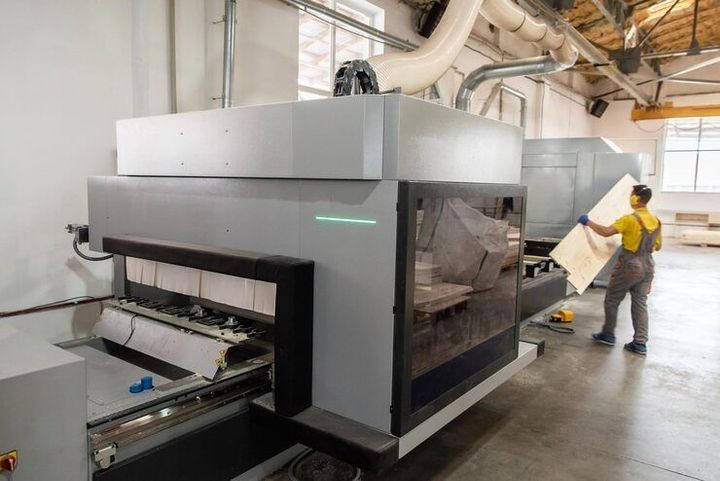
Coating Machines Explained: Types, Components, Coating Methods, Applications, Efficiency, Benefits and Selection Considerations
A coating machine is equipment used to apply a controlled layer of a material onto the surface of another material. Depending on the process, the coating may be applied as a liquid, powder, film, slurry, or other formulated material. Coating machines are used in manufacturing, construction materials, automotive components, electronics, packaging, textiles, metal processing, and many other industries.
Coating processes have existed for centuries, with early methods relying mainly on brushes, rollers, dipping, or manual spraying. Industrial production gradually introduced mechanical application systems that could distribute coating materials more evenly and process larger quantities of products.
Modern coating machines combine mechanical movement, material delivery, temperature control, drying systems, and electronic controls. Some systems are designed for individual components, while others are integrated into continuous production lines.
What a Coating Machine Does
The primary function of a coating machine is to place a defined layer of material onto a target surface. The coating can serve different purposes, such as improving surface appearance, reducing exposure to environmental conditions, providing insulation, controlling friction, or creating a particular surface characteristic.
The machine may control factors such as coating thickness, application speed, material flow, temperature, pressure, and drying conditions. The exact process depends on the coating material and the properties required from the finished product.
Main Types of Coating Machines
Coating equipment can be categorized according to how the material reaches the surface.
- Spray coating machines use nozzles to distribute liquid or other coating materials.
- Roll coating machines transfer coating material through one or more rotating rollers.
- Dip coating machines immerse components into a coating bath and then remove them at a controlled rate.
- Powder coating machines apply electrically charged powder particles before a curing stage.
- Curtain coating machines create a continuous curtain of coating material through which products pass.
- Slot-die coating machines dispense a controlled layer through a narrow slot and are used in applications requiring precise coating thickness.
- Blade coating machines use a blade or similar device to control the amount of material left on a surface.
The machine type is normally selected according to the material being coated, component geometry, production method, coating thickness, and process requirements.
Importance
Coating machines are important because many products require a controlled surface layer for functional, protective, or appearance-related reasons. A consistent coating can help manufacturers maintain defined product characteristics while reducing variation between individual components.
Coating processes also affect material use and production efficiency. Uneven application can create excessive material consumption, incomplete coverage, defects, or additional processing requirements.
Applications Across Industries
Coating machines are used in many manufacturing environments. Common applications include:
- Metal component coating
- Automotive part finishing
- Protective coatings for industrial equipment
- Architectural and construction materials
- Packaging materials
- Printed electronics
- Batteries and energy-related components
- Textiles and fabrics
- Wood and furniture products
- Glass processing
- Plastic components
- Paper and flexible films
Different industries use different coating materials and application methods. A coating process designed for a metal component may be unsuitable for a flexible polymer film or electronic material.
Surface Preparation
Surface preparation is an important part of many coating processes. Dust, oil, moisture, oxidation, or other contaminants can affect how a coating adheres to the surface.
Preparation may involve cleaning, degreasing, abrasive treatment, drying, or other processes. The appropriate method depends on the substrate and coating system.
Types of Coating Methods
Coating methods differ mainly in how the coating material is transferred and controlled. Understanding these methods helps explain why different coating machines are used for different products.
Spray Coating
Spray coating uses compressed air, airless pressure, electrostatic forces, or other mechanisms to atomize and distribute coating material. Spray systems can cover complex shapes and are used for various industrial surfaces.
Application parameters may include spray pressure, nozzle size, distance from the surface, movement speed, and material viscosity. Poor control of these factors can contribute to uneven thickness or overspray.
Roll Coating
Roll coating uses rotating rollers to transfer material onto a substrate. It is commonly used when products move continuously through a production line.
The coating thickness can be influenced by roller speed, gap settings, material properties, substrate speed, and roller configuration.
Dip Coating
Dip coating involves immersing an object in a coating material and withdrawing it under controlled conditions. The withdrawal speed, material viscosity, surface properties, and drying conditions can influence the resulting layer.
This method can be useful for components that need coverage over multiple surfaces.
Powder Coating
Powder coating uses dry powder particles that are deposited onto a prepared surface and subsequently heated so the particles form a continuous layer. The process is widely associated with metal products.
The application stage, powder characteristics, electrical conditions, oven temperature, and curing time can affect the final coating.
Slot-Die Coating
Slot-die coating dispenses coating material through a precisely shaped slot onto a moving substrate. It is commonly associated with continuous materials and applications where controlled coating thickness is important.
The process can involve careful management of flow rate, coating speed, gap, viscosity, and substrate properties.
Components
A coating machine contains different components depending on the application method. However, several functional parts are common across many systems.
Material Delivery System
The material delivery system moves coating material from a container or reservoir to the application point. Pumps, hoses, valves, filters, pressure regulators, and flow controls may form part of this system.
Maintaining stable material flow is important because fluctuations can affect coating thickness and surface uniformity.
Application Unit
The application unit is the part that places the material onto the workpiece. It may consist of spray guns, nozzles, rollers, blades, slots, curtains, or dipping tanks.
Its design determines how the coating interacts with the surface.
Drive and Motion System
Motors, gears, belts, conveyors, linear actuators, or robotic arms can control the movement of the workpiece or application equipment. Controlled movement helps maintain a consistent application pattern.
Drying and Curing System
Some coatings require drying or curing after application. Equipment may use heated air, infrared radiation, ultraviolet radiation, ovens, or other controlled conditions.
Drying and curing requirements depend strongly on the coating chemistry and substrate.
Control System
Modern coating machines may include programmable controllers, sensors, touchscreens, flow meters, temperature sensors, pressure controls, and monitoring systems.
These controls allow operators to establish and monitor process parameters. More advanced systems may record operating information for process analysis.
Efficiency
Coating machine efficiency refers to how effectively a system uses materials, energy, equipment time, and production capacity while achieving the required coating characteristics.
Material utilization is one important factor. Spray systems, for example, can generate overspray, while other application methods may transfer material more directly to the substrate.
Energy use is another consideration, especially when drying or curing requires heating. Production speed, equipment downtime, cleaning requirements, and changeover time can also influence overall efficiency.
Factors Affecting Efficiency
| Factor | Effect on the coating process |
|---|---|
| Coating viscosity | Influences flow and application behavior |
| Application speed | Affects coverage and layer formation |
| Material flow rate | Influences coating thickness |
| Drying temperature | Affects drying or curing conditions |
| Substrate condition | Influences adhesion and surface quality |
| Equipment configuration | Determines application consistency |
| Maintenance condition | Can affect reliability and process stability |
| Automation level | Influences repeatability and operator involvement |
Efficiency should therefore be assessed as part of the complete process rather than from machine speed alone.
Benefits
Coating machines provide several practical benefits when appropriately configured for their intended application.
Consistent Application
Mechanized application can provide more repeatable movement and material distribution than purely manual processes. Electronic controls can further support consistent operating conditions.
Controlled Coating Thickness
Many coating systems are designed to regulate the amount of material applied to a surface. Thickness control is important where the coating has specific functional or dimensional requirements.
Process Integration
Coating machines can be connected with conveyors, inspection equipment, drying systems, curing ovens, and other production equipment. This allows coating to become part of a continuous manufacturing process.
Reduced Manual Handling
Automated systems can perform repetitive application movements with limited direct handling of the workpiece. The extent of automation varies from simple mechanical assistance to fully integrated robotic systems.
Process Monitoring
Sensors and electronic controls can provide information about temperature, pressure, flow, speed, or other parameters. Monitoring can help identify process changes and support quality-control activities.
Applications
The appropriate coating machine depends heavily on the industry and product.
Metal Products
Metal components may receive coatings for corrosion resistance, electrical properties, appearance, friction control, or other purposes. Spray, powder, dip, and roll systems are among the methods used for different metal products.
Electronics and Energy Components
Thin and controlled coatings are used in some electronic, battery, photovoltaic, and related manufacturing processes. Slot-die and other precision coating methods may be used where controlled material distribution is required.
Packaging and Flexible Materials
Paper, films, foils, and other flexible substrates can be processed using roll, gravure, slot-die, or other continuous coating technologies. The machine must accommodate the substrate's flexibility and movement characteristics.
Construction Materials
Coating equipment can be used for panels, boards, flooring components, glass, and other construction-related products. The required coating characteristics vary according to the material and intended environment.
Selection Considerations
Selecting a coating machine involves evaluating the complete coating process rather than focusing on a single machine specification.
Material Compatibility
The coating material must be compatible with the equipment's pumps, hoses, seals, tanks, nozzles, rollers, or other contact surfaces. Viscosity, temperature sensitivity, particle size, and chemical characteristics can influence equipment requirements.
Substrate Characteristics
The size, shape, texture, flexibility, porosity, and material composition of the substrate affect machine selection. Flat continuous sheets require different equipment from irregular three-dimensional components.
Required Coating Thickness
Applications requiring a thin and closely controlled layer may require precision application equipment. Other applications may tolerate a broader thickness range and use simpler equipment.
Production Method
Batch production and continuous production have different equipment requirements. Continuous processes often use conveyors, rolls, or web-handling systems, while batch processes may use chambers, booths, dipping tanks, or robotic cells.
Drying and Curing
The coating's drying or curing requirements should be considered together with the application equipment. A coating machine may need to connect with a heated oven, infrared unit, ultraviolet system, or controlled drying chamber.
Safety and Environmental Conditions
Operators should consider ventilation, dust control, electrical safety, temperature, noise, chemical exposure, and fire-related risks where applicable. The specific safety measures depend on the coating material and process.
Maintenance and Cleaning
Coating materials can accumulate in pumps, nozzles, rollers, tanks, filters, and other components. Equipment design should therefore be evaluated for inspection, cleaning, replacement of wear components, and routine maintenance.
FAQs
What is a coating machine?
A coating machine is equipment used to apply a controlled layer of material onto a surface. It may use spraying, rolling, dipping, powder application, slot-die dispensing, or another coating method.
What are the main types of coating machines?
Common types include spray coating machines, roll coating machines, dip coating machines, powder coating machines, curtain coaters, slot-die coaters, and blade coating systems. Each type is designed around different material and production requirements.
How does a coating machine work?
A coating machine transfers coating material from a reservoir or supply system to an application unit. The application unit distributes the material onto the substrate, after which the coating may be dried or cured.
What factors affect coating machine efficiency?
Material properties, coating thickness, application speed, flow rate, drying requirements, substrate condition, equipment configuration, maintenance, and automation can all affect efficiency.
How should a coating machine be selected?
Selection generally considers the coating material, substrate, required thickness, product dimensions, production method, drying or curing process, operating environment, safety requirements, and maintenance needs. The machine's technical specifications should be evaluated against the particular application.
Conclusion
Coating machines provide controlled methods for applying materials to surfaces across manufacturing and processing industries. Their designs range from simple spray and roller systems to automated equipment using sensors, programmable controls, and precision dispensing technologies. Efficiency depends on factors such as material use, application control, drying requirements, equipment condition, and production method. Appropriate selection requires consideration of the coating material, substrate, process conditions, safety requirements, and required surface characteristics.